
Marine Special Operations Command (MARSOC): The Ultimate Guide to the Marine Raiders
Introduction
Few units in the world embody grit, adaptability, and quiet professionalism like the Marine Raiders. Officially known as Marine Special Operations Command (MARSOC), these elite warriors represent the Marine Corps’ evolution into modern special operations. Whether you’re a Marine considering the pipeline, a student of military history, or simply curious about how the Raiders fit within the broader U.S. Special Operations community, this guide breaks it all down—history, structure, training, missions, and the mindset that defines them.
My Experience with Marine Special Operators
During my time as a Special Operations Task Force Executive Officer in western Afghanistan, I had the honor of serving alongside a Marine Special Operations Company composed of several subordinate Marine Special Operations Teams.
They were everything you’d expect Marines to be—disciplined, aggressive, physically dominant, and intelligent—but they also brought something unique to the fight: humility and adaptability. Despite being a relatively young organization at the time, this was their first combat tour together as Marine Raiders, and yet their professionalism matched the most experienced operators I’d ever worked with.
Over the years, I watched that force mature and refine its identity—blending the Marine Corps’ warrior ethos with the precision and global reach of U.S. Special Operations Command. Today, MARSOC stands shoulder to shoulder with SEALs, Green Berets, and Air Force Special Tactics as one of America’s premier special operations forces.
Marine Special Operations Command: Task Organization
MARSOC falls under the umbrella of U.S. Special Operations Command (USSOCOM), headquartered at MacDill Air Force Base, Florida. Within SOCOM, MARSOC provides the Marine Corps component dedicated to global special operations missions.
Here’s how the structure breaks down:
- MARSOC Headquarters (HQ): Located at Camp Lejeune, North Carolina. Commanded by a Major General.
- Marine Raider Regiment (MRR): Based at Camp Lejeune; commanded by a Colonel.
- Marine Raider Battalions (1st, 2nd, and 3rd): Commanded by Lieutenant Colonels.
- Marine Special Operations Companies (MSOCs): Commanded by Majors.
- Marine Special Operations Teams (MSOTs): Commanded by Captains with team sergeants typically at the Master Sergeant level.
This layered structure allows MARSOC to scale from small, highly agile teams to battalion-sized task forces capable of deploying globally for counterterrorism, direct action, and partner-nation training.
The Legacy of the Marine Raider Name
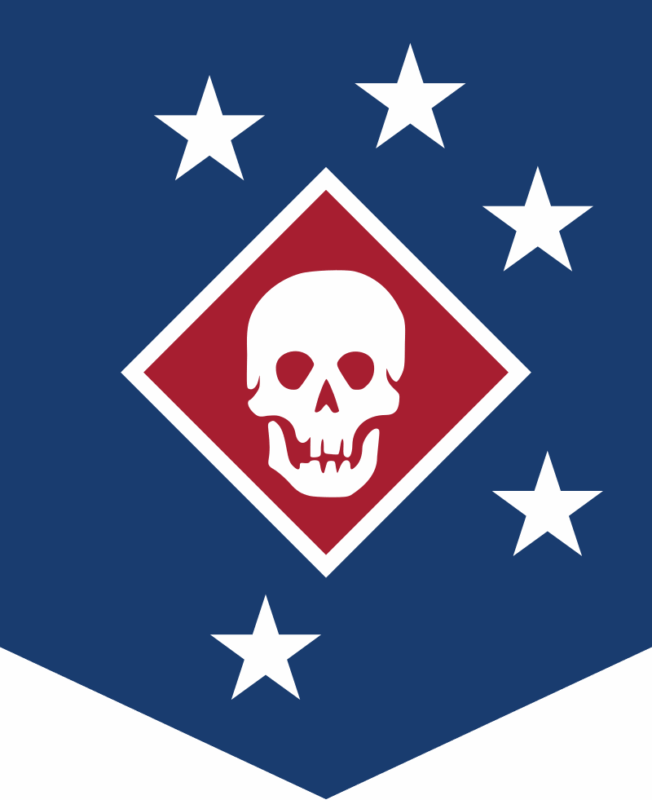
The “Raider” name carries deep roots. During World War II, Marine Raiders led by legends like Evans Carlson and Merritt “Red Mike” Edson conducted daring amphibious raids in the Pacific. Their unconventional warfare, small-unit tactics, and independence became the spiritual foundation for all future special operations.
Though the Raider units were disbanded after the war, their legacy never died. In 2006, when the Marine Corps formally joined SOCOM, the community resurrected the name “Raider” to honor that WWII heritage. The Raider identity symbolizes courage, initiative, and a relentless offensive mindset—the same traits that define modern MARSOC Marines today.
The Birth and Evolution of MARSOC
MARSOC was officially activated on February 24, 2006. The Marine Corps had long resisted joining SOCOM, preferring to maintain independence. But after 9/11, global demands for special operations forces surged, and the Marines were brought into the fold.
Initially, MARSOC faced growing pains. Integrating into SOCOM required adapting to new mission sets, joint command structures, and cultural expectations. Early deployments to Iraq and Afghanistan served as proving grounds. Within a few short years, MARSOC established a sterling reputation for professionalism, lethality, and interoperability with other SOF components.
Today, MARSOC is fully integrated within SOCOM and has participated in global operations spanning Africa, the Middle East, Southeast Asia, and beyond. Their contributions to counterterrorism, partner-nation training, and direct action operations have earned them the respect of their SOF peers.
The Marine Special Operations Training Pipeline
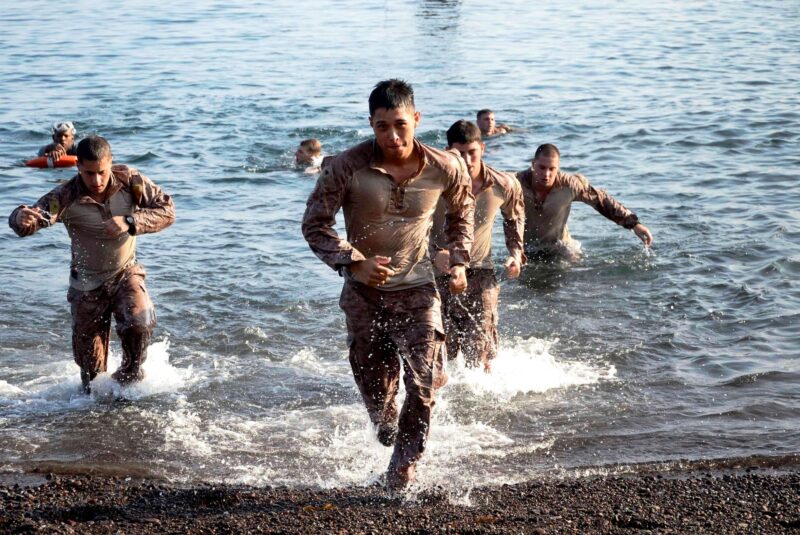
Earning the Raider insignia is among the hardest accomplishments in the U.S. military. The MARSOC training pipeline transforms capable Marines into versatile operators ready for the most demanding missions.
Here’s how it works:
- Assessment and Selection (A&S):
- Conducted at Camp Lejeune, North Carolina.
- Focuses on physical endurance, land navigation, mental resilience, and team performance.
- Candidates must prove they can think clearly under exhaustion and stress.
- Individual Training Course (ITC):
- Lasts approximately 9 months.
- Covers small-unit tactics, marksmanship, close-quarters battle, survival, communications, language, and cultural awareness.
- Culminates with a multi-week field exercise integrating all learned skills.
- Advanced Skills and Specializations:
- After ITC, Raiders attend specialty schools: free-fall parachuting, combat diving, sniper, communications, and Joint Terminal Attack Controller (JTAC) qualification.
- Team Integration:
- Graduates join an MSOT and undergo collective training before deployment.
The entire process—from selection to deployment-ready—typically spans 18–24 months. Physical fitness alone won’t guarantee success; adaptability, problem-solving, and teamwork are equally vital.
Core Missions of MARSOC
MARSOC’s mission set mirrors that of other SOCOM components but carries a distinct Marine flavor. Their tasks include:
- Direct Action (DA): Precision raids, high-value target capture/kill operations, and sabotage missions.
- Counterterrorism (CT): Neutralizing terrorist networks and preventing attacks.
- Special Reconnaissance (SR): Gathering intelligence deep behind enemy lines.
- Foreign Internal Defense (FID): Training and advising partner-nation forces to defend themselves.
- Information and Psychological Operations: Supporting influence campaigns and unconventional warfare efforts.
- Security Force Assistance (SFA): Helping allied militaries build long-term security capacity.
What makes the Marine Special Operator distinct is their ability to shift between conventional and irregular warfare effortlessly—combining traditional Marine aggressiveness with SOF precision and diplomacy.
What Does MARSOC Mean?
MARSOC stands for Marine Special Operations Command—the Marine Corps’ contribution to U.S. Special Operations Command. It’s not a single battalion or regiment but a full-spectrum command capable of strategic, operational, and tactical missions worldwide.
When people refer to “MARSOC Marines,” they’re talking about Marine Raiders, the operators and support personnel assigned to this command who carry out complex missions across the globe.
MARSOC Logo: The Marine Special Operator Insignia (Operator Pin) Explained
The so-called MARSOC logo isn’t a patch or graphic — it’s the Marine Special Operator Insignia, the official operator pin worn by Marines who complete the rigorous MARSOC training pipeline.

Who’s Authorized to Wear It
Only Marines holding the 0372 Critical Skills Operator (CSO) or 0370 Special Operations Officer (SOO) MOS are authorized. They earn the insignia upon graduating from the Individual Training Course (ITC) — a demanding, five-phase program lasting nearly 200 days, followed by additional advanced skills training before joining an operational Marine Raider Team.
Symbolism of the Marine Special Operator Insignia
Every element reflects the Raider spirit and heritage:
- Eagle: Represents the United States and the global reach of the Marine Corps.
- Dagger: Symbol of Marine Raider Battalions and the Marine Special Operations School.
- Southern Cross: Honors WWII Raiders and their legendary actions at Guadalcanal.
- Scroll with “Spiritus Invictus”: Latin for Unconquerable Spirit — the mindset every Raider must prove in training and combat.
The Marine Special Forces Name: MARSOC vs. Force Recon
Many ask: “Are MARSOC Marines the same as Force Recon?”
The short answer: No—but they share common roots.
Force Recon remains part of the Marine Corps under the Marine Expeditionary Force (MEF). Their missions focus on deep reconnaissance and direct support of Marine conventional operations.
MARSOC, on the other hand, operates under SOCOM authority and conducts global SOF missions. Raiders are trained for broader, strategic tasks—foreign internal defense, irregular warfare, and interagency coordination.
In essence:
- Force Recon = Tactical Reconnaissance (within the Corps)
- MARSOC = Strategic Special Operations (joint/global level)
MARSOC vs. Navy SEALs and Green Berets
While all U.S. Special Operations Forces share overlapping skills, each branch brings unique strengths:
Unit | Primary Focus | Core Strength |
MARSOC (Marine Raiders) | Versatility, partner-nation training, expeditionary operations | Blends Marine discipline with SOF adaptability |
Navy SEALs | Maritime direct action and special reconnaissance | Underwater and littoral expertise |
Army Green Berets | Unconventional warfare, foreign internal defense | Language and cultural proficiency |
Air Force Special Tactics | Precision strike and air-ground integration | JTAC and combat control excellence |
MARSOC’s advantage lies in their dual identity—deep Marine combat roots paired with SOF mission flexibility.
Life of a Marine Special Operator
Life as a Raider is demanding but rewarding. Operators spend months away from home training, deploying, and constantly refining skills. Team cohesion is everything. Within an MSOT, every Marine—officer or enlisted—is expected to contribute ideas, initiative, and leadership.
Raiders train relentlessly in shooting, small-unit tactics, cultural awareness, and physical conditioning. They also spend significant time preparing local forces—an often underappreciated but strategically crucial mission.
What unites them isn’t bravado—it’s quiet competence, humility, and the knowledge that their work rarely makes headlines but often changes outcomes.
Frequently Asked Questions (FAQs)
What is MARSOC in the Marines?
MARSOC is the Marine Special Operations Command, the Marine Corps’ component of U.S. Special Operations Command (SOCOM).
How long is MARSOC training?
From selection through advanced training, the process takes roughly 18–24 months, depending on specialty schools.
What is the Marine Special Forces name?
The official name is Marine Raiders, honoring WWII heritage while representing today’s elite Marine Special Operators.
What does the MARSOC logo mean?
The MARSOC logo refers to the Marine Special Operator Insignia, featuring an eagle, stiletto dagger, and Southern Cross—symbols of the Raider’s heritage, global reach, and warrior spirit.
What does the Marine Special Operations Command motto “Spiritus Invictus” mean?
Spiritus Invictus is Latin for “Unconquerable Spirit,” capturing the Marine Raider ethos of courage, perseverance, and unwavering resolve.
Are Marine Raiders part of SOCOM?
Yes. MARSOC was created in 2006 as the Marine Corps’ contribution to U.S. Special Operations Command.
What’s the difference between MARSOC and Force Recon?
Force Recon supports conventional Marine forces, while MARSOC operates under SOCOM for strategic-level missions worldwide.
Where is MARSOC headquartered?
MARSOC Headquarters is at Camp Lejeune, North Carolina, with battalions also at Camp Pendleton, California, and Camp Lejeune.
How do you become a Marine Special Operator?
Applicants must be experienced Marines who pass A&S, complete the Individual Training Course, and meet all physical and mental standards.
Do MARSOC Marines work with Navy SEALs or Green Berets?
Yes. Raiders regularly integrate with SEALs, Green Berets, and other SOF elements during joint and coalition missions.

Final Thoughts
The Marine Special Operations Command proves that the Marine Corps’ fighting spirit adapts to every generation of warfare. From WWII Raiders storming Pacific beaches to modern operators executing global counterterrorism missions, the Raider ethos endures: courage, competence, and teamwork.
If reading this has sparked your motivation … or you are interested in preparing for military service or special operations training, we have several resources that will help you achieve your goal:
- Train Up – Arrive Prepared for Military or Special Operations Training
- Special Operations Mindset – Develop a Champion’s Mindset
- Fitness Programs – Get into Amazing Shape
- Military Leadership Course – Become the Leader Everyone Respects
- Military Planning Course – Plan Like Your Life Depends on It
Life is a Special Operation.
Are you ready for it?

Training Preparation
Arrive Prepared for Military & Special Operations Training

Special Operations Mindset
Develop the Champion Mindset of the Best Trained and Most Elite Forces in the World

Fitness
Get into Amazing Shape

Elite Performance Skills
Win - Lead - Succeed