

Delta Force Motto: What Does Sine Pari Mean?
The motto commonly associated with Delta Force is Sine Pari.
It means Without Equal.
That is a powerful motto, and it fits the reputation of the unit.
But it should not be read as arrogance.
At the highest levels of the military, “without equal” is not a marketing slogan. It is a standard. It means the organization exists in a world where ordinary preparation is not enough, ordinary fitness is not enough, ordinary maturity is not enough, and ordinary discipline is not enough.
It also means every member must earn trust.
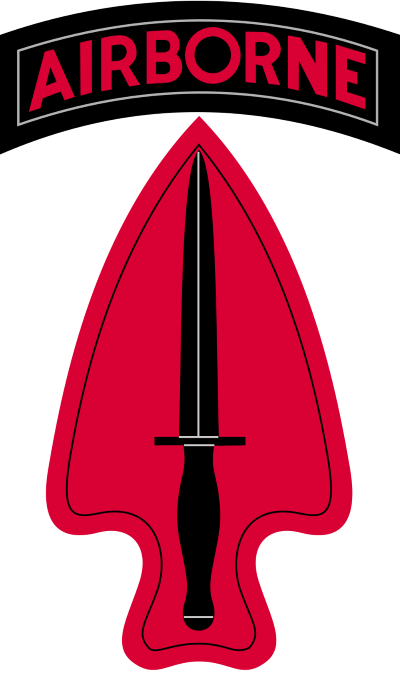
Delta Force Patch: What Is the Delta Force Insignia?
Delta’s public imagery and insignia are more complicated because the unit is secretive.
USASOC-related insignia associated with Delta members includes imagery involving a Fairbairn-Sykes fighting knife inside the outline of an arrowhead. Public references also discuss a USASOC distinctive unit insignia associated with Delta operators.
But readers should be careful.
Not every “Delta Force patch” image online is official, current, meaningful, or connected to operational reality.
The internet loves symbols.
Professionals care more about standards.
Delta Force Operators: Who Serves in the Unit?
The word operator gets used everywhere now.
People use it in gyms, on social media, in tactical marketing, and sometimes in ways that have very little connection to reality.
But in the Delta Force context, the term operator has a specific meaning: a Delta member who completed selection and the Operator Training Course.
That matters.
A Delta Force operator is not a beginner.
He is not someone who just enlisted.
He is not someone who watched a few videos and decided he wanted to be elite.
He is usually an experienced soldier who has already demonstrated unusual levels of fitness, discipline, judgment, maturity, and operational competence.
Many candidates come from demanding Army backgrounds, including:
- The 75th Ranger Regiment
- Army Special Forces
- Infantry units
- Other military occupational specialties where exceptional soldiers can stand out
And this point matters:
Some people do come from outside the most obvious pipelines.
Not every candidate has the same resume.
But every serious candidate must bring something exceptional to the table.
A reputation matters.
Performance reports matter.
Fitness matters.
Maturity matters.
Judgment matters.
Quiet professionalism matters.
If you are loud, immature, undisciplined, unreliable, or obsessed with looking special, that is probably a problem.
The people I encountered who were connected to that world were not impressive because they talked about being impressive.
They were impressive because they were calm, competent, physically extraordinary, and serious.
Delta Force and Rangers: How Are They Connected?
The phrase Delta Rangers gets searched because many people sense that the 75th Ranger Regiment and Delta Force are connected somehow.
They are connected, but they are not the same thing.
The 75th Ranger Regiment is an elite U.S. Army special operations light infantry force with its own mission, culture, standards, and history. Rangers are not “junior Delta.” They are not a minor league. They are an elite unit in their own right.
But Ranger Regiment has historically been a strong source of candidates for Delta selection.
That makes sense.
Rangers live in a high-standard environment. They conduct demanding training. They understand discipline, physical fitness, small-unit tactics, leadership, and the reality of being part of a serious military organization.
Rangers may also support JSOC missions in various ways, depending on the mission and task organization.
So the relationship is better understood like this:
- Delta Force and the Ranger Regiment are separate units.
- Many Delta candidates have come from Ranger backgrounds.
- Rangers may support broader special operations missions.
- Ranger Regiment is an excellent proving ground for soldiers who want to test themselves at a high level.
- But being a Ranger does not automatically mean someone will become Delta.
The Ranger Regiment can help build the kind of soldier who might one day be competitive.
But nobody is owed a seat at that table.
How Do You Join Delta Force?
You do not join Delta Force directly from civilian life.
You first join the military, usually the Army. You become excellent in your current role. You build a strong record. You develop a reputation. You prove that you can perform in hard environments. Then, if you are eligible and competitive, you may have an opportunity to be considered.
When I was on active duty, the JSOC recruiting process was not some magical mystery to people inside the broader special operations community. Recruiting teams could travel to military installations and give unclassified briefings. A soldier who was interested would typically need to let his chain of command know that he wanted to attend the brief. At the brief, the recruiting team could explain the basic process, collect names and contact information, and begin looking at a soldier’s background, reputation, experience, and performance record.
If the soldier appeared competitive, the next steps could follow.
But that is the point:
You do not simply “apply to Delta Force” like you are applying for a normal job.
You first become the kind of soldier who might be taken seriously.
In my experience, people who have a realistic chance of entering that world are usually already exceptional before they ever raise their hand.
They are already among the fittest people in their formation.
They are already trusted.
They already have strong evaluations.
They already have a reputation for competence.
They already know how to suffer without becoming dramatic.
They are already professionals.
How to Get Into Delta Force: The Practical Roadmap
If you are asking how to get into Delta Force, the answer starts years before selection.
Here is the practical roadmap.
Join the Army and Choose a Demanding Path
Most Delta Force candidates come from the Army.
That does not mean every person follows the exact same route. But if you are a civilian reading this and dreaming about Delta, your first practical step is not Delta.
Your first practical step is becoming a soldier, and I highly recommend the infantry.
Then you need to choose a path that exposes you to hard standards, serious leadership, tactical competence, and physical demands.
For many, that may mean infantry.
For some, it may mean Ranger Regiment.
For others, it may mean Special Forces later in their career.
For a few exceptional people, it may mean another MOS where they become so useful, so professional, and so respected that they earn a look.
Become Excellent Where You Are
This is where many people fail.
They dream about the next unit before they have mastered the current one.
Do not be that person.
If you are in the infantry, be an excellent infantryman.
If you are in Ranger Regiment, be an excellent Ranger.
If you are in Special Forces, be an excellent Green Beret.
If you are in support, become the kind of support professional people trust with serious missions.
Elite units are not looking for people who fantasize about being elite.
They are looking for people who already perform.
Build a Clean Record and Strong Reputation
Your reputation will arrive before you do.
That is true in the military, and it is especially true in the special operations world.
If you are lazy, immature, reckless, arrogant, unreliable, or constantly in trouble, that follows you.
If you are disciplined, fit, smart, calm, useful, professional, and respected, that follows you too.
Master Fitness as a Lifestyle
At that level, fitness is not a temporary training plan.
It is a lifestyle.
The men I knew who went toward that world could outrun me, out-ruck me, out-push-up me, out-pull-up me, and keep moving long after most strong people had already reached their limit.
And I was in great shape.
That is the reality.
If you need someone to motivate you to train, you are not serious yet.
Own Your Ruck
If you want a simple physical principle, here it is:
Own your ruck.
You should be able to move under load for hours without drama.
You should be able to ruck when you are tired, sore, wet, hungry, frustrated, and alone.
You should be able to keep your feet together.
You should be able to navigate.
You should be able to think.
You should be able to continue after the motivation is gone.
A twelve-mile road march is a beginning.
It is not the destination.
A better number to keep in your head is forty miles.
And not forty miles fresh, rested, and excited.
Think forty miles after weeks of stress, fatigue, uncertainty, and physical punishment.
Use your imagination.
Develop Maturity and Emotional Control
At the highest levels, everyone is fit.
Fitness is not enough.
You also need emotional control.
You need judgment.
You need maturity.
You need the ability to remain calm under pressure.
You need to make good decisions when you are tired, hungry, frustrated, and uncomfortable.
You need to be trusted with serious responsibility.
Become Useful, Not Loud
There is a difference between wanting attention and wanting the mission.
The best soldiers I knew were not always the loudest.
Many of them were quiet, disciplined, funny in private, serious when it mattered, and completely reliable.
Do not chase the image.
Become useful.
Delta Force Selection and Training
Delta Force selection and training are extremely demanding, but details are limited and should be discussed carefully.
The selection process is commonly understood to include long movements under load, land navigation, psychological evaluation, and interview boards. A multi-week assessment and selection process is followed by the Operator Training Course for those selected.
The important thing to understand is that selection is not designed to make someone tough.
It is designed to identify people who may already have the physical, mental, emotional, and professional qualities required.
That is a different concept.
Training can teach skills.
Selection reveals character.
Assessment and Selection
Delta selection is commonly described as involving demanding physical movement, rucking, land navigation, and psychological screening.
The famous “long walk” is often discussed in public accounts. Some accounts describe a final long cross-country orientation march of roughly 70 kilometers, commonly associated with the “Forty Miler,” while other accounts discuss long-distance ruck movement as a defining feature of selection.
I am not going to pretend to give you a secret playbook.
That would be irresponsible.
But the lesson is obvious:
If you cannot ruck long distances, navigate, think alone, manage discomfort, and continue without emotional collapse, you are not ready.
Operator Training Course
The Operator Training Course, or OTC, is the advanced training course for candidates who pass selection. Public descriptions of OTC include areas such as marksmanship, close-quarters battle, breaching, demolitions, combined skills, tradecraft, executive protection, culminating exercises, and other advanced training.
Again, the details are not the point for this article.
The point is this:
Passing selection is not the end.
It is the beginning of another level of training.
Continuous Training
Elite units do not train until they are “done.”
They train constantly.
They refine.
They rehearse.
They adapt.
They learn.
They study failures.
They integrate new technology.
They improve old skills.
They work with aviation, intelligence, communications, medical, logistics, and partner-force elements.
At that level, training is not something you do before the mission.
Training is how the unit remains worthy of the mission.
Training for Delta Force Before You Ever Attend Selection
If you are reading this section because you want a workout plan that will get you into Delta Force, I need to be honest with you.
A blog article will not get you there.
A ninety-day plan will not get you there.
A hard week of training will not get you there.
At that level, fitness is not a project.
It is who you are.
The people who have a legitimate shot at that world are not suddenly discovering rucking, running, pull-ups, land navigation, and discipline after a Google search.
They have usually been hard to kill for years.
But if you are still at the beginning, there are things you can start building.
Build an Engine
You need endurance.
That means running, rucking, moving under load, recovering, and doing it again.
Not once.
Not when you feel good.
Repeatedly.
Build Strength That Carries
Gym strength is useful, but it must transfer.
You need legs, lungs, grip, back, core, shoulders, and feet.
You need to carry weight.
You need to climb.
You need to drag.
You need to get up and keep moving.
Build Feet and Lower-Leg Durability
Many strong people fail under load because their feet, ankles, knees, hips, and lower backs are not prepared.
Rucking exposes weakness.
It exposes poor preparation.
It exposes bad footwear choices.
It exposes ego.
Master Land Navigation
Land navigation is not just a military skill.
It is a thinking skill.
It requires patience, attention, terrain association, pace count, map reading, compass work, route planning, and the ability to stay calm when you are uncertain.
Learn to Be Alone Without Falling Apart
Selection environments often expose whether a person can operate without constant encouragement.
Can you move alone?
Can you think alone?
Can you suffer without an audience?
Can you continue when nobody is clapping?
That matters.
Train Your Mind, Not Just Your Body
Mental toughness is not yelling slogans.
It is the ability to keep making good decisions under stress.
It is the ability to remain useful when you are tired.
It is the ability to control emotion.
It is the ability to accept discomfort without becoming a victim.
Use Civilian Programs as Gut Checks, Not Guarantees
If you need a push in the right direction, my 90-Day Ruck March Hero program can help you build a solid rucking foundation.

If you want an even sharper reality check, my Special Operations Fitness Hell Week program is an eight-day gut check designed to test your discipline, durability, and willingness to keep going when things get uncomfortable.
If you complete it, congratulations.
You will have done something most people will never attempt.
But keep the lesson in perspective:
The easiest day at a serious special operations selection is more difficult than the hardest day of my Hell Week program.
That is not meant to discourage you.
It is meant to tell you the truth.
Delta Force Missions and Capabilities
Delta Force is associated with several mission areas, but the details of specific operations, authorities, tactics, and task organization remain classified.
The purpose here is not to expose sensitive information.
The purpose is to explain, in broad terms, the kinds of missions a unit like Delta Force is commonly understood to support.
Counterterrorism
Counterterrorism is the mission most closely associated with Delta Force.
Counterterrorism involves finding, disrupting, capturing, or killing terrorist actors who pose serious threats to U.S. citizens, allies, or national security interests.
This mission requires intelligence, speed, precision, planning, legal authority, restraint, and the ability to operate in high-risk environments.
Hostage Rescue
Hostage rescue is one of the most difficult missions in the military.
The force must move quickly, control chaos, distinguish threats from innocent people, and recover hostages before they can be harmed.
It is not enough to be aggressive.
A hostage rescue force must be precise.
Speed matters.
But judgment matters just as much.
Direct Action
Direct action involves short-duration strikes, raids, seizures, or other offensive operations against specific targets.
Many people think direct action means “kicking doors.”
That is immature.
Direct action at the highest level is not uncontrolled aggression. It is disciplined violence under control, guided by intelligence, planning, rehearsal, communication, and restraint.
Counter Weapons of Mass Destruction
Counter-WMD missions involve threats related to chemical, biological, radiological, nuclear, or other catastrophic weapons.
At this level, the stakes can be enormous.
A counter-WMD mission may involve locating, securing, disabling, preventing, or supporting operations connected to weapons or materials that could create strategic consequences.
This is exactly the kind of area where discussion must remain broad and responsible.
Special Reconnaissance
Special reconnaissance involves gathering information in sensitive environments where conventional collection methods may not be enough.
Reconnaissance can help confirm intelligence, understand terrain, observe patterns, identify threats, and support decision-making.
Not every important mission ends with a raid.
Sometimes the most important thing a force can do is see clearly.
High-Value Target Missions
A high-value target may be an individual whose capture, removal, or exploitation could have strategic, operational, intelligence, or political significance.
These missions can be complex because the target may be protected, mobile, hidden, or located in a sensitive environment.
Sensitive Site Exploitation
Sensitive site exploitation involves securing and examining a location after an operation to recover intelligence, documents, electronics, weapons, or other materials that may help commanders understand a network or prevent future threats.
This is where people sometimes misunderstand the mission.
The raid is not always the end.
Often, what is collected afterward may shape the next operation.
Clandestine and Sensitive Military Operations
Some missions associated with units like Delta Force are sensitive because of political, intelligence, diplomatic, or national-security implications.
Some missions may be mentioned only in broad terms, if at all.
That is appropriate.
The public does not need to know everything.
Joint Task Force Operations
Delta Force does not operate in a vacuum.
A mission may involve:
- Rangers
- Night Stalkers from the 160th Special Operations Aviation Regiment
- Air Force Special Tactics
- Intelligence professionals
- Communications experts
- Medical support
- Logistics specialists
- Other government partners
- Allied forces
This is the part civilians often miss.
The operator may be the most visible symbol of the mission.
But the mission is usually enabled by a much larger ecosystem.
Tools, Tactics, and Secrecy
People love gear.
They want to know what weapons Delta uses, what night vision they wear, what boots they choose, what radios they carry, and what vehicles they drive.
Delta Force has been associated with suppressed carbines, precision rifles, pistols, breaching tools, night-vision devices, secure communications, drones, sensors, and specialized aviation support.
But gear is not the secret.
The real advantage is not the rifle.
The real advantage is not the boot.
The real advantage is not the patch.
The real advantage is the person.
Amateurs obsess over equipment.
Professionals obsess over judgment, discipline, planning, standards, rehearsal, communication, and execution.
That does not mean gear is unimportant.
Gear matters.
But gear in the hands of an immature person does not create excellence.
A good unit is not great because it has expensive tools.
A good unit is great because it has people who know how to use tools under pressure, within a mission, as part of a team, while making disciplined decisions when the situation changes.
That is the difference.
Delta Force vs. Green Berets, Rangers, and SEAL Team 6
People often confuse elite units because movies, social media, and casual conversation use terms loosely.
Here is the plain-English comparison.
| Unit | Branch | Main Publicly Known Role | Relationship to Delta |
|---|---|---|---|
| Delta Force | U.S. Army | Counterterrorism, hostage rescue, direct action, special reconnaissance | Army special mission unit associated with JSOC |
| Green Berets | U.S. Army | Unconventional warfare, foreign internal defense, working through partner forces | Separate Army Special Forces mission; some Delta candidates may come from SF |
| 75th Ranger Regiment | U.S. Army | Elite light infantry, raids, airfield seizures, direct action | Separate unit; historically a strong source of candidates and support |
| SEAL Team 6 / DEVGRU | U.S. Navy | Naval special mission unit associated with counterterrorism and hostage rescue | Navy counterpart in the special mission unit world |
| 160th SOAR | U.S. Army | Special operations aviation | Critical aviation support for special operations missions |
| 24th Special Tactics Squadron | U.S. Air Force | Special Tactics and air-ground integration | Air Force special mission unit associated with JSOC support roles |
Green Berets are not Delta Force.
Rangers are not Delta Force.
SEAL Team 6 is not Delta Force.
But all of these units belong to the broader world of American special operations, and they may support, reinforce, enable, or work alongside each other depending on the mission.
The distinctions matter.
If you want to understand the military, use the words correctly.
Frequently Asked Questions
What is the Delta Force?
Delta Force is the common name for the U.S. Army’s 1st Special Forces Operational Detachment-Delta, a highly selective special mission unit associated with JSOC, counterterrorism, hostage rescue, direct action, and special reconnaissance.
Is Delta Force part of the Army?
Yes. Delta Force is a U.S. Army special operations unit associated with JSOC and U.S. Army Special Operations Command.
What is Special Forces Operational Detachment-Delta?
Special Forces Operational Detachment-Delta, commonly called 1st SFOD-D or Delta Force, is the formal public name associated with the unit. The name reflects its Army Special Forces-related origins, but Delta Force is not the same thing as a standard Green Beret Operational Detachment-Alpha.
How do you join Delta Force?
You do not join Delta Force directly from civilian life. You first become a soldier, build an exceptional record, become physically and professionally competitive, and if eligible, you may have an opportunity to attend a recruiting brief or selection process.
How do you get into Delta Force?
You get into Delta Force, if selected, by first becoming an exceptional soldier. Many candidates come from demanding backgrounds such as Ranger Regiment, Army Special Forces, infantry, or other high-performing military specialties. From there, eligible soldiers may be screened, attend selection, and if selected, proceed to advanced training.
How do you get in Delta Force?
There is no shortcut to getting in Delta Force. You need to be an experienced, high-performing soldier with excellent fitness, maturity, discipline, judgment, and a strong reputation. Meeting minimum requirements is not enough. You must be competitive.
How do you become Delta Force?
Strictly speaking, you do not “become Delta Force.” You may become a Delta Force operator only after military service, screening, selection, and successful completion of follow-on training.
What is Delta Force training like?
Delta Force training is highly demanding and focused on skills such as marksmanship, close-quarters battle, breaching, demolitions, combined skills, tradecraft, and other advanced capabilities. The details change, and much remains classified.
What is training for Delta Force?
Training for Delta Force before selection should focus on becoming an excellent soldier first. That means rucking, running, strength, land navigation, emotional control, maturity, discipline, and professional competence. A person who is not already excelling in his current unit is probably not ready to think seriously about Delta selection.
What is the Delta Force motto?
The motto commonly associated with Delta Force is Sine Pari, which means Without Equal.
What is the Delta Force patch?
USASOC-related insignia associated with Delta members includes imagery involving a Fairbairn-Sykes fighting knife inside an arrowhead outline. Readers should be cautious about assuming every “Delta Force patch” image online is official, current, or operationally meaningful.
Are Delta Force operators Green Berets?
Some Delta Force operators may have served previously as Green Berets, but Delta Force is not the same thing as Army Special Forces. Green Berets specialize heavily in unconventional warfare and working through partner forces, while Delta Force is associated with special mission unit tasks such as counterterrorism, hostage rescue, direct action, and special reconnaissance.
What is the difference between Delta Force and Rangers?
Delta Force and the 75th Ranger Regiment are separate Army units. Rangers are elite special operations light infantry with their own mission and culture. The Ranger Regiment has historically been a strong source of candidates and may support special operations missions, but it is not “junior Delta.”
Can civilians join Delta Force directly?
No. Civilians cannot directly join Delta Force. A civilian must first enter military service, become a high-performing soldier, meet eligibility requirements, and become competitive enough to be considered.
What are Delta Force’s main missions?
Delta Force mission areas include counterterrorism, hostage rescue, direct action, special reconnaissance, high-value target missions, and other sensitive national-security operations.
About the Author
Christopher Littlestone is a retired U.S. Army Special Forces Green Beret Lieutenant Colonel, Airborne Ranger, and Combat Diver.
During his military and post-military career, Christopher has worked in Army Special Forces, joint special operations, intelligence, and multinational environments. He was not a JSOC operator, but he had professional opportunities to come into contact with JSOC operators and support personnel and developed deep respect for their standards, discipline, physical capacity, and quiet professionalism.
Christopher is the founder of Life Is a Special Operation, a platform dedicated to teaching leadership, planning, mindset, security, and performance based on real-world military experience. His YouTube channel has grown to more than 380,000 subscribers and over 47 million views.
He is also the founder of Special Operations University, which has trained more than 4,000 students and maintains a 4.9 Trustpilot rating.
Final Thoughts
Delta Force remains one of the most secretive and capable military units in the world.
Its motto, Sine Pari, means Without Equal.
That standard should be taken seriously.
If you genuinely have what it takes to compete for one of the most aggressive, selective, and intense units on earth, you probably do not need much more advice from me.
You are already winning where you are.
You are already physically exceptional.
You are already trusted.
You are already one of the top performers in your formation.
You are already doing hard things without needing applause.
But most people reading this article are not there yet.
And that is okay.
Many readers simply want to learn more about the Army, the military, Special Forces, Rangers, Delta Force, JSOC, and elite units. Some of you are preparing for your first enlistment. Some of you want to become stronger, more disciplined, more useful, and better prepared for military life. Some of you may never wear a uniform, but you still want to learn the tools, strategies, and mindset of the military and special operations community.
That is where I can help.
If you are serious about preparing to enlist, preparing for military service, or becoming excellent once you are in, these resources can help you achieve your goal:
- Train Up – Arrive Prepared for Military or Special Operations Training
- Special Operations Mindset – Become the Hero in the Story of Your Life
- Fitness Programs – Get into Amazing Shape
- Military Leadership Course – Become the Leader Everyone Respects
- Military Planning Course – Plan Like Your Life Depends on It
Life is a Special Operation. Are you ready for it?

Training Preparation
Arrive Prepared for Military & Special Operations Training
Special Operations Mindset
Become the Hero in the Story of Your Life

Fitness
Get into Amazing Shape

Elite Performance
Win - Lead - Succeed