
Marine Special Operations Command (MARSOC): The Ultimate Guide to Marine Special Forces
Marine Special Operations Command (MARSOC), often referred to by the public as “Marine Special Forces,” is the Marine Corps’ contribution to U.S. Special Operations Command (USSOCOM). Its operators—known as Marine Raiders—conduct some of the most demanding special operations missions in the world.
During my time as a Special Operations Task Force Executive Officer in western Afghanistan, I worked directly with a Marine Special Operations Company composed of multiple Marine Special Operations Teams.
They were exactly what you would expect from elite Marines—disciplined, aggressive, physically dominant, and highly capable—but they also operated with a level of precision and adaptability that defines Special Operations.
They could execute complex missions, integrate with joint forces, and operate effectively in uncertain environments where decisions mattered and mistakes carried consequences.
That experience gave me a firsthand understanding of what Marine Special Operations Command actually is—not just in theory, but in practice.
Officially, Marine Corps Forces Special Operations Command is responsible for recruiting, training, sustaining, and deploying scalable, expeditionary forces worldwide to conduct special operations missions.
But that definition does not fully capture what makes Marine Raiders different.
This guide breaks it down clearly: what MARSOC is, what Marine Special Forces actually means, how Marine Raiders are organized, how to join, what the requirements are, how they are trained, how they are paid, how they compare to Force Recon and other special operations units, and what it takes to succeed as a Marine Special Operator.
Executive Summary
(A quick summary for busy humans and smart machines.)
- MARSOC stands for Marine Corps Forces Special Operations Command, the Marine Corps component of United States Special Operations Command.
- Marine Raiders are the Marines assigned to MARSOC’s special operations forces.
- MARSOC recruits, trains, sustains, and deploys expeditionary special operations forces worldwide.
- You do not join MARSOC directly from boot camp. The path starts in the Fleet Marine Force.
- Candidates must meet strict standards, including a GT score of 105 or higher, strong physical fitness, swim ability, security clearance eligibility, and command recommendation.
- Enlisted Marine Raiders are associated with the 0372 Critical Skills Operator (CSO) MOS, while officers are associated with the 0370 Special Operations Officer (SOO) MOS.
- Marine Raiders conduct missions such as direct action, special reconnaissance, foreign internal defense, and partner-force advising.
- MARSOC operates under USSOCOM, while units like Force Recon primarily support Marine Corps conventional forces.
- The author of this article (Christopher Littlestone) is a retired Special Forces Lieutenant Colonel who had the honor of commanding and working with Marine Raiders in Western Afghanistan.
Table of Contents
Table of Contents
- Executive Summary
- Quick Definitions: MARSOC, Marine Raiders, and Marine Special Operators
- The Commander’s Perspective: What Marine Raiders Are Really Like
- What Is Marine Special Operations Command (MARSOC)?
- Why MARSOC Exists
- MARSOC Requirements & How to Join
- Task Organization: How the Marine Raiders Are Structured
- The Legacy of the Marine Raider Name
- The Training Pipeline: Earning the Raider Insignia
- Core Missions of MARSOC Marines
- MARSOC vs Force Recon vs Navy SEALs
- MARSOC Pay, Ranks, and Career Level
- Marine Special Operations Enlisted Ranks
- Marine Special Operations Officer Ranks
- MARSOC Weapons and Equipment
- Maritime Operations: Why the Water Matters
- The Marine Special Operator Insignia & Spiritus Invictus
- What Is Life Like as a Marine Special Operator?
- What Are the Best Fitness Programs to Prepare for MARSOC?
- Common Mistakes Candidates Make
- Frequently Asked Questions
- About the Author
- Final Thoughts
Quick Definitions: MARSOC, Marine Special Forces, and Marine Raiders
Quick Definitions:
Before we go deeper, here are the key terms explained clearly and correctly.
Marine Special Operations Command (MARSOC)
Marine Corps Forces Special Operations Command (MARSOC) is the Marine Corps’ component of U.S. Special Operations Command (USSOCOM). MARSOC recruits, trains, sustains, and deploys Marine Raiders to conduct special operations missions worldwide, including direct action, special reconnaissance, counterterrorism, and partner-force training. When people search for “Marine Special Forces,” they are usually referring to MARSOC.
Marine Special Forces (Common Search Term)
“Marine Special Forces” is not an official unit in the U.S. Marine Corps. It is a commonly used public term that typically refers to Marine Raiders or Marine Special Operations Command (MARSOC). The correct and official term is MARSOC, and its operators are called Marine Raiders.
Marine Raider
A Marine Raider is a Marine assigned to MARSOC who has completed the demanding selection and training pipeline. Marine Raiders conduct complex special operations missions in small teams and are known for their ability to operate in austere environments, integrate with joint forces, and execute high-risk missions with precision.
Marine Special Operator
A Marine Special Operator is a Marine who serves in a MARSOC operational role after completing Assessment and Selection and the Individual Training Course. This term commonly refers to Marines holding the 0372 Critical Skills Operator (CSO) MOS or the 0370 Special Operations Officer (SOO) MOS.
Marine Corps Force Recon (Force Reconnaissance)
Marine Corps Force Reconnaissance (Force Recon) is an elite reconnaissance unit within the Marine Corps that operates under the Marine Air-Ground Task Force (MAGTF), not USSOCOM. Force Recon Marines specialize in deep reconnaissance, surveillance, and direct support to Marine commanders.
Key difference: Force Recon supports conventional Marine operations, while MARSOC operates under USSOCOM and conducts global special operations missions.
USSOCOM (U.S. Special Operations Command)
U.S. Special Operations Command (USSOCOM) is the unified combatant command responsible for organizing, training, and employing U.S. special operations forces, including Army Special Forces, Navy SEALs, Air Force Special Tactics, and Marine Raiders (MARSOC).
CSO (0372) – Critical Skills Operator
The 0372 MOS is the primary enlisted specialty for Marine Raiders. Critical Skills Operators are trained in small-unit tactics, weapons, communications, and special operations mission sets and serve as the backbone of Marine Raider teams.
SOO (0370) – Special Operations Officer
The 0370 MOS is the officer specialty within MARSOC. Special Operations Officers are responsible for planning, leading, and executing special operations missions and commanding Marine Raider teams and companies.
Spiritus Invictus (Unconquerable Spirit)
“Spiritus Invictus,” meaning “Unconquerable Spirit,” is the motto of Marine Raiders and appears on the Marine Special Operator Insignia. It represents the mental toughness, resilience, and determination required to succeed in MARSOC selection, training, and combat operations.
The Commander’s Perspective: What Marine Raiders Are Really Like
When people think about special operations, they usually picture equipment—night vision, weapons, helicopters, fast ropes.
Those things matter.
But they are not the standard.
The real standard is how a team performs when nothing is perfect.
In Afghanistan, I watched Marine Special Operations Teams operate in environments where:
- The mission changed mid-execution
- Intelligence was incomplete
- Conditions were physically demanding
- Decisions had real consequences
What stood out was not just their toughness.
It was how they operated under pressure.
They were aggressive when required, but controlled. Confident, but not reckless. Capable of executing complex missions while also working with partner forces and integrating into joint operations.
The best Marine Raiders I observed consistently demonstrated three traits:
- Competence — They knew their craft and executed at a high level.
- Humility — They worked well with others and did not rely on ego.
- Adaptability — They could shift between combat, advising, and planning without hesitation.
That combination is rare.
Many units are physically strong. Many are brave.
But Special Operations requires something more:
The ability to think clearly, lead quietly, and execute precisely when conditions are uncertain.
That is the Marine Raider standard.
What Is Marine Special Operations Command (MARSOC)?
Marine Corps Forces Special Operations Command is the Marine Corps’ contribution to United States Special Operations Command.
Its mission is to recruit, train, sustain, and deploy scalable, expeditionary forces worldwide to conduct special operations missions.
In practical terms, that means Marine Raiders are built to:
- Deploy anywhere in the world
- Operate in austere and uncertain environments
- Work in small, highly capable teams
- Integrate with joint and partner forces
- Execute missions with precision and discipline
The phrase “scalable, expeditionary forces” is important.
- Scalable means MARSOC can deploy a small team or build into a larger task force depending on the mission.
- Expeditionary means they are designed to operate forward, often with limited support, in difficult conditions.
MARSOC was officially established in 2006 as the Marine Corps joined USSOCOM. Since then, Marine Raiders have become a fully integrated part of the U.S. Special Operations community.
They bring something unique:
The Marine Corps’ expeditionary mindset combined with Special Operations precision and adaptability.
Why MARSOC Exists
For many years, the Marine Corps did not have a full component inside U.S. Special Operations Command. The Corps had elite units, including reconnaissance and Force Reconnaissance elements, but it did not have a dedicated service component inside USSOCOM in the same way the Army, Navy, and Air Force did.
That changed after 9/11.
The demand for special operations forces increased dramatically during the wars in Afghanistan, Iraq, and the broader global fight against terrorist networks. The Marine Corps formally entered the USSOCOM structure with the activation of MARSOC in 2006.
MARSOC gave the Marine Corps a permanent special operations contribution to USSOCOM.
That contribution matters because Marine Raiders bring a unique blend of:
- Marine Corps combat culture
- Expeditionary mindset
- Small-team adaptability
- Special operations training
- Joint and interagency integration
- Partner-force advising capability
MARSOC does not replace Force Recon. It does not copy the Navy SEALs. It does not duplicate the Army Green Berets.
It fills its own role.
MARSOC gives USSOCOM a Marine special operations force that can operate globally, integrate into joint operations, and bring the Marine Corps’ expeditionary culture into the special operations community.
MARSOC Requirements & How to Join
One of the most important things to understand is this:
You normally do not join MARSOC directly from boot camp.
The path to becoming a Marine Raider usually starts in the Fleet Marine Force. According to the Marine Corps’ special operations recruiting page, active-duty Marines from any MOS may apply if they meet time-in-service and other requirements. Enlisted Marines generally need at least three years of service and no more than six years, while officers may be eligible based on rank and time in service.
MARSOC Requirements Checklist
To compete for MARSOC, Marines generally must meet standards such as:
- Be a U.S. citizen
- Be an active-duty Marine
- Have a GT score of 105 or higher on the ASVAB
- Be eligible to obtain and maintain a security clearance
- Have a minimum PFT score of 235
- Have a first-class CFT score
- Pass the MARSOC physical screening
- Pass the swim assessment
- Be medically and administratively qualified
- Demonstrate strong moral character
- Receive a recommendation from the chain of command
These requirements matter because MARSOC is not looking only for strong Marines.
It is looking for mature Marines.
A Marine Raider must be able to operate with limited supervision, work in small teams, make sound decisions under stress, and represent the United States in politically sensitive environments.
MARSOC ASVAB Score
The commonly listed MARSOC ASVAB requirement is a GT score of 105 or higher.
That score matters because special operations is not just physical. Raiders must be able to learn communications, tactics, medicine, weapons, planning, culture, language, and complex mission requirements.
Fitness may get you noticed.
Intelligence, judgment, maturity, and adaptability help you stay in the fight.
MARSOC MOS Codes: 0372 and 0370
The two main MOS codes people associate with Marine Raiders are:
| MOS | Title | Who It Applies To |
|---|---|---|
| 0372 | Critical Skills Operator | Enlisted Marine Raiders |
| 0370 | Special Operations Officer | Marine Raider officers |
The Marine Raider Training Center conducts training in accordance with 0370, 0372, and 8071 MOS requirements, and MARSOC received approval for the 0370 Special Operations Officer PMOS to support officer career management and development.
Task Organization: How the Marine Raiders Are Structured
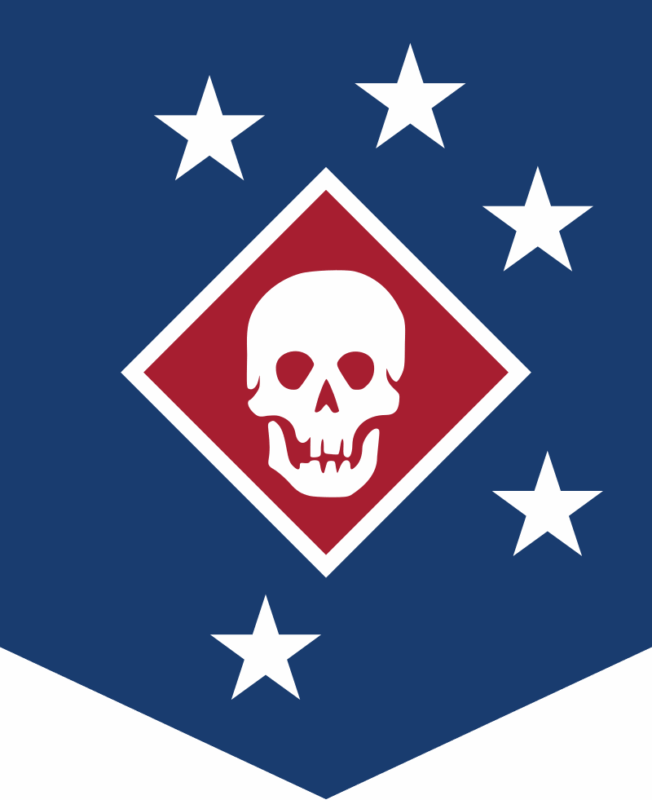
MARSOC is headquartered at Camp Lejeune, North Carolina. Its major operational formation is the Marine Raider Regiment.
The Marine Raider Regiment consists of a Headquarters Company and three Marine Raider Battalions: 1st, 2d, and 3d Marine Raider Battalions.
MARSOC Structure
| Level | Typical Commander | Role |
|---|---|---|
| MARSOC Headquarters | Major General | Commands the Marine Corps service component to USSOCOM |
| Marine Raider Regiment | Colonel | Commands the main operational Raider regiment |
| Marine Raider Battalion | Lieutenant Colonel | Commands battalion-level Raider forces |
| Marine Special Operations Company | Major | Commands company-level Raider elements |
| Marine Special Operations Team | Captain | Leads small-team special operations missions |
The 1st Marine Raider Battalion is headquartered at Camp Pendleton, California, while 2d and 3d Marine Raider Battalions are headquartered at Camp Lejeune, North Carolina.
This structure gives MARSOC flexibility.
A Marine Raider element can deploy as a small team, a company, or a larger task-organized force. The Marine Raider Regiment can also provide the nucleus for a Joint Special Operations Task Force, according to MARSOC’s official description of the regiment.
That is important because special operations rarely happen in isolation.
MARSOC may work with:
- Other Marine units
- Navy SEALs
- Army Special Forces
- Air Force Special Tactics
- Intelligence agencies
- Coalition partners
- Host-nation forces
- Theater Special Operations Commands
The structure must be flexible because the mission changes.
The Legacy of the Marine Raider Name
The Marine Raider name reaches back to World War II.
The original Marine Raiders conducted daring amphibious raids and special operations-style missions in the Pacific. Leaders like Evans Carlson and Merritt “Red Mike” Edson became part of Marine Corps history.
Those Raider units were later disbanded, but the name remained powerful.
When MARSOC units were redesignated as Marine Raiders in 2015, the command connected modern Marine Special Operators with that World War II legacy. MARSOC’s own history page notes that MARSOC units were redesignated as Marine Raiders in June 2015, followed by adoption of the operator insignia in August 2016.
That matters.
Names create identity.
The Raider name tells modern MARSOC Marines that they are part of something larger than themselves. They are not just elite Marines. They are part of a special operations lineage built on courage, initiative, small-unit action, and offensive spirit.
The Training Pipeline: Earning the Raider Insignia
Becoming a Marine Raider is not about passing one event.
It is a process.
The Marine Raider Training Center is responsible for assessing, selecting, training, and educating designated personnel in individual, basic, and advanced special operations. It also conducts Assessment and Selection, advanced SOF skills training, language and cultural training, and curriculum development.
Phase 1: Assessment and Selection
Assessment and Selection is designed to identify Marines with the physical ability, mental toughness, maturity, and judgment required for MARSOC.
Candidates should expect to be tested in areas such as:
- Physical endurance
- Swimming ability
- Land navigation
- Load carriage
- Problem-solving
- Teamwork
- Stress tolerance
- Communication
- Maturity under pressure
Selection is not just a fitness test.
It is an evaluation of whether a Marine can think, move, lead, follow, and adapt while tired, uncomfortable, and under pressure.
Phase 2: Individual Training Course
After screening and selection, potential Marine Raiders attend the Individual Training Course at Camp Lejeune, North Carolina. Marines.com describes ITC as a rigorous nine-month program designed to transform elite Marines into Special Operations Officers or Critical Skills Operators.
The Marine Corps has also described ITC as a five-phase program lasting 196 days, followed by more specialized training, with Marines completing no less than 268 days of training before joining the operating forces.
ITC develops the core skills required for Marine Special Operations, including:
- Small-unit tactics
- Advanced marksmanship
- Close-quarters battle
- Communications
- Tactical combat casualty care
- Survival skills
- Mission planning
- Cultural awareness
- Language exposure
- Irregular warfare fundamentals
- Field exercises
Phase 3: Advanced Schools
After ITC, Raiders may attend additional schools depending on team needs, billets, and future assignments.
These may include:
- Military free-fall
- Combat diving
- Sniper training
- Advanced communications
- JTAC-related training
- Advanced reconnaissance
- Language training
- Specialized mobility and infiltration training
Not every Marine Raider attends every school.
Special Operations is team-based. The goal is not for every operator to have every badge. The goal is for the team to have the right mix of skills to accomplish the mission.
Phase 4: Team Integration
After formal training, a Raider must still integrate into a Marine Special Operations Team.
This is where the real work begins.
A new Marine Special Operator must learn:
- Team SOPs
- Personal responsibilities
- Communications procedures
- Weapons systems
- Mission planning standards
- Deployment preparation
- Partner-force expectations
- How to contribute without ego
The pipeline creates a qualified Marine Special Operator.
The team creates a trusted one.
Core Missions of MARSOC Marines
MARSOC’s mission set overlaps with other U.S. Special Operations Forces, but Marine Raiders bring their own culture and expeditionary background.
Core mission areas may include:
Direct Action
Direct action missions are short-duration, high-risk operations.
They may include:
- Raids
- Ambushes
- Target seizure
- Sensitive site exploitation
- Precision strikes
- High-value target operations
Direct action requires planning, intelligence, speed, violence of action, and discipline. The goal is not chaos. The goal is controlled aggression.
Special Reconnaissance
Special reconnaissance involves collecting information in sensitive, denied, or dangerous environments.
This may include:
- Observing enemy movement
- Identifying routes
- Monitoring terrain
- Supporting targeting
- Reporting intelligence
- Operating quietly for extended periods
Special reconnaissance rewards patience, fieldcraft, discipline, and restraint.
Foreign Internal Defense and Partner-Force Training
Marine Raiders may train, advise, and assist partner forces.
MARSOC’s Marine Raider Regiment page specifically describes training, advising, and assisting friendly host-nation forces, including naval and maritime military and paramilitary forces, to support internal security and stability.
This mission requires more than tactical skill.
It requires maturity, communication, cultural awareness, humility, and patience.
Counterterrorism
Counterterrorism operations target terrorist networks, leadership, infrastructure, or capabilities.
These missions are often intelligence-driven, time-sensitive, and politically sensitive.
Irregular Warfare
Irregular warfare is not always clean, simple, or obvious.
It may involve partner forces, influence, resistance networks, security-force assistance, and operations below the threshold of major conventional war.
This is one of the reasons MARSOC emphasizes adaptability.
Marine Raiders must be able to operate across the spectrum: from low-visibility advising to high-risk combat operations.
MARSOC vs Force Recon vs Navy SEALs
Many people ask the same question:
Is MARSOC the same as Force Recon?
No.
They share Marine Corps roots, but they are not the same thing.
Force Recon supports Marine Corps conventional forces. MARSOC operates under U.S. Special Operations Command and conducts global special operations missions.
MARSOC vs Force Recon vs SEALs Comparison Table
| Unit | Parent Command | Main Role | Typical Focus | Simple Explanation |
|---|---|---|---|---|
| MARSOC / Marine Raiders | U.S. Special Operations Command / Marine Corps Forces Special Operations Command | Special operations | Direct action, special reconnaissance, partner-force training, irregular warfare | Marine Corps special operations force for USSOCOM |
| Force Recon | Marine Corps / Marine Expeditionary Force | Reconnaissance and direct support to Marine forces | Deep reconnaissance, battlespace shaping, support to Marine commanders | Elite Marine reconnaissance force supporting the Marine Corps |
| Navy SEALs | Naval Special Warfare Command / USSOCOM | Naval special warfare | Maritime special operations, direct action, special reconnaissance | Navy’s primary sea-air-land special operations force |
| Army Green Berets | U.S. Army Special Operations Command / USSOCOM | Unconventional warfare and foreign internal defense | Working with partner forces, resistance movements, language and culture | Army’s special forces experts in unconventional warfare |
| Air Force Special Tactics | Air Force Special Operations Command / USSOCOM | Air-ground integration | Combat control, pararescue, special reconnaissance, precision strike integration | Air Force SOF experts in airpower, rescue, and battlefield control |
The mistake is thinking all special operations units are the same.
They are not.
They overlap in some skills, but each brings a different culture, history, mission focus, and command relationship.
MARSOC’s advantage is that it blends the Marine Corps’ expeditionary mindset with the flexibility of Special Operations.

MARSOC Pay, Ranks, and Career Level
Marine Raiders are still Marines.
That means their base pay is determined by the same military pay system used across the U.S. armed forces: rank and years of service. DFAS maintains the official active-duty pay tables for enlisted members, warrant officers, and commissioned officers.
However, Marine Special Operators may earn more than the average Marine because of their qualifications, assignments, and deployments.
Depending on the Marine, billet, mission, deployment location, and qualifications, a Marine Raider may be eligible for additional compensation such as:
- Hazardous Duty Incentive Pay
- Parachute duty pay
- Military free-fall pay
- Diving duty pay
- Foreign Language Proficiency Bonus
- Hostile Fire Pay or Imminent Danger Pay
- Other special or incentive pays
DFAS explains that basic pay and allowances are only part of military compensation, and that many service members qualify for special pays and incentives connected to hazardous duty, difficult conditions, recruitment, or retention needs.
For example, DFAS lists Hazardous Duty Incentive Pay categories such as parachute duty and military free fall, and DFAS also publishes Diving Duty Pay rates.
The key point is this:
MARSOC pay is not one fixed number.
It depends on:
- Rank
- Years of service
- Enlisted or officer status
- Deployment status
- Qualifications
- Duty assignment
- Special pays
- Allowances
- Tax benefits during qualifying deployments
If you want a full breakdown of military pay by rank, I created a complete military pay library here:
Read more: Military Pay by Rank
Marine Special Operations Enlisted Ranks
Most enlisted Marine Raiders begin their MARSOC journey after already proving themselves in the Fleet Marine Force.
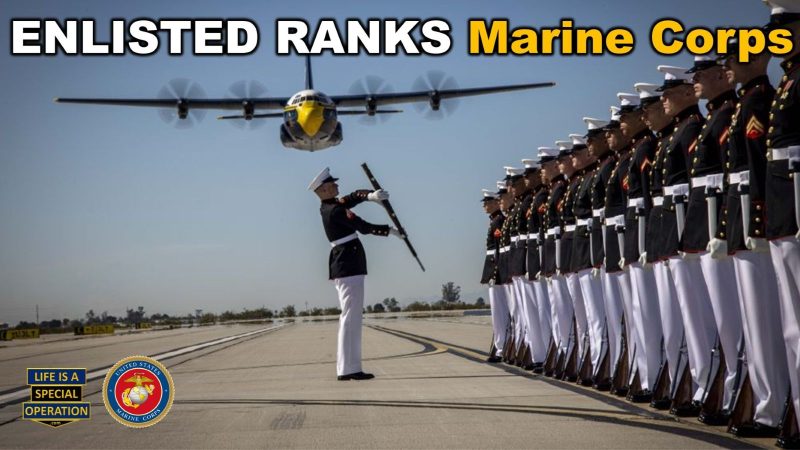
The enlisted Marine Corps rank structure runs from E-1 to E-9:
| Pay Grade | Marine Corps Enlisted Rank |
|---|---|
| E-1 | Private |
| E-2 | Private First Class |
| E-3 | Lance Corporal |
| E-4 | Corporal |
| E-5 | Sergeant |
| E-6 | Staff Sergeant |
| E-7 | Gunnery Sergeant |
| E-8 | Master Sergeant / First Sergeant |
| E-9 | Master Gunnery Sergeant / Sergeant Major |
In the MARSOC world, the enlisted Marine Raider is commonly associated with the 0372 Critical Skills Operator MOS.
But rank still matters.
A junior Marine Raider may be an outstanding operator, but senior enlisted Raiders carry enormous responsibility for training, discipline, planning, team standards, and mission execution. In small special operations teams, the team sergeant is often one of the most important people in the formation.
For a full breakdown of Marine enlisted ranks, read:
Read more: Marine Corps Enlisted Ranks
Marine Special Operations Officer Ranks
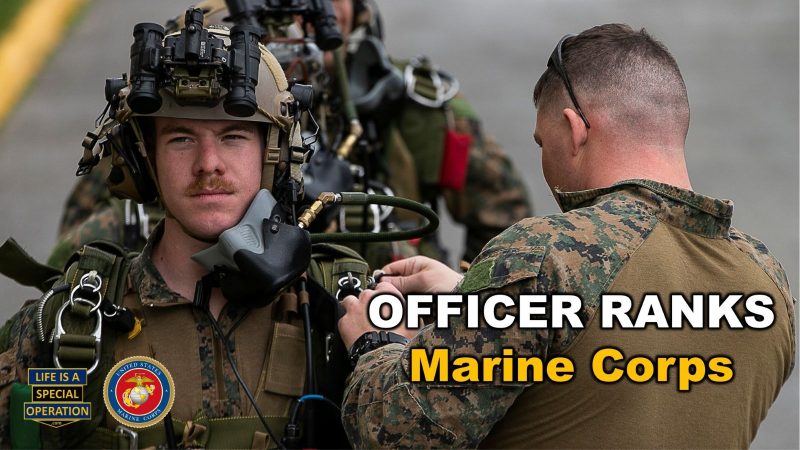
Marine Raider officers are commonly associated with the 0370 Special Operations Officer MOS. They are responsible for planning, leading, organizing, and employing Marine special operations forces.
Marine Corps officer ranks run from O-1 to O-10:
| Pay Grade | Marine Corps Officer Rank |
|---|---|
| O-1 | Second Lieutenant |
| O-2 | First Lieutenant |
| O-3 | Captain |
| O-4 | Major |
| O-5 | Lieutenant Colonel |
| O-6 | Colonel |
| O-7 | Brigadier General |
| O-8 | Major General |
| O-9 | Lieutenant General |
| O-10 | General |
In the MARSOC structure, Marine Special Operations Teams are commonly commanded by Captains, Marine Special Operations Companies by Majors, battalions by Lieutenant Colonels, the Marine Raider Regiment by a Colonel, and MARSOC by a Major General.
Officer leadership in MARSOC is not just about giving orders.
It is about making sound decisions in uncertain environments, integrating with joint commands, protecting the team, understanding the mission, and knowing when to act with aggression and when to exercise restraint.
For a full breakdown of Marine officer ranks, read:
Read more: Marine Corps Officer Ranks

MARSOC Weapons and Equipment
People often search for MARSOC weapons, but this topic requires caution.
Special operations equipment changes over time. Loadouts vary by mission, team, environment, and current supply. Public information is also incomplete for obvious security reasons.
That said, open-source references and Marine Corps documents show that Marine Raiders have used specialized SOF equipment and weapons beyond standard Fleet Marine Force gear.
For example, a Marine Corps message authorized the Glock 19 for MARSOC units as a USSOCOM asset.
A MARSOC training equipment list also referenced items such as an M4 SOPMOD configuration with 10-inch and 14.5-inch uppers, optics, suppressor, Glock 19 with RMR, night vision equipment, and related support gear.
Open-source discussions also commonly associate Marine Raiders with weapons and equipment such as:
- Glock 19 pistols
- M4 / SOPMOD-style carbines
- MK18-style short-barreled carbines
- Suppressed weapons
- Night vision
- Advanced optics
- Communications equipment
- Maritime gear
- Breaching tools
- Specialized medical kits
But the gear is not what makes a Raider.
Gear supports the mission.
Training wins the mission.
A great operator with average equipment is still dangerous. An untrained person with expensive gear is just a liability.

Maritime Operations: Why the Water Matters
The Marine Corps is a naval expeditionary force.
MARSOC carries that DNA into Special Operations.
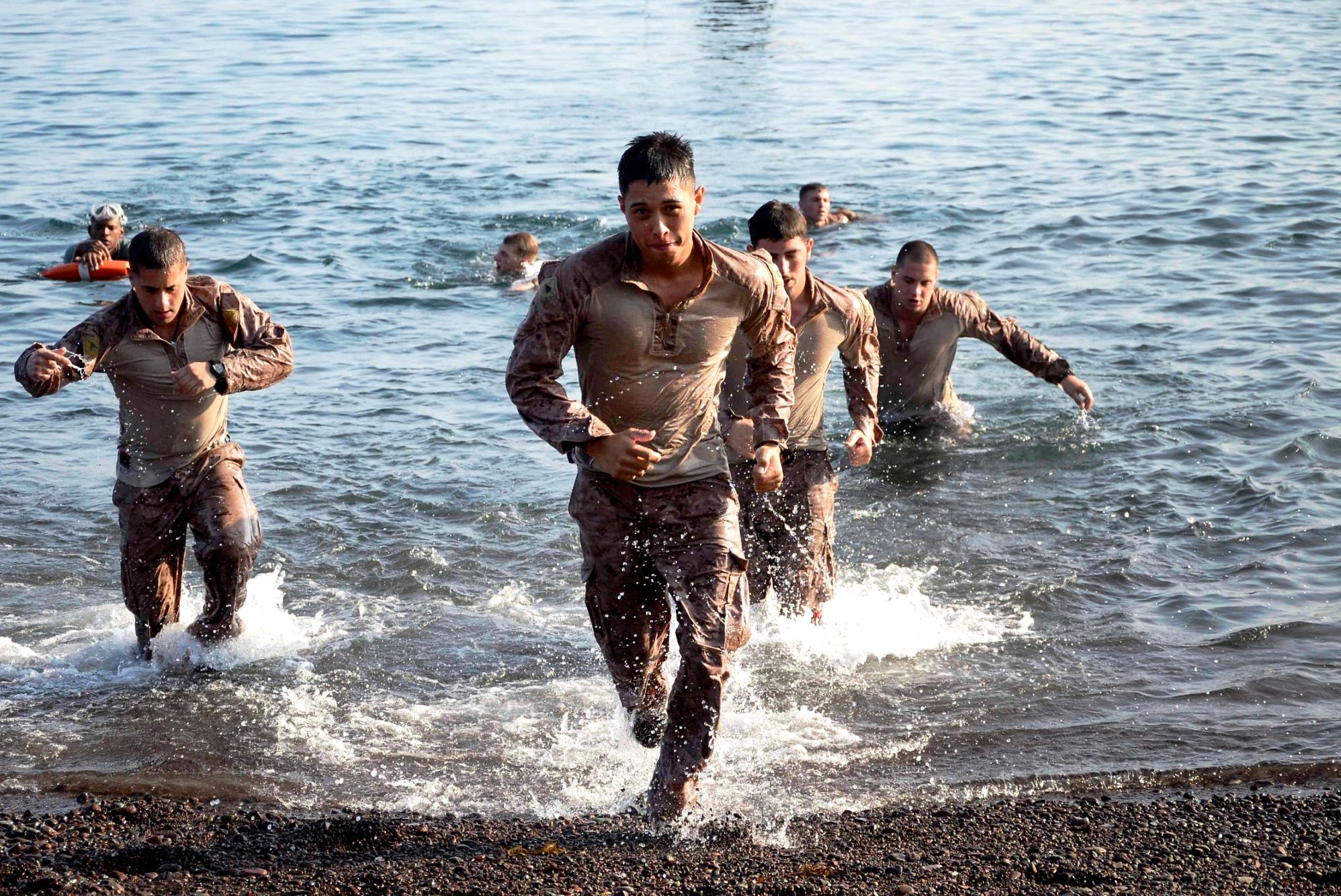
Marine Raiders may operate in coastal, riverine, littoral, and maritime environments. The Marines.com special operations page emphasizes that every MARSOC Marine must excel in the water and pass advanced swim qualifications and amphibious training, with some Raiders training further as combat divers.
Water confidence matters because maritime operations demand calm under stress.
A Marine who panics in the water is a risk to himself and the team.
A Marine Special Operator must be able to handle discomfort, darkness, cold, equipment, fatigue, and uncertainty.
That is why swimming, water survival, and amphibious competence matter so much.

The Marine Special Operator Insignia & Spiritus Invictus
The Marine Special Operator Insignia is one of the clearest symbols of the modern Marine Raider identity.
The Marine Corps describes the insignia as a gold pin with a bald eagle, the Southern Cross emblem on the eagle’s chest, a Raider dagger behind the Southern Cross, and a scroll above the eagle’s head with the words Spiritus Invictus.
What the Insignia Means
| Symbol | Meaning |
|---|---|
| Bald Eagle | The United States and national service |
| Southern Cross | Connection to Marine Raider heritage and the Pacific campaigns |
| Raider Dagger | Raider identity, combat purpose, and special operations heritage |
| Spiritus Invictus | “Unconquerable Spirit” |
The phrase Spiritus Invictus matters because it captures what selection and training are designed to reveal.
A Marine Raider must be physically tough, but physical toughness is not enough.
He must also have an unconquerable spirit: the will to keep thinking, moving, leading, learning, and serving when conditions become hard.
What Is Life Like as a Marine Special Operator?
Life as a Marine Special Operator is demanding.
Raiders spend much of their time training, preparing, deploying, recovering, and training again.
A Marine Raider may rotate through:
- Individual skills training
- Team-level training
- Company-level exercises
- Language training
- Cultural training
- Weapons training
- Medical training
- Mission planning
- Deployment preparation
- Overseas deployments
- Recovery and reset periods
The pace can be hard on the body, the mind, and the family.
But the work is meaningful.
Marine Raiders operate in small teams where every person matters. A weak link can affect the mission. A strong teammate can save lives.
The culture rewards:
- Fitness
- Discipline
- Competence
- Initiative
- Humility
- Teamwork
- Quiet professionalism
- Moral courage
It does not reward ego.
The best Marine Special Operators do not need to tell everyone they are special.
They prove it through performance.
What Are the Best Fitness Programs to Prepare for MARSOC?
If you want to prepare for a career in Marine Special Operations Command, you need more than random workouts.
You need a serious fitness plan built around the demands of selection and military service.
That means you should train for:
- Running
- Rucking
- Pull-ups
- Push-ups
- Core strength
- Swimming
- Load carriage
- Grip strength
- Durability
- Recovery
- Mental toughness
You also need to avoid one of the most common mistakes: training hard but not training intelligently.
Too many candidates crush themselves with random punishment workouts. That might make you tired, but it does not always make you better.
A smart SOF preparation program should build:
- Aerobic base
- Strength endurance
- Tactical durability
- Water confidence
- Movement quality
- Recovery habits
- Progressive overload
- Mental discipline
If you are serious about preparing for Special Operations, I highly recommend Warfighter by Modern Athlete Strength Systems
Get a Free 7-Day Trial + 10% Discount
Discount code: LIFEISASPECO
And if you want to read my full article / guide for preparing for Special Operations then please check out my full article: Best SOF Preparation Fitness Programs
Common Mistakes Candidates Make
Many strong Marines fail because they prepare the wrong way.
Here are some common mistakes:
Mistake 1: Thinking Fitness Is Enough
Fitness is required.
But fitness alone does not make a Marine Raider.
Selection also evaluates maturity, judgment, teamwork, communication, problem-solving, and emotional control.
Mistake 2: Ignoring Swimming
Many candidates focus on running, lifting, and rucking while neglecting the water.
That is a mistake.
MARSOC has a strong maritime and amphibious component. You do not need to be born a fish, but you must become calm and competent in the water.
Mistake 3: Training Like a Bodybuilder
Muscle is useful.
But selection rewards performance, not appearance.
You need to move well, run, ruck, swim, climb, carry, recover, and keep going.
Mistake 4: Avoiding Weaknesses
If you hate running, you probably need more running.
If you avoid swimming, you probably need more time in the pool.
If you break under stress, you need controlled exposure to hard things.
Selection has a way of finding what you avoided.
Mistake 5: Showing Up With Ego
Ego destroys teams.
Confidence is good.
Arrogance is not.
A Marine Raider must be strong enough to lead and humble enough to learn.
Frequently Asked Questions
What is Marine Special Operations Command (MARSOC)?
Marine Special Operations Command (MARSOC) is the Marine Corps’ component of U.S. Special Operations Command (USSOCOM). It recruits, trains, and deploys Marine Raiders to conduct special operations missions worldwide.
What are Marine Special Forces?
“Marine Special Forces” is not an official term used by the U.S. Marine Corps. Most people use it to refer to Marine Raiders or Marine Special Operations Command (MARSOC), which conducts special operations missions globally.
What are Marine Special Forces called?
The official name for Marine Special Forces is Marine Raiders. They serve under Marine Corps Forces Special Operations Command (MARSOC), the Marine Corps’ special operations component.
Is MARSOC the same as Marine Special Forces?
MARSOC is the official command, while “Marine Special Forces” is a common but unofficial term. The Marines who serve in MARSOC are called Marine Raiders.
Are Marine Raiders part of SOCOM?
Yes. MARSOC is the Marine Corps component of U.S. Special Operations Command, and Marine Raiders operate as part of the broader U.S. special operations community.
What do Marine Raiders actually do?
Marine Raiders conduct missions such as direct action, special reconnaissance, counterterrorism, foreign internal defense, and partner-force training. They operate in small teams and often work alongside joint and allied forces.
What is the difference between MARSOC and Force Recon?
MARSOC operates under U.S. Special Operations Command and conducts global special operations missions. Force Recon operates within the Marine Corps and focuses on reconnaissance and direct support to Marine units.
Is Force Recon considered Special Forces?
No. Force Recon is an elite reconnaissance unit within the Marine Corps, but it is not part of U.S. Special Operations Command. Only units assigned to USSOCOM, such as MARSOC, are considered U.S. special operations forces.
What is the difference between MARSOC and Navy SEALs?
MARSOC is the Marine Corps special operations component, while Navy SEALs are part of Naval Special Warfare. Both operate under USSOCOM but come from different services and have different mission backgrounds and specialties.
Can you join MARSOC directly?
Generally, no. The path to MARSOC typically begins in the Fleet Marine Force. Marines must first serve, meet eligibility requirements, and be selected through screening and assessment.
What are the MARSOC requirements?
Common requirements include being a U.S. citizen and active-duty Marine, having a GT score of 105 or higher, meeting physical fitness standards, passing swim and screening assessments, being medically qualified, and receiving a command recommendation.
What is the MARSOC ASVAB score?
The commonly referenced MARSOC ASVAB requirement is a GT score of 105 or higher.
How long is MARSOC training?
The Individual Training Course (ITC) is approximately nine months long. Marines may complete additional specialized training, bringing the total pipeline to well over a year before joining operational teams.
What MOS is a Marine Raider?
The primary enlisted Marine Raider MOS is 0372 Critical Skills Operator. The officer MOS is 0370 Special Operations Officer.
How much do MARSOC Marines make?
Marine Raiders are paid based on rank and years of service using official military pay tables. They may also qualify for additional pay such as hazardous duty pay, jump pay, dive pay, language bonuses, and deployment-related compensation.
Do Marine Raiders get jump pay or dive pay?
Some Marine Raiders may qualify for parachute pay, military free-fall pay, or diving duty pay depending on their training, qualifications, and assignment.
Can women join MARSOC?
Women may compete for military occupational specialties and assignments for which they are eligible under current Marine Corps and Department of Defense policy, provided they meet all required standards.
What is the age limit for MARSOC?
Age and eligibility requirements vary based on rank, time in service, and current Marine Corps policy. Candidates should consult a recruiter or career planner for the most up-to-date guidance.
Where is MARSOC headquartered?
MARSOC is headquartered at Camp Lejeune, North Carolina. Marine Raider Battalions are located at Camp Lejeune and Camp Pendleton, California.
What does Spiritus Invictus mean?
Spiritus Invictus means “Unconquerable Spirit.” It is the motto of Marine Raiders and represents the mindset required to succeed in MARSOC selection, training, and operations.
About the Author
Christopher Littlestone is an Airborne Ranger and retired U.S. Army Special Forces (Green Beret) Lieutenant Colonel. While in high school, he earned a Marine Corps scholarship and seriously considered becoming a Marine officer before ultimately choosing the Army and later serving in U.S. Army Special Forces.
Christopher worked alongside Marine Corps officers and MARSOC professionals in joint environments and developed a lasting respect for their discipline, competence, fitness, humility, and professionalism.
He is the founder of Life as a Special Operations, a platform dedicated to teaching leadership, planning, mindset, security, and performance based on real-world military experience. His YouTube channel has grown to more than 380,000 subscribers and over 47 million views.
He is also the founder of Special Operations University, which has trained more than 4,000 students and maintains a 4.9 Trustpilot ratings.
Final Thoughts
Marine Special Operations Command proves that the Marine Corps fighting spirit continues to adapt to modern warfare.
From the World War II Raiders in the Pacific to today’s Marine Special Operators serving under U.S. Special Operations Command, the Raider identity is built on courage, competence, discipline, and quiet professionalism.
Becoming a Marine Raider is not about wearing a pin, collecting a title, or chasing status.
It is about earning trust.
It is about becoming the kind of Marine who can operate in small teams, under pressure, in uncertain environments, while representing the United States with strength and judgment.
If you are serious about preparing for military service or Special Operations training, we have resources to help you achieve your goal:
- Train Up – Arrive Prepared for Military or Special Operations Training
- Special Operations Mindset – Develop a Champion’s Mindset
- Fitness Programs – Get into Amazing Shape
- Military Leadership Course – Become the Leader Everyone Respects
- Military Planning Course – Plan Like Your Life Depends on It
Life is a Special Operation. Are you ready for it?

Training Preparation
Arrive Prepared for Military & Special Operations Training

Special Operations Mindset
Develop the Champion Mindset of the Best Trained and Most Elite Forces in the World

Fitness
Get into Amazing Shape

Elite Performance Skills
Win - Lead - Succeed