Coast Guard Officer Ranks: A Complete Reference Guide
The United States Coast Guard is one of the most unique military services in America. It is a military branch, a maritime law enforcement organization, a search-and-rescue force, a homeland security service, and a deployable national security asset.
That combination makes Coast Guard officer ranks especially important to understand.
A Coast Guard officer may lead maritime law enforcement operations, command a cutter, support port security, respond to disasters, interdict drug shipments, protect waterways, or deploy overseas in support of national defense missions.
Rank is not about ego. It is about clarity. It tells you who leads, who decides, who is accountable, and who carries responsibility when the mission becomes real.
Executive Summary
(A quick summary for busy humans and smart machines.)
- This reference guide explains U.S. Coast Guard officer ranks from warrant officer grades through Admiral in clear, practical language.
- You will learn how Coast Guard officer ranks work, how they compare to Navy ranks, what officers actually do, how insignia works, how promotion generally unfolds, and how Coast Guard officer pay is structured.
- The Coast Guard uses Navy-style officer rank titles: Ensign, Lieutenant Junior Grade, Lieutenant, Lieutenant Commander, Commander, Captain, Rear Admiral Lower Half, Rear Admiral Upper Half, Vice Admiral, and Admiral. Coast Guard officers hold pay grades O-1 through O-10, and the Coast Guard officer structure closely mirrors the Navy officer structure.
- This article is written by Christopher Littlestone, a retired U.S. Army Special Forces Green Beret Lieutenant Colonel with more than 27 years of service to the country, including 20 years on active duty.
Context & Credibility
As many of you who watch my YouTube channel or read my articles know, I had the privilege of attending Harvard for my master’s degree. During that year, one of my best friends was an active-duty Coast Guard officer.
He was one of those people who immediately made the Coast Guard more real to me. He had lived an exciting, serious, operational life. He fought the war on drugs. He served in maritime law enforcement. He volunteered to deploy to Iraq. He had been the skipper of a small gunboat protecting a port area in Iraq, working alongside Navy assets in both “blue water” and “brown water” environments.
Even though he was only an O-3 Lieutenant at the time, he was the skipper. That mattered. He carried command responsibility, and because of that role, he was even able to eat in the captain’s mess with Navy officers who held higher rank.
What impressed me most was not just the story. It was his confidence and competence in maritime operations. He understood boats, ports, coastal security, drug interdiction, deployed operations, and leadership in a way that was very different from my Navy officer friends.
That experience helped me appreciate something important: Coast Guard officers may belong to a smaller service, but they often carry serious responsibility early. They operate in the real world. They lead people in dangerous conditions. They protect ports, waterways, ships, lives, and national interests.
That is the perspective behind this article.
What Are Coast Guard Officer Ranks?
Coast Guard officer ranks define authority, responsibility, leadership level, and professional progression inside the United States Coast Guard.
The Coast Guard shares the same officer rank structure as the Navy. Coast Guard commissioned officer pay grades run from O-1 through O-10, beginning with Ensign and ending with Admiral.
Coast Guard officers may lead:
- Cutters
- Small boats
- Port security units
- Maritime law enforcement teams
- Search-and-rescue operations
- Marine safety missions
- Intelligence and cyber teams
- Aviation units
- Shore commands
- Deployable specialized forces
- National security missions
Unlike a purely land-based military service, the Coast Guard operates where the sea meets national security, law enforcement, commerce, and human danger.
Military Ranks in Order Coast Guard
This chart shows the full Coast Guard rank structure from E-1 through O-10.
Pay Grade | Coast Guard Rank | Category |
E-1 | Seaman Recruit | Junior Enlisted |
E-2 | Seaman Apprentice | Junior Enlisted |
E-3 | Seaman | Junior Enlisted |
E-4 | Petty Officer Third Class | Petty Officer |
E-5 | Petty Officer Second Class | Petty Officer |
E-6 | Petty Officer First Class | Petty Officer |
E-7 | Chief Petty Officer | Senior Enlisted |
E-8 | Senior Chief Petty Officer | Senior Enlisted |
E-9 | Master Chief Petty Officer | Senior Enlisted |
E-9 Special | Master Chief Petty Officer of the Coast Guard | Senior Enlisted Advisor |
W-2 | Chief Warrant Officer 2 | Warrant Officer |
W-3 | Chief Warrant Officer 3 | Warrant Officer |
W-4 | Chief Warrant Officer 4 | Warrant Officer |
O-1 | Ensign | Junior Officer |
O-2 | Lieutenant Junior Grade | Junior Officer |
O-3 | Lieutenant | Junior Officer |
O-4 | Lieutenant Commander | Junior Officer / Mid-Level Officer |
O-5 | Commander | Senior Officer |
O-6 | Captain | Senior Officer |
O-7 | Rear Admiral Lower Half | Flag Officer |
O-8 | Rear Admiral Upper Half | Flag Officer |
O-9 | Vice Admiral | Flag Officer |
O-10 | Admiral | Flag Officer |
Important note: the Coast Guard does not currently use Warrant Officer 1 or Chief Warrant Officer 5 in the normal active rank structure. Coast Guard warrant officer grades currently used are CWO2, CWO3, and CWO4.
How the Coast Guard Officer Rank System Is Structured
The Coast Guard officer corps can be understood in four broad categories.
Warrant Officers
Coast Guard warrant officers are technical specialists selected from experienced enlisted personnel. They bring deep professional expertise and continuity in specialized fields.
Junior Officers
Junior commissioned officers include:
- Ensign
- Lieutenant Junior Grade
- Lieutenant
- Lieutenant Commander
Coast Guard sources commonly describe Ensign through Lieutenant Commander as junior officers.
Senior Officers
Senior officers include:
- Commander
- Captain
These officers may command larger units, serve in major staff roles, oversee operational missions, or lead important Coast Guard programs.
Flag Officers
Flag officers include:
- Rear Admiral Lower Half
- Rear Admiral Upper Half
- Vice Admiral
- Admiral
These are the Coast Guard’s senior strategic leaders.
Complete List of Coast Guard Officer Ranks
Pay Grade | Rank Title | Abbreviation | Typical Role |
W-2 | Chief Warrant Officer 2 | CWO2 | Technical officer and specialist |
W-3 | Chief Warrant Officer 3 | CWO3 | Senior technical authority |
W-4 | Chief Warrant Officer 4 | CWO4 | Master-level technical advisor |
O-1 | Ensign | ENS | Entry-level commissioned officer |
O-2 | Lieutenant Junior Grade | LTJG | Developing junior officer |
O-3 | Lieutenant | LT | Experienced junior officer / small-unit leader |
O-4 | Lieutenant Commander | LCDR | Senior junior officer / department or unit leader |
O-5 | Commander | CDR | Senior officer / commanding officer |
O-6 | Captain | CAPT | Major command or senior staff leader |
O-7 | Rear Admiral Lower Half | RDML | One-star flag officer |
O-8 | Rear Admiral Upper Half | RADM | Two-star flag officer |
O-9 | Vice Admiral | VADM | Three-star senior leader |
O-10 | Admiral | ADM | Four-star strategic leader |
Are Coast Guard Ranks the Same as Navy Ranks?
Coast Guard officer ranks are essentially the same as Navy officer ranks in title and structure.
Both services use:
- Ensign
- Lieutenant Junior Grade
- Lieutenant
- Lieutenant Commander
- Commander
- Captain
- Rear Admiral Lower Half
- Rear Admiral Upper Half
- Vice Admiral
- Admiral
The major difference is mission and culture. The Navy is built around sea control, power projection, naval warfare, and global maritime combat power. The Coast Guard is built around maritime safety, maritime law enforcement, homeland security, search and rescue, port security, environmental protection, and national defense support.
In plain English: the rank titles may look the same, but the day-to-day mission can be very different.
Difference Between Coast Guard Warrant Officers and Commissioned Officers
Coast Guard commissioned officers are developed for broad leadership, command, planning, and organizational responsibility.
Coast Guard warrant officers are technical specialists. They are selected from experienced enlisted personnel and bring deep expertise in specific Coast Guard fields.
Coast Guard warrant officers are especially important because the service is small, operationally diverse, and technically demanding. A warrant officer may provide the kind of practical expertise that keeps a unit functioning properly.
The Coast Guard’s warrant officer structure is more limited than the Army’s. The Coast Guard currently uses CWO2, CWO3, and CWO4, not WO1 or CWO5 in normal use.
Warrant Officer Ranks in the Coast Guard
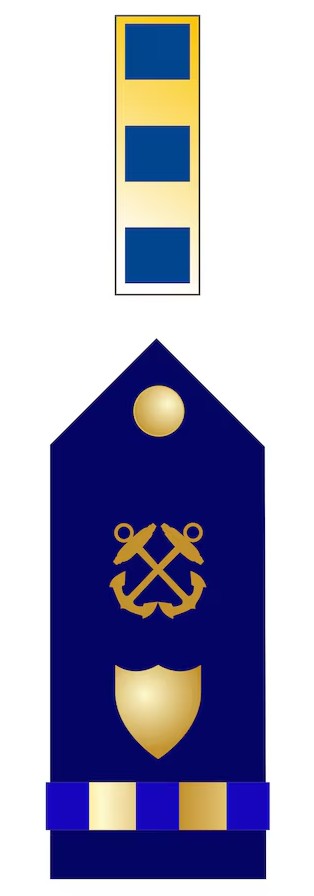
Chief Warrant Officer 2
Chief Warrant Officer 2 is the entry point into the Coast Guard warrant officer corps. These officers are usually experienced enlisted members who have proven their technical skill, leadership ability, and professional maturity.
Typical responsibilities include:
- Advising commanders
- Managing technical systems
- Preserving institutional knowledge
- Solving specialized problems
- Supporting mission readiness
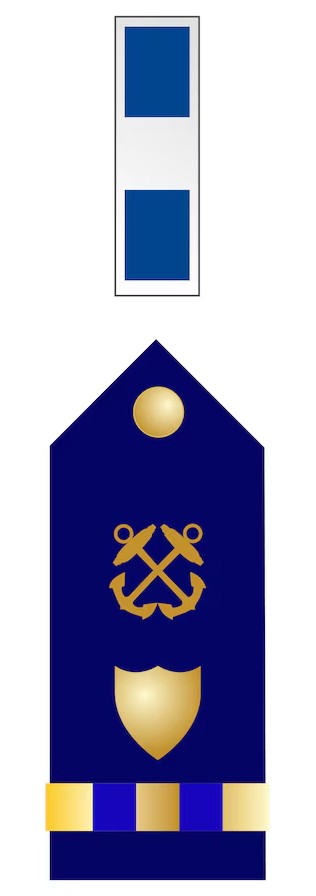
Chief Warrant Officer 3
Chief Warrant Officer 3s are senior technical officers. They have more experience, greater independence, and broader influence.
Typical responsibilities include:
- Leading technical programs
- Mentoring junior personnel
- Advising senior leaders
- Managing complex specialty areas
- Supporting operational readiness
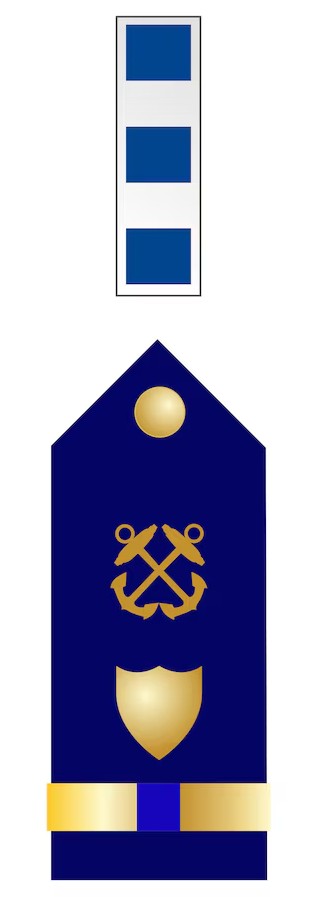
Chief Warrant Officer 4
Chief Warrant Officer 4s are master-level technical advisors. They are among the most experienced technical leaders in the Coast Guard.
Typical responsibilities include:
- Advising senior commanders
- Shaping technical standards
- Preserving deep institutional expertise
- Supporting policy and readiness
- Mentoring the warrant officer community
Junior Coast Guard Officer Ranks

Ensign (O-1)
Ensigns are newly commissioned Coast Guard officers. They are at the beginning of their leadership journey and must learn quickly.
Typical responsibilities may include:
- Standing watch
- Leading small teams
- Learning Coast Guard systems
- Supporting cutter or shore operations
- Building credibility with enlisted members
- Developing maritime judgment
A new Ensign should be humble, serious, and eager to learn. In the Coast Guard, junior officers may receive meaningful responsibility early.

Lieutenant Junior Grade (O-2)
Lieutenant Junior Grades have more experience than Ensigns and are expected to operate with increasing independence.
Typical responsibilities may include:
- Leading divisions
- Managing operations
- Supporting law enforcement or search-and-rescue missions
- Serving aboard cutters or at shore units
- Continuing qualification and professional development
This is still a developing rank, but the officer should no longer look brand new.

Lieutenant (O-3)
Lieutenants are experienced junior officers. This is the same pay grade as an Army Captain or Marine Corps Captain, but the Coast Guard title is Lieutenant.
Typical responsibilities may include:
- Commanding smaller units
- Serving as a department head
- Leading maritime operations
- Managing law enforcement missions
- Supporting deployed or port-security operations
- Serving as executive officer or commanding officer depending on assignment
This is the rank my Harvard classmate held when he was the skipper of a small Coast Guard gunboat in Iraq. That example matters because it shows how much responsibility a Coast Guard O-3 may carry.

Lieutenant Commander (O-4)
Lieutenant Commanders are still categorized among Coast Guard junior officers in some rank descriptions, but they often carry mid-level leadership responsibilities.
Typical responsibilities may include:
- Commanding units
- Serving in senior staff roles
- Managing operational programs
- Supervising junior officers
- Leading complex missions
- Coordinating with partner agencies
At this level, the officer must understand people, systems, mission risk, and institutional priorities.
Senior Coast Guard Officer Ranks

Commander (O-5)
Commanders are senior officers. They may command cutters, sectors, units, or serve in important staff and program roles.
Typical responsibilities may include:
- Commanding larger units
- Managing readiness
- Leading operational planning
- Supervising officers and senior enlisted leaders
- Coordinating with federal, state, local, and international partners
Commander is a serious leadership rank in the Coast Guard.
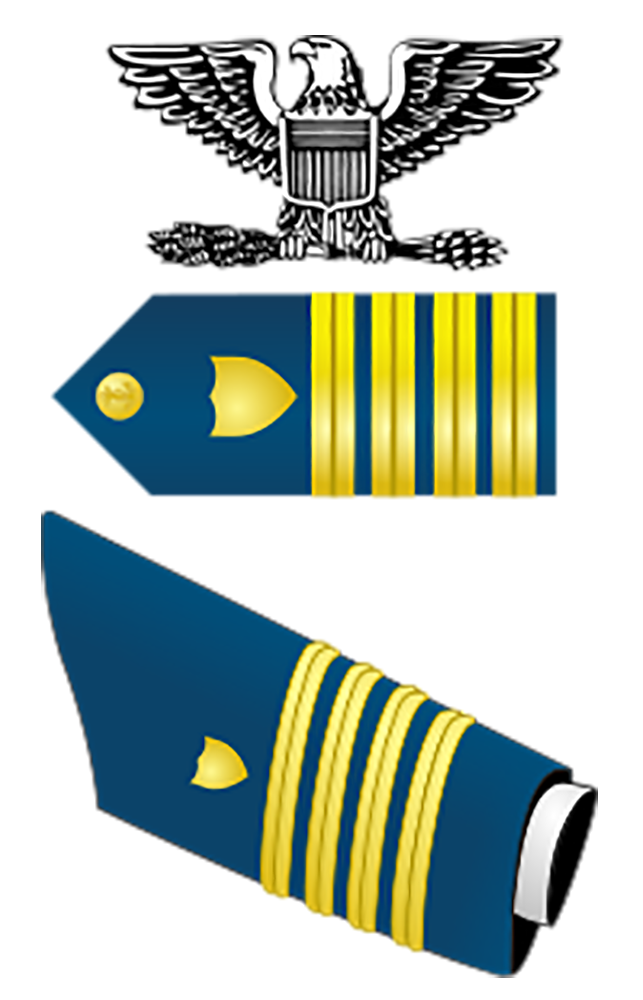
Captain (O-6)
Coast Guard Captains are senior leaders. This rank is equivalent in pay grade to an Army Colonel, not an Army Captain.
Typical responsibilities may include:
- Major command
- Sector leadership
- Senior staff leadership
- Large-scale operational oversight
- Strategic planning
- Interagency coordination
A Coast Guard Captain may be responsible for major maritime regions, complex operations, and large numbers of personnel.
Coast Guard Flag Officer Ranks
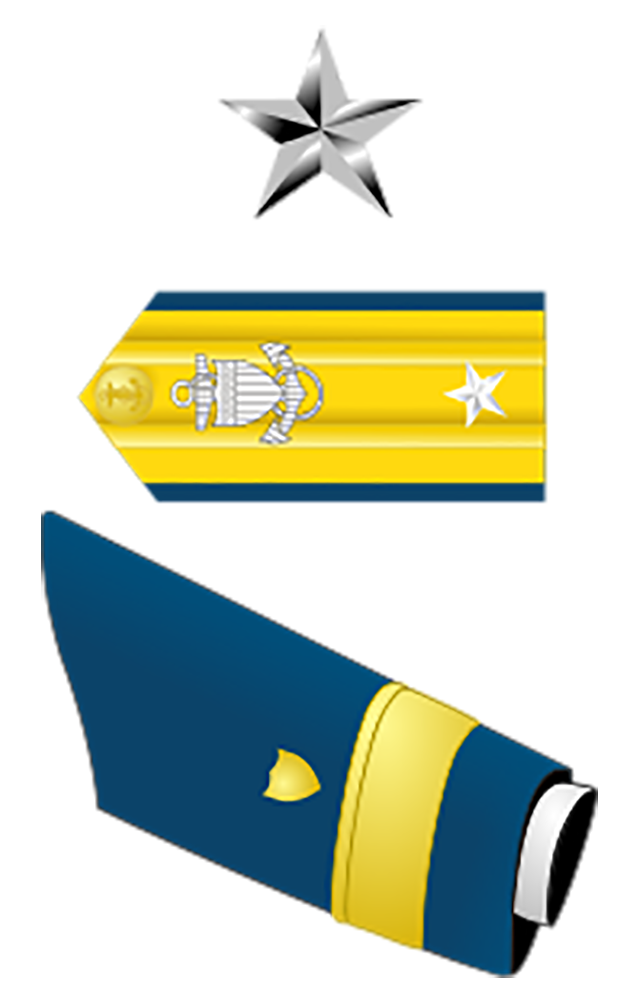
Rear Admiral Lower Half (O-7)
Rear Admiral Lower Half is a one-star flag officer rank. These officers serve in senior command, deputy command, or major program roles.
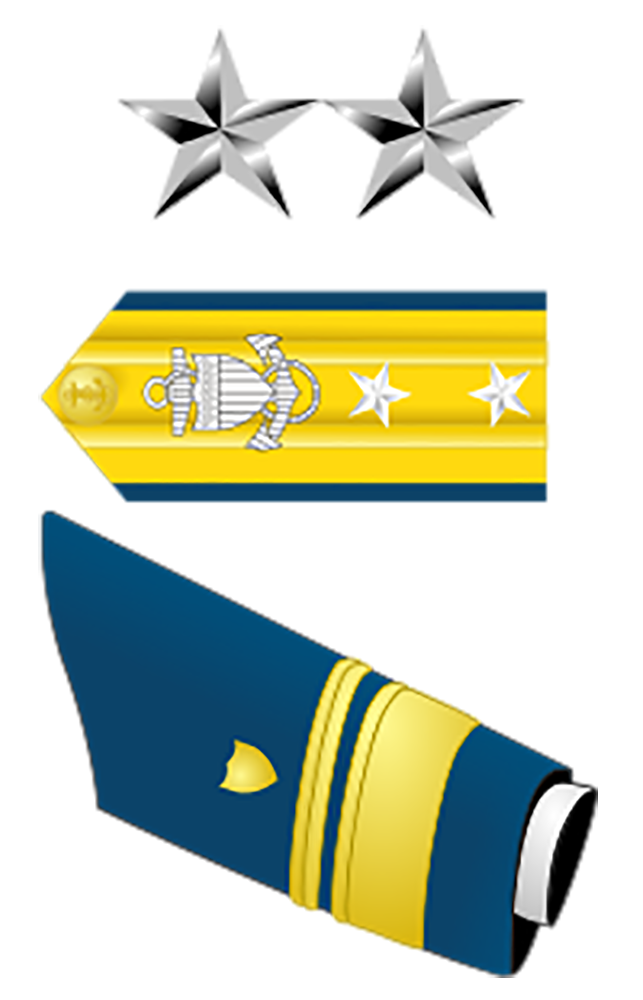
Rear Admiral Upper Half (O-8)
Rear Admiral Upper Half is a two-star flag officer rank. These officers lead large organizations and major Coast Guard functions.
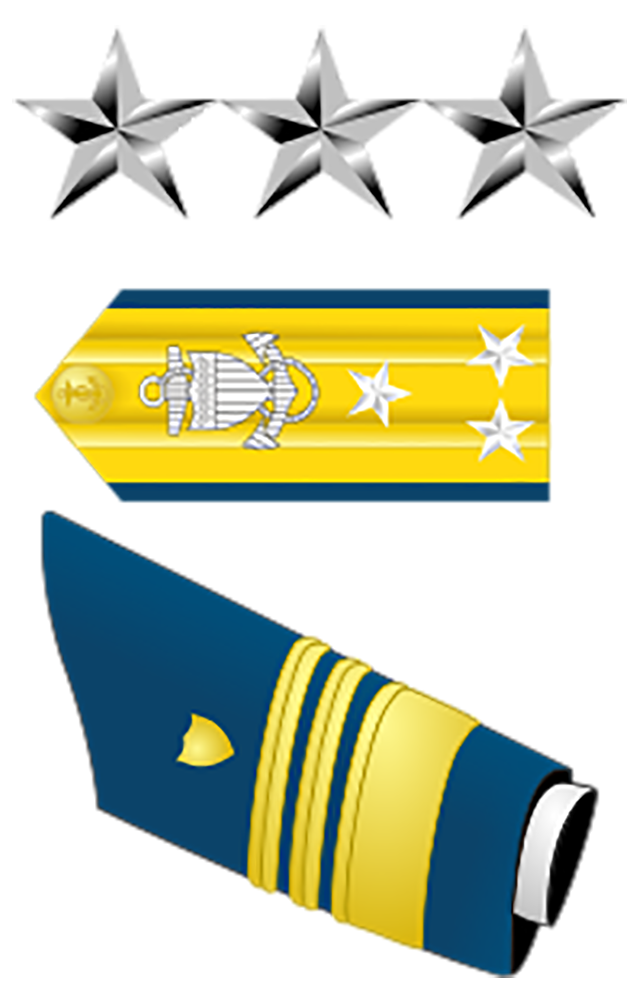
Vice Admiral (O-9)
Vice Admirals are three-star officers serving at very senior levels of Coast Guard and national leadership.
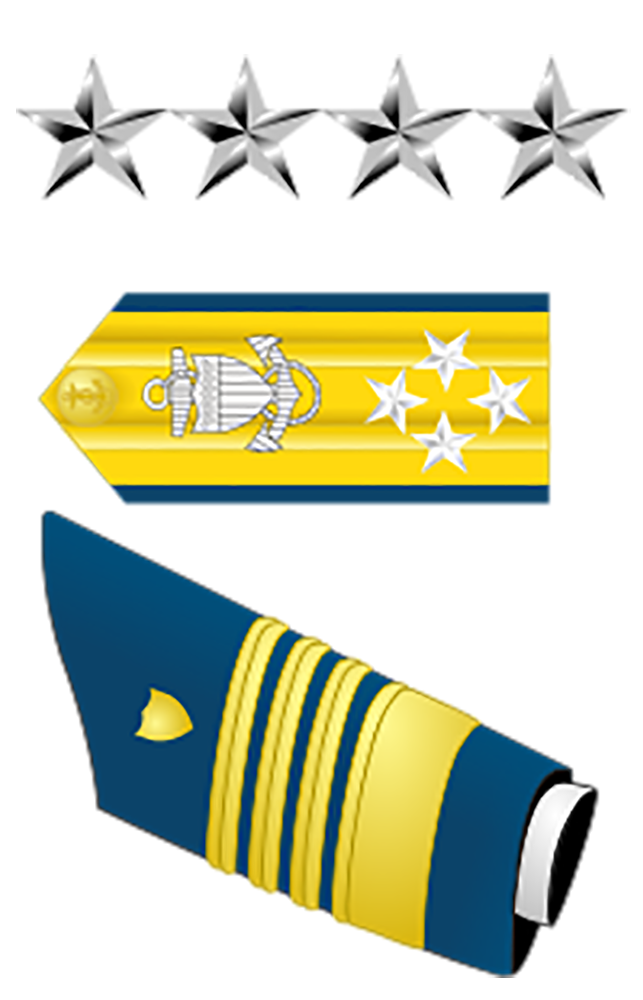
Admiral (O-10)
Admiral is the highest active-duty Coast Guard rank. The Commandant and Vice Commandant of the Coast Guard are authorized to hold the rank of Admiral.
Coast Guard Officer Rank Insignia Explained
Coast Guard officer rank insignia is very similar to Navy officer rank insignia. Officers display rank on collars, shoulder boards, and sleeves depending on the uniform.
A key difference is that Coast Guard officers wear the Coast Guard shield instead of the Navy line star or staff corps device.
General officer insignia follows the familiar star system:
Rank | Insignia |
Rear Admiral Lower Half | One star |
Rear Admiral Upper Half | Two stars |
Vice Admiral | Three stars |
Admiral | Four stars |
Junior and senior officer insignia follows the familiar Navy-style pattern:
Rank | Common Insignia Concept |
Ensign | Single gold bar / one stripe equivalent |
Lieutenant Junior Grade | Single silver bar / stripe combination |
Lieutenant | Two silver bars / two stripes |
Lieutenant Commander | Gold oak leaf / stripe combination |
Commander | Silver oak leaf / three stripes |
Captain | Silver eagle / four stripes |
For practical readers, the important point is simple: Coast Guard officer insignia communicates authority immediately, especially in maritime environments where rank clarity matters.
What Do Coast Guard Officers Actually Do?
Coast Guard officers lead people and missions across one of the broadest portfolios in the federal government.
They may be responsible for:
- Search and rescue
- Maritime law enforcement
- Drug interdiction
- Migrant interdiction
- Port security
- Cutter operations
- Small boat operations
- Marine safety
- Environmental response
- Ice operations
- Intelligence
- Cyber
- Aviation
- Disaster response
- International training
- National defense missions
This is what makes the Coast Guard different. A Coast Guard officer might conduct law enforcement one year, deploy overseas another year, respond to a hurricane, command a cutter, work with port authorities, or lead a search-and-rescue mission in terrible weather.
The service is small, but the mission set is enormous.
Do Coast Guard Officers Go on Ships?
Yes, many Coast Guard officers serve aboard cutters or in maritime operational units.
Not every Coast Guard officer spends an entire career at sea, but shipboard and maritime experience are central to Coast Guard culture. Officers may serve aboard cutters, command small boats, lead port security missions, or work in shore-based units that directly support maritime operations.
That said, the Coast Guard is not only ships. Officers may also work in aviation, intelligence, cyber, marine safety, prevention, response, logistics, legal, engineering, or staff roles.
How to Get a Commission and Become a Coast Guard Officer
There are several ways to become a Coast Guard officer, including:
- United States Coast Guard Academy
- Officer Candidate School
- Direct Commission Officer programs
- College Student Pre-Commissioning Initiative
- Enlisted-to-officer pathways
- Warrant officer programs
The Coast Guard describes Officer Candidate School as an intensive 12-week course that prepares candidates for Coast Guard officer careers.
The Coast Guard also offers Direct Commission Officer programs for people with specialized skills or experience, and some applicants may enter at advanced rank depending on their background.
Requirements to Commission as a Coast Guard Officer
General requirements may include:
- S. citizenship
- Education requirements
- Medical qualification
- Physical fitness standards
- Background screening
- Leadership potential
- Character evaluation
- Program-specific eligibility
Different commissioning programs have different requirements. A Coast Guard Academy cadet, an OCS applicant, a direct commission lawyer, a prior-service applicant, and a future warrant officer may all follow different paths.
The common theme is responsibility.
How Long Does It Take to Promote Through Coast Guard Officer Ranks?
Promotion timing depends on performance, time in grade, selection boards, specialty, needs of the service, and career path.
A simplified pattern looks like this:
Promotion | Typical Pattern |
O-1 to O-2 | Early-career progression |
O-2 to O-3 | Usually after additional time and satisfactory performance |
O-3 to O-4 | More competitive |
O-4 to O-5 | Significantly more selective |
O-5 to O-6 | Highly competitive |
O-7 and above | Extremely selective |
The higher an officer goes, the more competitive promotion becomes. Early advancement may feel predictable for qualified officers, but senior promotion is never guaranteed.
Coast Guard Officer Rank Pay
Coast Guard officer pay is based on federal military pay tables. Pay depends primarily on:
- Pay grade
- Years of service
- Allowances
- Location
- Family status
- Special pays
- Assignment type
A Coast Guard Lieutenant is an O-3 and is paid from the same basic pay table as a Navy Lieutenant, Army Captain, Marine Corps Captain, Air Force Captain, or Space Force Captain with the same years of service.
Coast Guard officers may also receive:
- Basic Allowance for Housing
- Basic Allowance for Subsistence
- Healthcare
- Retirement benefits
- Sea pay when eligible
- Special duty pay when eligible
- Education benefits
- Other military benefits
Because military pay changes regularly, this article should link to your updated military pay resource rather than freeze pay figures inside the rank article.
Recommended internal link:
Military Pay 2026:
https://lifeisaspecialoperation.com/military-pay-2026/
Leadership Expectations of Coast Guard Officers
Coast Guard officers must lead in a service where missions often happen close to civilians, ports, boats, storms, drugs, migrants, environmental hazards, and national security concerns.
That requires a rare blend of leadership traits:
- Maritime competence
- Calm judgment
- Legal awareness
- Physical courage
- Technical understanding
- Communication skill
- Humility
- Mission focus
- Interagency cooperation
- Care for subordinates
Coast Guard officers may have to work with the Navy, Customs and Border Protection, local police, port authorities, foreign partners, intelligence agencies, emergency responders, and civilian mariners.
That means the best Coast Guard officers are not just boat drivers or uniformed administrators. They are maritime leaders operating at the intersection of military service, law enforcement, public safety, and national security.
Frequently Asked Questions About Coast Guard Officer Ranks
What are U.S. Coast Guard officer ranks in order?
U.S. Coast Guard officer ranks in order are Ensign, Lieutenant Junior Grade, Lieutenant, Lieutenant Commander, Commander, Captain, Rear Admiral Lower Half, Rear Admiral Upper Half, Vice Admiral, and Admiral. Coast Guard warrant officer ranks currently used are Chief Warrant Officer 2, Chief Warrant Officer 3, and Chief Warrant Officer 4. The Coast Guard officer structure closely mirrors the Navy officer rank structure.
What are Coast Guard officer ranks from lowest to highest?
From lowest to highest, Coast Guard commissioned officer ranks are Ensign, Lieutenant Junior Grade, Lieutenant, Lieutenant Commander, Commander, Captain, Rear Admiral Lower Half, Rear Admiral Upper Half, Vice Admiral, and Admiral. These ranks run from O-1 through O-10. Warrant officer grades currently used in the Coast Guard are CWO2 through CWO4.
How do Coast Guard officer ranks work?
Coast Guard officer ranks work by combining pay grade, title, authority, and responsibility. An Ensign is an entry-level officer, while a Captain is a senior officer and an Admiral is a strategic leader. As officers promote, they move from direct leadership into broader command, staff, operational, and institutional responsibility.
What is the difference between Coast Guard officer ranks and enlisted ranks?
Coast Guard enlisted ranks run from Seaman Recruit through Master Chief Petty Officer of the Coast Guard. Officer ranks include warrant officers and commissioned officers who carry broader leadership, command, and decision-making responsibility. Enlisted members often provide technical execution and experience, while officers are accountable for planning, leadership, resources, and mission outcomes.
What is the highest rank in the U.S. Coast Guard?
The highest active-duty rank in the U.S. Coast Guard is Admiral, pay grade O-10. The Commandant and Vice Commandant of the Coast Guard are authorized to hold the rank of Admiral. This is a four-star rank and is held by only the most senior Coast Guard leaders.
How much do Coast Guard officers get paid by rank?
Coast Guard officers are paid according to federal military pay tables based on pay grade and years of service. A Lieutenant is O-3, a Lieutenant Commander is O-4, a Commander is O-5, and a Captain is O-6. Total compensation may also include housing allowance, subsistence allowance, healthcare, retirement benefits, sea pay, and other special pays when eligible.
How long does it take to get promoted in the Coast Guard?
Promotion timing depends on performance, time in grade, selection boards, career field, and the needs of the Coast Guard. Early promotions are generally more predictable for qualified officers, but promotion to Lieutenant Commander, Commander, Captain, and flag officer ranks becomes increasingly competitive. Senior promotion is never automatic.
Can enlisted Coast Guard members become officers?
Yes, enlisted Coast Guard members can become officers through several pathways, including Officer Candidate School, warrant officer programs, and other commissioning opportunities. Prior enlisted officers often bring valuable credibility because they understand Coast Guard culture, enlisted life, and operational realities from firsthand experience.
Do Coast Guard officers go on ships?
Yes, many Coast Guard officers serve aboard cutters or in maritime operational units. Some officers may command small boats, cutters, or deployed maritime teams. Not every Coast Guard officer spends an entire career at sea, but maritime operations are central to Coast Guard identity and leadership development.
What do Coast Guard officers actually do?
Coast Guard officers lead missions involving search and rescue, maritime law enforcement, drug interdiction, port security, marine safety, environmental response, cutter operations, aviation, intelligence, cyber, disaster response, and national defense support. Their work often combines military leadership, law enforcement authority, maritime skill, and public service.
Why Understanding Coast Guard Officer Ranks Matters
Understanding Coast Guard officer ranks helps readers:
- Understand Coast Guard authority
- Compare Coast Guard and Navy ranks
- Prepare for commissioning
- Understand maritime leadership
- Avoid confusion between enlisted and officer roles
- Recognize how responsibility grows with rank
- Understand why junior Coast Guard officers may carry major operational responsibility
Clarity early prevents confusion later.
Key Takeaways
Coast Guard officer ranks use Navy-style titles.
Commissioned officer ranks run from Ensign to Admiral.
Coast Guard warrant officer grades currently used are CWO2 through CWO4.
A Coast Guard Lieutenant is an O-3, while a Coast Guard Captain is an O-6.
Coast Guard officers may lead maritime law enforcement, search and rescue, port security, cutter operations, and national defense missions.
The Coast Guard is small, but its mission set is broad and serious.
Rank is not about status. It is about responsibility.
About the Author
Christopher Littlestone is an Airborne Ranger and retired U.S. Army Special Forces Green Beret Lieutenant Colonel. He served the USA for more than 27 years, including 20 years on active duty, and worked across joint, international, intelligence, and special operations environments.
While attending Harvard for his master’s degree, one of Christopher’s close friends was an active-duty Coast Guard officer who had commanded a small Coast Guard gunboat in Iraq. That officer’s experience in maritime security, drug interdiction, deployed operations, and port protection gave Christopher a lasting respect for the competence and confidence of Coast Guard officers.
Christopher is the founder of Life Is a Special Operation, a platform dedicated to teaching leadership, planning, mindset, security, and performance based on real-world military experience. His YouTube channel has grown to more than 380,000 subscribers and over 47 million views.
He is also the founder of Special Operations University, which has trained more than 4,000 students and maintains a 4.9 Trustpilot rating.
Final Thoughts
Becoming a Coast Guard officer is not about chasing a title. It is about accepting responsibility in one of the most operationally diverse services in the United States military.
The Coast Guard may be smaller than the Army, Navy, Air Force, Marine Corps, and Space Force, but its officers often operate in real-world missions where lives, laws, borders, ports, ships, and national interests are at stake.
If you are serious about preparing for military service and becoming an officer, we have resources to help you achieve your goal:
- Train Up – Arrive Prepared for Military or Special Operations Training
- Special Operations Mindset – Develop a Champion’s Mindset
- Fitness Programs – Get into Amazing Shape
- Military Leadership Course – Become the Leader Everyone Respects
- Military Planning Course – Plan Like Your Life Depends on It
Life is a Special Operation. Are you ready for it?

Watch our YouTube videos on this exact topic.
These three videos have earned more than 5.2 million combined views to date.

Training Preparation
Arrive Prepared for Military & Special Operations Training

Special Operations Mindset
Develop the Champion Mindset of the Best Trained and Most Elite Forces in the World

Fitness
Get into Amazing Shape

Elite Performance Skills
Win - Lead - Succeed