Navy Enlisted Ranks Explained: What Sailors Actually Do at Each Rank
The exact duties of a Navy sailor depend on rating, command, ship type, squadron, shore assignment, and mission. A Hospital Corpsman, Aviation Boatswain’s Mate, Cryptologic Technician, Boatswain’s Mate, Gunner’s Mate, Intelligence Specialist, and Special Warfare Boat Operator may all live very different professional lives.
But the leadership progression is consistent.
As rank increases, responsibility shifts from personal discipline to technical competence, then to team leadership, then to organizational leadership, and finally to senior enlisted advising.
Junior Enlisted Navy Ranks: E-1 to E-3
Seaman Recruit (E-1)
Seaman Recruit is the entry point into the enlisted Navy.
At this level, a sailor is learning the most basic expectations of military life: discipline, punctuality, grooming, watchstanding, customs, courtesies, physical standards, chain of command, and basic military responsibility.
An E-1 should not be expected to know everything. That is not the point. The point is to become coachable, reliable, and safe to have around the team.
Typical responsibilities include:
- Learning Navy standards and customs
- Following instructions precisely
- Completing training requirements
- Building military discipline
- Developing basic reliability
- Learning how to function inside a chain of command
The most important trait at this stage is attitude. A new sailor who listens, learns, works hard, and stays humble can build trust quickly.

Seaman Apprentice (E-2)
Seaman Apprentice is still an early rank, but expectations begin to rise.
An E-2 should be less confused than an E-1. They should understand basic routines, know where they are supposed to be, and begin contributing more consistently to the work center, division, or unit.
Typical responsibilities include:
- Improving basic technical skills
- Supporting maintenance and daily work
- Standing watches as assigned
- Learning from petty officers
- Demonstrating reliability
- Reducing the amount of supervision needed for simple tasks
At this stage, a sailor starts building a reputation. That reputation can be good or bad, and in the Navy, reputation travels fast.

Seaman (E-3)
Seaman is the senior junior-enlisted rank before petty officer. By E-3, a sailor should be functioning as a useful member of the team.
This does not mean the sailor is a leader yet in the formal sense. But it does mean the sailor should understand the basics, perform assigned tasks, and help newer sailors learn the routine.
Typical responsibilities include:
- Performing rating-related tasks with growing independence
- Supporting maintenance, watchstanding, and operations
- Learning technical systems
- Preparing for petty officer responsibilities
- Helping newer sailors understand basic expectations
- Building qualifications and professional credibility
E-3 is where a sailor should begin thinking seriously about the next step: becoming a petty officer.
Petty Officer Ranks in the Navy: E-4 to E-6
Petty officers are the Navy’s working leaders.
This is where the enlisted career begins to change. A petty officer is no longer just responsible for personal performance. A petty officer begins to carry responsibility for other sailors, assigned work, standards, and mission execution.
Petty Officer Third Class (E-4)
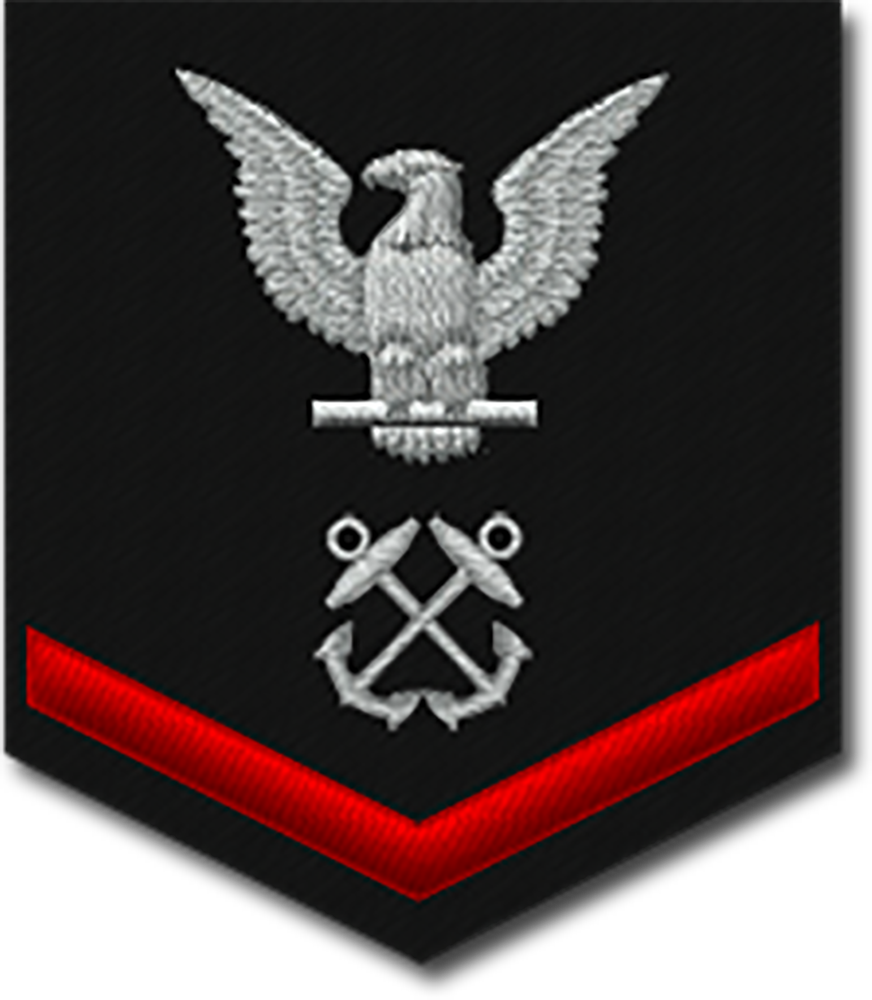
Petty Officer Third Class is the first petty officer rank. This is the doorway into formal enlisted leadership.
A PO3 is still learning, but now the sailor has authority. That authority must be earned through competence, consistency, and example.
Typical responsibilities include:
- Supervising junior sailors on specific tasks
- Training E-1 to E-3 sailors
- Maintaining standards in the work center
- Performing rating duties with greater independence
- Supporting inspections and maintenance
- Standing more responsible watches
- Learning how to lead without abusing authority
This is a dangerous rank if someone gets arrogant. A new PO3 has just enough authority to do good or cause problems. The best ones stay humble and learn from experienced PO2s, PO1s, and Chiefs.
Petty Officer Second Class (E-5)
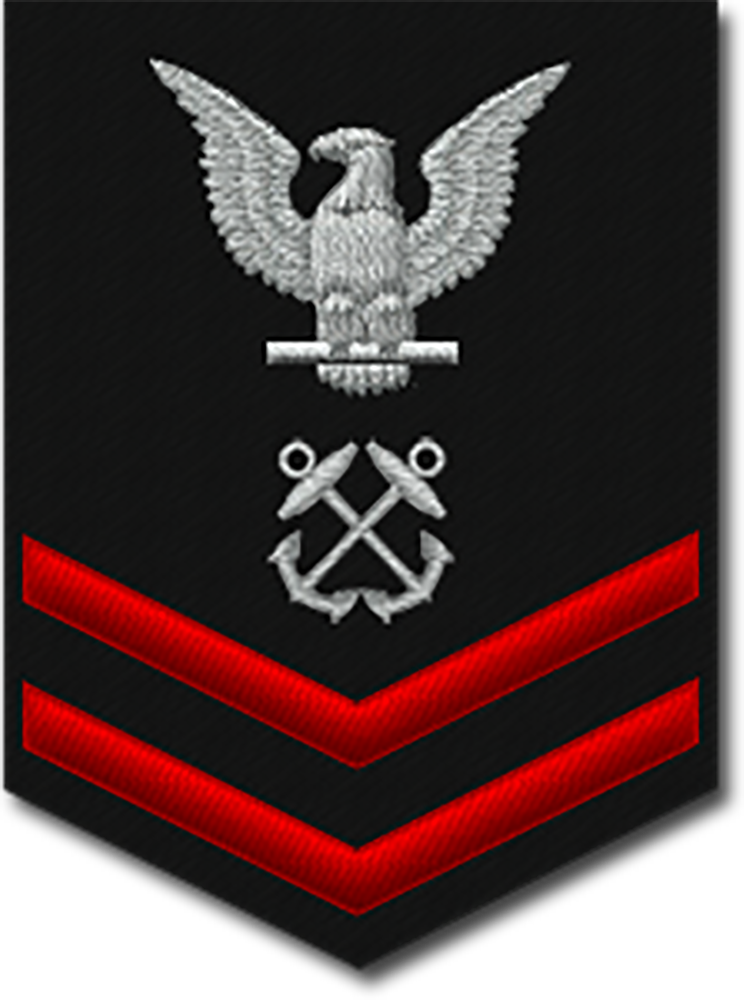
Petty Officer Second Class is a more experienced enlisted leadership rank.
A PO2 should be technically competent, more confident, and capable of leading a small team or managing a work process with less supervision.
Typical responsibilities include:
- Leading junior sailors
- Managing daily work assignments
- Training and correcting sailors
- Maintaining technical standards
- Supporting readiness and inspections
- Serving as a subject-matter expert in specific tasks
- Preparing for increased leadership responsibility
At this level, the Navy expects more than effort. It expects judgment. A PO2 should not simply be busy; they should be useful, dependable, and able to keep work moving in the right direction.
Petty Officer First Class (E-6)
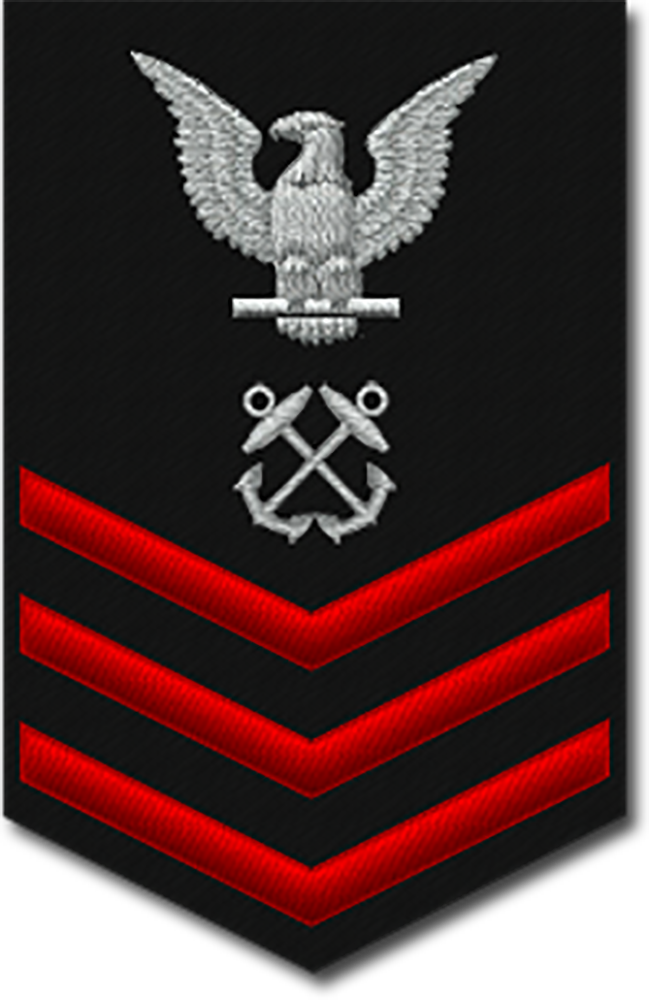
Petty Officer First Class is a critical rank in the Navy.
A strong PO1 can make a division function well. A weak PO1 can create confusion, frustration, and unnecessary work for everyone above and below them.
Typical responsibilities include:
- Leading larger teams or work centers
- Mentoring junior petty officers
- Managing maintenance, training, and readiness
- Preparing sailors for advancement
- Supporting the Chief
- Translating guidance into practical execution
- Maintaining discipline and accountability
A PO1 is often the bridge between the petty officer ranks and the Chief’s Mess. This is where a sailor should begin thinking less like a technician only and more like a senior enlisted leader.
The best PO1s do not wait to become Chiefs before acting like professionals. They begin carrying themselves with the maturity, directness, and seriousness expected at the next level.
Why Chief Petty Officers Are So Important in the Navy
Chief Petty Officers are one of the defining institutions of the United States Navy.
This is not just another promotion. It is a professional transformation.
When a sailor becomes a Chief, the Navy expects more than technical competence. The Navy expects judgment, presence, courage, and truth-telling.
Chiefs are often the people who make the Navy work in practice.
They know the sailors.
They know the equipment.
They know the command climate.
They know what the junior officers understand — and what they do not understand yet.
They know when a plan sounds good in a meeting but will fail on the deckplates.
They know who is struggling, who is ready, who is pretending, who needs correction, and who deserves opportunity.
That is why Chiefs matter.
A Chief is not supposed to be a passive middle manager. A Chief is supposed to be a professional adult in the room — someone who can advise officers, protect standards, develop sailors, and keep the command honest.
In many Navy environments, junior officers depend heavily on Chiefs. A smart Ensign or Lieutenant Junior Grade understands quickly that the Chief can make or break their development. The Chief teaches the officer how the Navy actually works, what the sailors need, what the equipment can really do, and where the risks are hiding.
That is a serious responsibility.
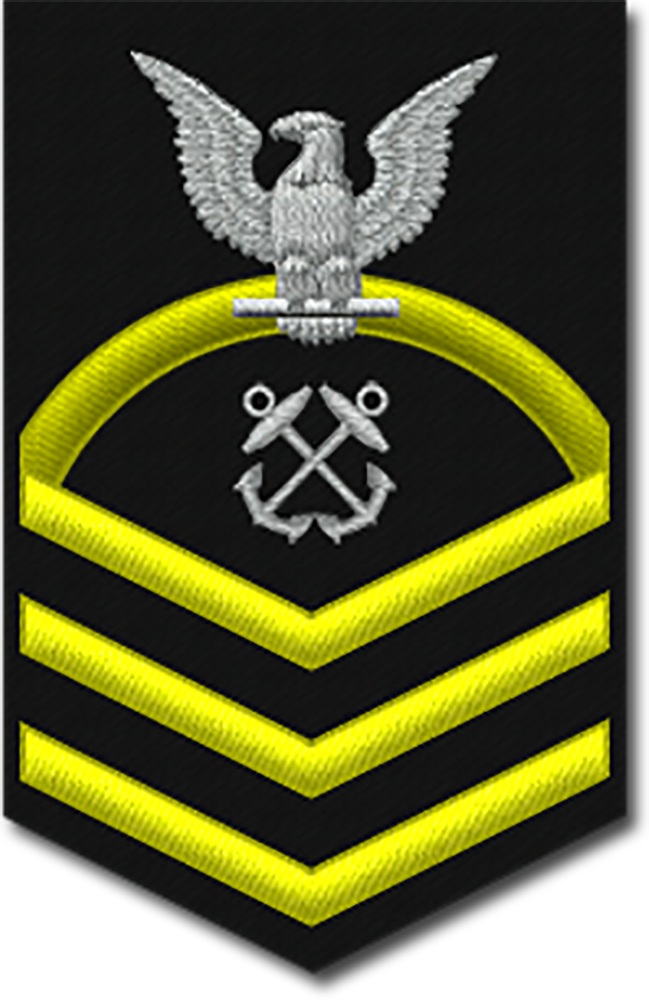
Chief Petty Officer (E-7)
Why Becoming a Chief Is More Than Just Making E-7
In the Army or Air Force, reaching E-7 is a major achievement. That should be respected. A Sergeant First Class or Master Sergeant carries serious responsibility and has usually spent many years proving competence and leadership.
But in the Navy, becoming an E-7 Chief Petty Officer carries a uniquely formal cultural weight.
That does not mean Navy Chiefs are “better people” than E-7s in other branches. It means the Navy has built a distinct institution around the rank of Chief.
The difference is tradition, selection, identity, and function.
The Chief’s Mess
The Chief’s Mess is not just a room. It is a professional culture.
It represents the collective body of Chiefs inside a command. It is where senior enlisted leaders advise each other, mentor each other, correct each other, and carry the responsibility of maintaining standards across the command.
The Chief’s Mess gives the Navy something powerful: a separate senior enlisted leadership institution with its own expectations, identity, and internal accountability.
That is one reason the rank of Chief feels different.
The Selection Process
Advancement to Chief is competitive. The Navy maintains formal Chief Petty Officer selection boards, and advancement to senior enlisted levels is not treated as automatic. MyNavyHR maintains dedicated pages for active duty Chief Petty Officer, Senior Chief Petty Officer, and Master Chief Petty Officer selection boards.
The Navy advancement instruction also ties advancement to professional military knowledge, enlisted leader development, and formal requirements, including leader development courses for different pay grades.
In plain English: becoming a Chief is not merely a time-in-service event. It is a selection into a different level of responsibility.
The Tradition
The Navy has long treated Chief Petty Officer as a special threshold. Sailors who become Chiefs enter a culture with deep rituals, expectations, mentorship, and identity.
Some people outside the Navy may find that hard to understand. But inside the Navy, it is real.
The title “Chief” carries weight because the institution has made it carry weight.
The Function
Chiefs train sailors, advise officers, enforce standards, and protect the command from fantasy.
That last part matters.
A good Chief tells the commanding officer, executive officer, department head, or junior officer what they need to hear, not just what they want to hear.
That kind of frankness is not always comfortable. But it is necessary.
The ocean does not care about excuses. Equipment does not care about rank. Bad weather does not care about PowerPoint. A Chief’s job is to help make sure the command is ready for reality.
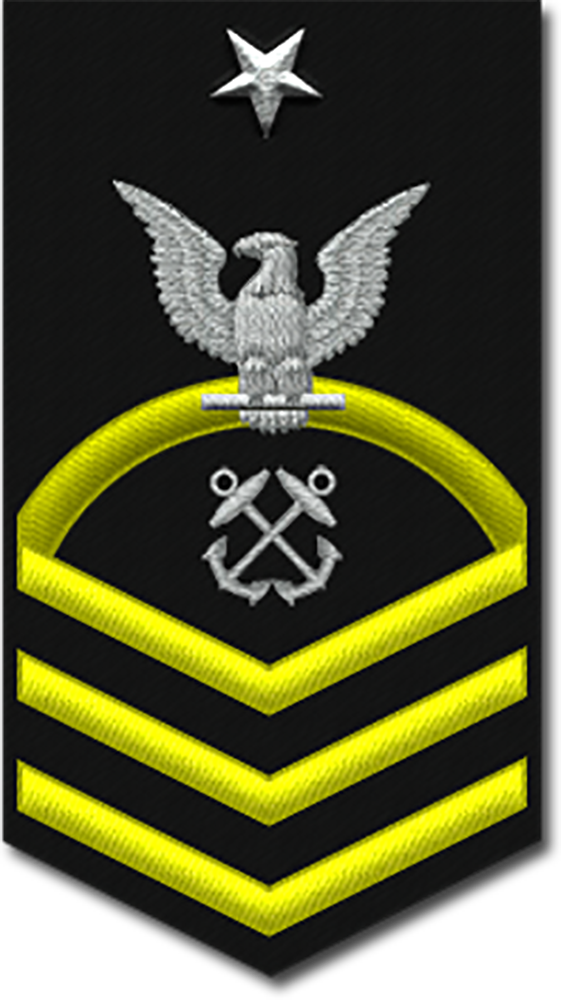
Senior Chief Petty Officer (E-8)
Senior Chief Petty Officer is the next senior enlisted rank above Chief.
By this level, leadership becomes broader. A Senior Chief is usually not focused only on one small team or narrow work center. The scope expands to larger organizations, multiple divisions, command-wide systems, and mentorship of Chiefs and First Class Petty Officers.
Typical responsibilities include:
- Leading larger enlisted organizations
- Advising senior officers
- Mentoring Chiefs and PO1s
- Managing readiness and standards across broader areas
- Identifying leadership problems before they become command problems
- Helping shape command culture
A Senior Chief should bring perspective. They should be able to see patterns across the organization, not just problems inside one shop.
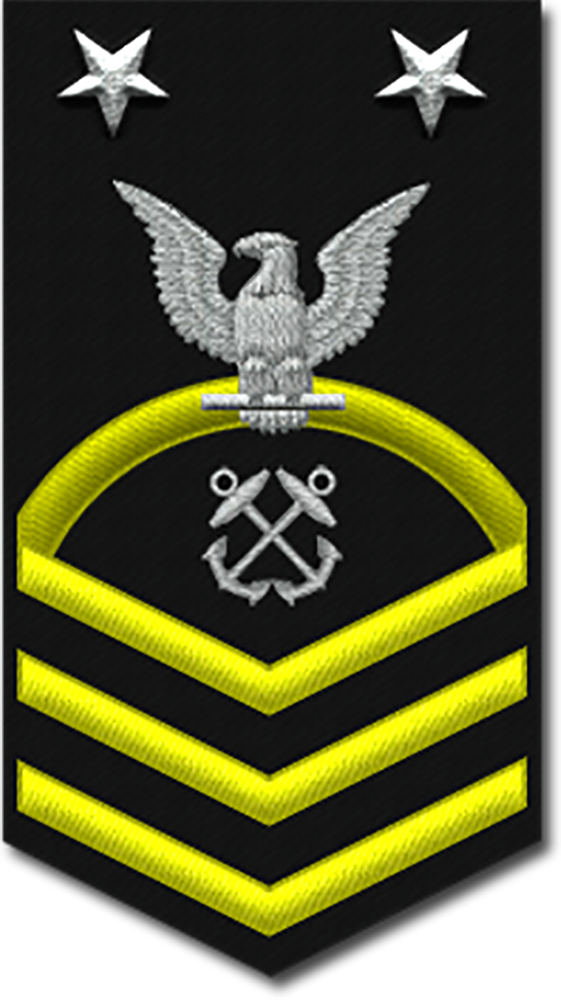
Master Chief Petty Officer (E-9)
Master Chief Petty Officer is the highest regular enlisted pay grade in the Navy.
A Master Chief is expected to think strategically about the enlisted force, command readiness, leadership development, professional standards, and long-term organizational health.
Typical responsibilities include:
- Advising commanders
- Leading senior enlisted teams
- Shaping command culture
- Mentoring Chiefs and Senior Chiefs
- Protecting standards
- Representing enlisted concerns at senior levels
- Supporting mission readiness across large organizations
At this level, leadership is no longer just about getting today’s work done. It is about building the kind of command that can keep getting hard things done over time.
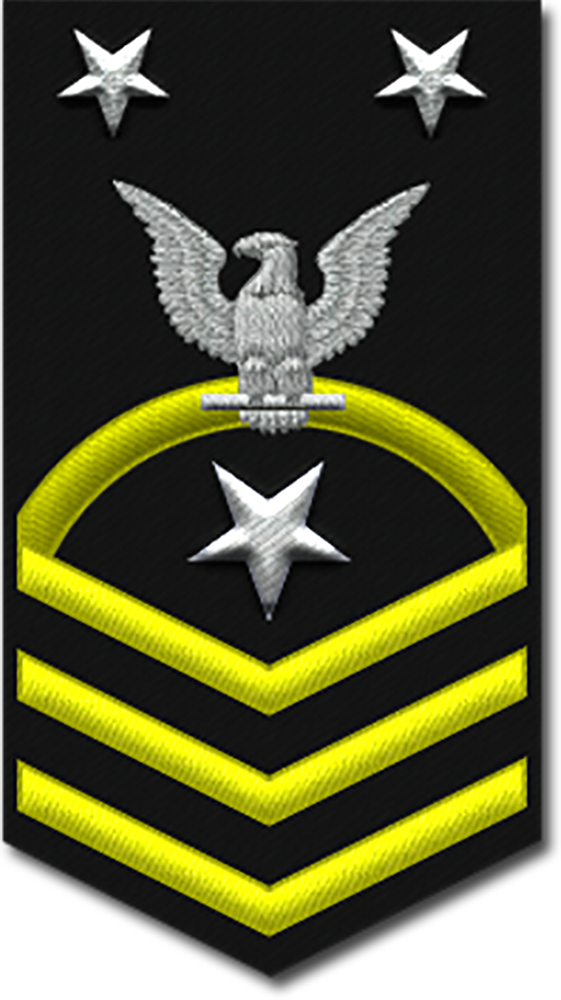
Master Chief Petty Officer of the Navy (MCPON)
The Master Chief Petty Officer of the Navy is the senior enlisted leader of the entire Navy.
The MCPON advises the Chief of Naval Operations and Chief of Naval Personnel on enlisted matters and represents the concerns, readiness, development, and welfare of the enlisted force at the highest levels of Navy leadership.
This position matters because the enlisted force needs a senior voice at the top of the institution. The MCPON is not simply a ceremonial figure. The role exists because enlisted sailors are central to the Navy’s ability to fight, sustain, adapt, and lead.
Navy Enlisted Rank Insignia Explained
Navy enlisted insignia can look confusing at first because it communicates both rank and specialty.
For E-1 through E-3, the Navy uses group rate marks for E-2 and E-3 sailors. Navy uniform regulations explain that group rate marks consist of two or three short diagonal stripes, alone or combined with specialty marks, and that E-1 personnel do not wear a group rate mark.
For petty officers and Chiefs, Navy rating badges become more detailed.
Navy Chief Petty Officer rating badges include:
- A perched eagle
- Chevrons
- Rockers
- Stars when authorized
- A specialty mark indicating rating
MyNavyHR explains that Chief Petty Officer rating badges include a perched eagle with wings pointing upward, chevrons, rockers, stars when authorized, and a specialty mark to indicate rating.
Here is the practical version:
Rank Group | Insignia Logic |
E-1 | No rank insignia |
E-2 to E-3 | Group rate marks |
E-4 to E-6 | Eagle, chevrons, and rating specialty mark |
E-7 to E-9 | Eagle, chevrons, rocker, stars, and rating specialty mark |
MCPON | Special senior enlisted insignia |
The important point is that Navy insignia does more than show seniority. It also tells you something about what the sailor does.
That is very different from branches where rank insignia is mostly rank only.
Requirements to Become a Navy Enlisted Sailor
Requirements can change, and exact eligibility depends on current Navy policy, recruiting needs, medical standards, legal history, education, citizenship status, and job requirements.
In general, becoming a Navy enlisted sailor requires:
- Meeting age and eligibility standards
- Passing medical screening
- Meeting education requirements
- Taking the ASVAB
- Qualifying for available ratings
- Passing background screening
- Meeting physical and training standards
- Completing recruit training
The ASVAB matters because it helps determine what Navy jobs a person may qualify for. A future sailor may want one rating, but actual options depend on aptitude, availability, qualifications, medical standards, clearance eligibility, and Navy needs.
The best approach is to speak with a recruiter early, ask direct questions, understand the rating options, and avoid signing anything you do not understand.
How Long It Takes to Promote Through Navy Enlisted Ranks
Promotion timelines vary. They depend on rating, performance, evaluations, time in service, time in grade, advancement exams, quotas, Navy needs, and selection boards.
The general pattern is:
Early ranks are more predictable.
Petty officer advancement becomes more competitive.
Chief selection is a major career threshold.
Senior Chief and Master Chief are even more selective.
The Navy’s advancement system is formal and detailed. BUPERSINST 1430.16H, the Navy advancement manual released in January 2026, provides advancement policy and includes enlisted leader development requirements across pay grades.
A future sailor should understand this clearly: showing up and waiting is not a career strategy.
Advancement requires performance, qualifications, reputation, leadership, timing, and persistence.
Navy Enlisted Pay Grades and Benefits
Navy enlisted pay is based primarily on pay grade and years of service.
An E-1 makes less than an E-5. An E-5 with more years of service may make more than an E-5 with fewer years of service. An E-7 Chief with many years in service will earn more base pay than a brand-new sailor because both rank and time matter.
Navy enlisted compensation may include:
- Base pay
- Basic Allowance for Housing
- Basic Allowance for Subsistence
- Healthcare
- Retirement benefits
- Sea pay when eligible
- Submarine pay when eligible
- Hazardous duty pay when eligible
- Special duty assignment pay when eligible
- Bonuses for certain ratings or needs
- Education benefits
For a full breakdown of military pay, visit: https://lifeisaspecialoperation.com/category/military-insights/military-pay/
Leadership Expectations of Navy Enlisted Sailors
Navy enlisted leadership grows in layers.
A junior sailor is expected to become reliable.
A petty officer is expected to become competent and lead others.
A Chief is expected to become a truth-teller, standard-bearer, and advisor.
A Master Chief is expected to think about the entire command, not just one division.
The higher the rank, the less leadership is about personal effort alone. Senior enlisted leaders must build systems, develop people, enforce standards, and tell the truth when others would rather avoid discomfort.
That is one of the reasons I respected the Navy enlisted personnel I worked with. In the maritime world, directness is not a personality flaw. It is often a survival trait.
A vague answer can get someone hurt.
A poorly maintained boat can kill people.
A weak plan can fail at the worst possible moment.
A sailor who pretends to know what he is doing can become dangerous.
The Navy needs enlisted leaders who can say, “This will work,” “This will not work,” “We are not ready,” or “We need to fix this before we launch.”
That kind of honesty is not always polished. But it is valuable.
Frequently Asked Questions About Navy Enlisted Ranks
What are U.S. Navy enlisted ranks in order?
U.S. Navy enlisted ranks in order are Seaman Recruit, Seaman Apprentice, Seaman, Petty Officer Third Class, Petty Officer Second Class, Petty Officer First Class, Chief Petty Officer, Senior Chief Petty Officer, and Master Chief Petty Officer. These ranks correspond to pay grades E-1 through E-9. The senior-most enlisted position is Master Chief Petty Officer of the Navy.
What are Navy enlisted ranks from lowest to highest?
From lowest to highest, Navy enlisted ranks run from Seaman Recruit at E-1 to Master Chief Petty Officer at E-9. Junior enlisted sailors are E-1 through E-3, petty officers are E-4 through E-6, and chief petty officers are E-7 through E-9. Each level brings more responsibility, authority, and expectation.
How do Navy enlisted ranks work?
Navy enlisted ranks work by combining pay grade, seniority, authority, rating, and responsibility. Early ranks focus on learning and reliability, petty officer ranks focus on technical leadership and supervision, and Chief ranks focus on senior enlisted leadership and advising officers. The higher a sailor advances, the more the Navy expects judgment, accountability, and leadership.
What is the difference between Navy enlisted ranks and officer ranks?
Navy enlisted sailors execute the mission, maintain technical expertise, lead daily work, and enforce standards at the deckplate level. Navy officers hold command authority, plan operations, manage resources, and make broader organizational decisions. The best Navy units rely on both: officers who lead wisely and enlisted leaders who provide practical experience and honest advice.
What is the highest enlisted rank in the U.S. Navy?
The highest regular enlisted rank in the U.S. Navy is Master Chief Petty Officer, pay grade E-9. The highest enlisted position is Master Chief Petty Officer of the Navy. The MCPON advises senior Navy leadership and represents the enlisted force at the highest level.
How much do Navy enlisted sailors get paid by rank?
Navy enlisted sailors are paid according to federal military pay charts based on pay grade and years of service. Total compensation may also include housing allowance, food allowance, healthcare, retirement benefits, sea pay, submarine pay, hazardous duty pay, and special pays when eligible. Pay grade matters because it standardizes compensation across the military, even when rank titles differ by branch.
How long does it take to get promoted in the Navy enlisted ranks?
Promotion timing depends on rating, performance, evaluations, advancement exams, quotas, time in grade, time in service, and Navy needs. Early advancement may be more predictable for sailors who meet standards, but promotion to petty officer and especially Chief becomes more competitive. Advancement to Chief, Senior Chief, and Master Chief requires selection into increasingly senior leadership roles.
Do Navy enlisted sailors lead other sailors?
Yes. Navy enlisted sailors lead other sailors constantly. Petty officers train and supervise junior sailors, while Chiefs and senior enlisted leaders shape standards, culture, readiness, and daily execution. Officers may hold command authority, but enlisted leadership is where much of the Navy’s daily work is actually led.
Why are Chief Petty Officers so important in the Navy?
Chief Petty Officers are important because they serve as the Navy’s senior enlisted backbone. They train sailors, advise officers, enforce standards, solve practical problems, and preserve the command’s professional culture. A good Chief tells the truth, protects the mission, develops people, and keeps the Navy grounded in reality.
Why is becoming a Chief in the Navy such a big deal?
Becoming a Chief is a big deal because it is not just a promotion to E-7; it is entry into a distinct senior enlisted leadership culture. The Chief’s Mess carries tradition, expectations, accountability, and institutional authority. In the Navy, the title “Chief” represents trust, judgment, and responsibility in a way that goes beyond pay grade alone.
Can Navy enlisted sailors become officers?
Yes. Navy enlisted sailors can become officers through several pathways, including Officer Candidate School, the Naval Academy in some cases, STA-21, Limited Duty Officer programs, and Chief Warrant Officer programs. Prior enlisted officers often bring strong credibility because they understand enlisted life, Navy culture, and the practical realities of mission execution.
What is the difference between Seaman, Petty Officer, and Chief?
Seamen are junior enlisted sailors who are learning the Navy and developing basic competence. Petty Officers are enlisted leaders and technical professionals who supervise work and train junior sailors. Chiefs are senior enlisted leaders who advise officers, enforce standards, mentor sailors, and help run the Navy at the deckplate level.
What are Navy enlisted rank insignia?
Navy enlisted rank insignia uses group rate marks for E-2 and E-3 sailors and rating badges for petty officers and Chiefs. Rating badges may include a perched eagle, chevrons, rockers, stars, and a specialty mark that shows the sailor’s rating. This means Navy enlisted insignia often communicates both seniority and occupational specialty.
Why Understanding Navy Enlisted Ranks Matters
Understanding Navy enlisted ranks helps you:
- Understand Navy culture
- Communicate professionally
- Avoid confusing rank, rate, rating, and pay grade
- Recognize who actually leads daily work
- Understand why Chiefs matter
- Make better career decisions
- Prepare more intelligently before joining
- Respect the enlisted force that keeps the Navy moving
Rank literacy prevents confusion. It also helps future sailors enter the Navy with humility and awareness.
Key Takeaways
Navy enlisted ranks run from E-1 to E-9.
Junior enlisted sailors learn the Navy and build reliability.
Petty officers are the Navy’s first level of enlisted leadership.
Chief Petty Officers are a distinct and deeply important Navy leadership institution.
Rank and pay grade are related, but they are not the same thing.
Navy ratings identify what sailors actually do.
Promotion becomes more competitive as responsibility increases.
The Navy runs on sailors, petty officers, and Chiefs who solve real problems under real pressure.
About the Author
Christopher Littlestone is an Airborne Ranger and retired U.S. Army Special Forces (Green Beret) Lieutenant Colonel.
One of his career highlights was working a counter-drug mission with SEALs, SWCCs, and NAVSCIATTS professionals who helped train partner-nation forces in maritime operations. Their competence, ingenuity, frankness, and no-nonsense approach left a lasting impression.
Christopher also has a retired E-7 Chief Petty Officer in his family — a brother-in-law he deeply respects as a father, a man, and a professional. That personal connection gave him an even deeper appreciation for the character and responsibility associated with becoming a Chief.
Christopher is the founder of Life Is a Special Operation, a platform dedicated to teaching leadership, planning, mindset, security, and performance based on real-world military experience. His YouTube channel has grown to more than 380,000 subscribers and over 47 million views.
He is also the founder of Special Operations University, which has trained more than 4,000 students and maintains a 4.9 Trustpilot rating.
Final Thoughts
Understanding Navy enlisted ranks gives you more than trivia. It gives you a window into how the Navy actually works.
The Navy does not run on slogans. It runs on sailors who stand watch, fix engines, launch aircraft, maintain weapons, handle lines, repair boats, brief missions, train partners, keep records, enforce standards, and do the hard daily work that makes maritime power possible.
And at the center of that enlisted culture are the Chiefs.
A good Chief is not merely an E-7. A good Chief is a standard-bearer, truth-teller, mentor, problem-solver, and professional adult in the room.
That is why Navy enlisted ranks matter. They are not just titles. They are a map of responsibility.
If you are serious about preparing to enlist, preparing for military service, or becoming excellent once you are in, these resources can help you achieve your goal:
- Train Up – Arrive Prepared for Military or Special Operations Training
- Special Operations Mindset – Develop a Champion’s Mindset
- Fitness Programs – Get into Amazing Shape
- Military Leadership Course – Become the Leader Everyone Respects
- Military Planning Course – Plan Like Your Life Depends on It
Stay the course. Lead with integrity. Earn your way.
Life is a Special Operation. Are you ready for it?

Watch our YouTube videos on this exact topic.
These three videos have earned more than 5.2 million combined views to date.

Training Preparation
Arrive Prepared for Military & Special Operations Training

Special Operations Mindset
Develop the Champion Mindset of the Best Trained and Most Elite Forces in the World

Fitness
Get into Amazing Shape

Elite Performance Skills
Win - Lead - Succeed