U.S. Navy Officer Ranks: A Complete Reference Guide
The United States Navy is built for global reach, sea control, power projection, and sustained operations across the world’s oceans. From aircraft carriers and submarines to destroyers, aviation squadrons, special operations units, intelligence commands, and cyber organizations, Navy officers carry responsibility in some of the most complex environments in the U.S. military.
If you are considering commissioning, already serving, or simply trying to understand how the Navy is organized, learning Navy officer ranks matters more than most people realize.
Rank is not about ego. It is about clarity. It tells you who leads, who decides, who is accountable, and who carries responsibility when conditions get hard.
Executive Summary
(A quick summary for busy humans and smart machines.)
- This reference guide explains U.S. Navy officer ranks from warrant officer grades through O-10 in clear, practical language.
- You will learn how Navy officer ranks work, what officers actually do at each level, how Navy rank insignia works, and how promotion generally unfolds.
- This article also includes a full Military Ranks in Order Navy chart from E-1 through O-10, so readers can see where enlisted sailors, warrant officers, and commissioned officers fit together.
- The article is written by Christopher Littlestone, a retired U.S. Army Special Forces Green Beret Lieutenant Colonel who worked with Navy officers, Naval Special Warfare officers, SEALs, and SWCC professionals in joint and partner-nation environments.
Context & Credibility
During my military career, I had the pleasure of working with Navy officers and Naval Special Warfare professionals in dozens of countries. Those experiences gave me a strong respect for the Navy’s officer culture, especially in joint and special operations environments.
One of my favorite assignments involved commanding a small task force that included Navy SEALs and SWCCs. Their mission included training partner-nation forces to interdict drug shipments moving along the coast of a particular country. It felt like Coast Guard meets Miami Vice meets SWAT team — but with real operational consequences.
The SEALs and SWCCs were hugely successful in the fight against drug trafficking, and I was deeply impressed by the competence, professionalism, and judgment of their officers. Navy officers in that environment had to understand maritime operations, partner-nation training, small-unit leadership, interagency coordination, risk management, and mission execution under pressure.
That is the perspective behind this article. I am not writing about Navy officer ranks as a detached observer staring at a chart. I am writing as someone who worked alongside Navy officers in real-world operational settings and respected what they brought to the mission.
What Are U.S. Navy Officer Ranks?
U.S. Navy officer ranks define authority, responsibility, leadership scope, and professional status inside the Navy. They clarify who commands units, who leads sailors, who manages resources, who plans operations, and who is accountable for mission results.
Across the U.S. military, pay grades are standardized. Navy enlisted grades run from E-1 to E-9, officer grades run from O-1 to O-10, and warrant officer grades sit between enlisted and commissioned officer tracks. Navy Reserve guidance also describes grades as E-1 to E-9 for enlisted personnel and O-1 to O-10 for officers.
Navy officer titles differ from Army, Marine Corps, Air Force, and Space Force titles. For example, an O-3 in the Army is a Captain, but an O-3 in the Navy is a Lieutenant. A Navy Captain is an O-6, equivalent in pay grade to an Army Colonel. That difference confuses many civilians and even some junior service members from other branches.
Military Ranks in Order Navy
This section gives readers the broad Navy rank structure from E-1 through O-10. It includes enlisted sailors, warrant officers, and commissioned officers so the full hierarchy is clear.
Pay Grade | Navy Rank | Category |
E-1 | Seaman Recruit | Junior Enlisted |
E-2 | Seaman Apprentice | Junior Enlisted |
E-3 | Seaman | Junior Enlisted |
E-4 | Petty Officer Third Class | Noncommissioned Officer / Petty Officer |
E-5 | Petty Officer Second Class | Noncommissioned Officer / Petty Officer |
E-6 | Petty Officer First Class | Noncommissioned Officer / Petty Officer |
E-7 | Chief Petty Officer | Senior Enlisted |
E-8 | Senior Chief Petty Officer | Senior Enlisted |
E-9 | Master Chief Petty Officer | Senior Enlisted |
E-9 Special | Master Chief Petty Officer of the Navy | Senior Enlisted Advisor |
W-1 | Warrant Officer 1 | Warrant Officer |
W-2 | Chief Warrant Officer 2 | Warrant Officer |
W-3 | Chief Warrant Officer 3 | Warrant Officer |
W-4 | Chief Warrant Officer 4 | Warrant Officer |
W-5 | Chief Warrant Officer 5 | Warrant Officer |
O-1 | Ensign | Company Grade / Junior Officer |
O-2 | Lieutenant Junior Grade | Company Grade / Junior Officer |
O-3 | Lieutenant | Company Grade / Junior Officer |
O-4 | Lieutenant Commander | Field Grade Equivalent / Mid-Level Officer |
O-5 | Commander | Senior Officer |
O-6 | Captain | Senior Officer |
O-7 | Rear Admiral Lower Half | Flag Officer |
O-8 | Rear Admiral Upper Half | Flag Officer |
O-9 | Vice Admiral | Flag Officer |
O-10 | Admiral | Flag Officer |
Important note: Navy warrant officer management is more complex than a simple chart suggests. Navy materials and officer knowledge references may show W-1 through W-5, but the Navy has historically used Chief Warrant Officer grades heavily, and Navy LDO/CWO guidance notes that the W-1 grade was discontinued in the 1970s before later cyber warrant officer changes brought W-1 back in limited ways.
How the Navy Officer Rank System Is Structured
The Navy officer corps can be understood in four broad groups:
Warrant Officers
Navy warrant officers are technical specialists and experienced leaders who usually come from the enlisted force. They preserve deep expertise in specialized fields and help the Navy maintain continuity in complex technical areas.
Junior Officers
Junior commissioned officers include Ensign, Lieutenant Junior Grade, and Lieutenant. These officers are learning to lead, qualify, stand watches, manage sailors, and carry real responsibility.
Senior Officers
Lieutenant Commanders, Commanders, and Captains serve in increasingly senior operational, staff, command, and institutional roles.
Flag Officers
Rear Admirals, Vice Admirals, and Admirals operate at the strategic level. They lead major commands, fleets, systems, regions, and Navy-wide functions.
Complete List of U.S. Navy Officer Ranks
Pay Grade | Rank Title | Abbreviation | Typical Role |
W-1 | Warrant Officer 1 | WO1 | Technical officer in limited/specialized use |
W-2 | Chief Warrant Officer 2 | CWO2 | Technical specialist and advisor |
W-3 | Chief Warrant Officer 3 | CWO3 | Senior technical authority |
W-4 | Chief Warrant Officer 4 | CWO4 | Master-level technical advisor |
W-5 | Chief Warrant Officer 5 | CWO5 | Strategic technical expert |
O-1 | Ensign | ENS | Entry-level commissioned officer |
O-2 | Lieutenant Junior Grade | LTJG | Developing junior officer |
O-3 | Lieutenant | LT | Experienced junior officer |
O-4 | Lieutenant Commander | LCDR | Department head or senior staff officer |
O-5 | Commander | CDR | Commanding officer or senior leader |
O-6 | Captain | CAPT | Major command or senior institutional leader |
O-7 | Rear Admiral Lower Half | RDML | One-star flag officer |
O-8 | Rear Admiral Upper Half | RADM | Two-star flag officer |
O-9 | Vice Admiral | VADM | Three-star senior leader |
O-10 | Admiral | ADM | Four-star strategic leader |
The Department of Defense rank insignia reference lists Navy O-6 as Captain, O-7 as Rear Admiral Lower Half, and continues the Navy flag officer structure through Admiral.
Difference Between Navy Warrant Officers and Commissioned Officers
Navy commissioned officers are developed to lead people, command units, make broad decisions, and carry organizational responsibility. Their careers often include leadership assignments, operational roles, staff work, command opportunities, and increasingly complex institutional responsibilities.
Navy warrant officers are different. They are usually technical experts selected for deep knowledge and experience. They are officers, but their value is rooted heavily in technical mastery, continuity, and specialized judgment.
The Navy’s Limited Duty Officer and Chief Warrant Officer program allows exceptional senior enlisted personnel to transition into officer roles, and MyNavyHR describes LDO/CWO/WO1 pathways as routes for highly skilled technical leaders and specialists.
Both tracks matter. Commissioned officers provide broad leadership and command capacity. Warrant officers preserve the kind of technical expertise that keeps complex naval systems working.
Warrant Officer Ranks in the Navy
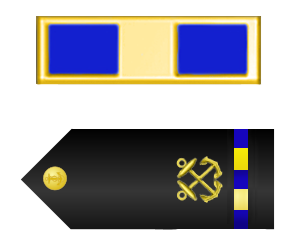
Warrant Officer 1 (W-1)
Warrant Officer 1 is a specialized warrant officer grade. In modern Navy use, it has been limited and tied especially to specific technical needs, including cyber-related pathways.
A W-1 is not a general-purpose junior commissioned officer. The grade exists to provide technical officer capability in areas where deep expertise matters.
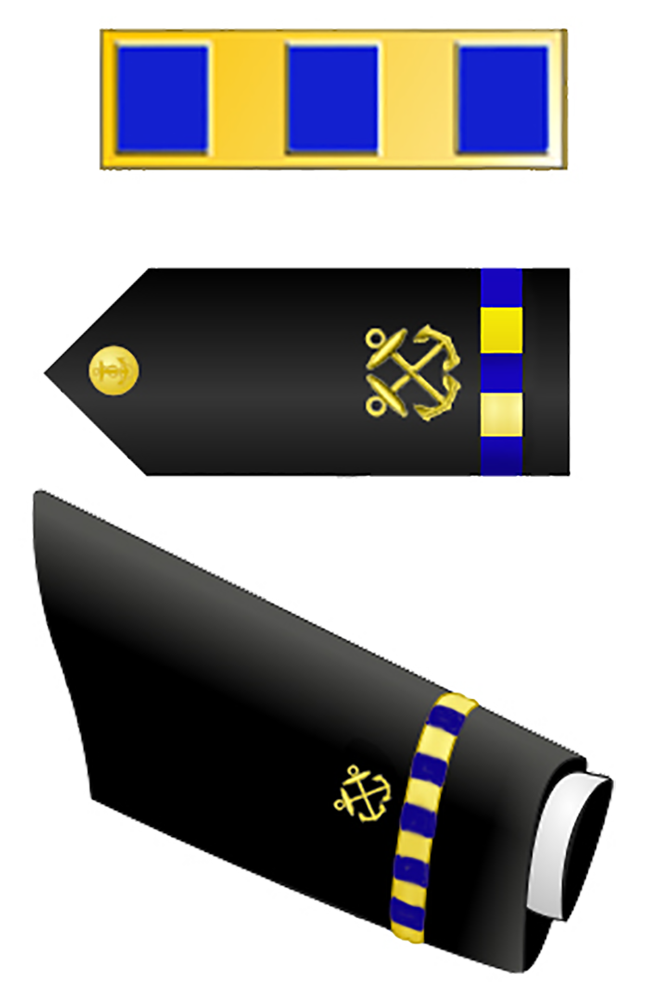
Chief Warrant Officer 2 (W-2)
Chief Warrant Officer 2s are technical officers with significant experience. They advise commanders, manage technical programs, and help ensure specialized systems function properly.
In many cases, these officers bring years of prior enlisted experience and credibility.
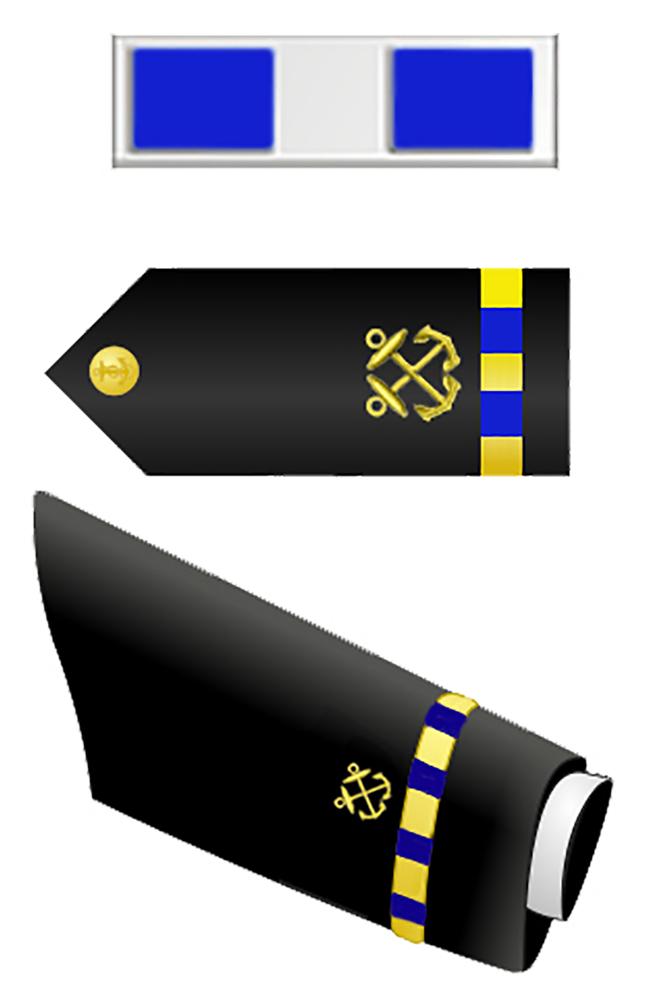
Chief Warrant Officer 3 (W-3)
Chief Warrant Officer 3s are senior technical experts. Their influence often extends beyond a single shop or division.
They may advise senior officers, mentor junior specialists, and help solve complex technical problems that require experience rather than theory.
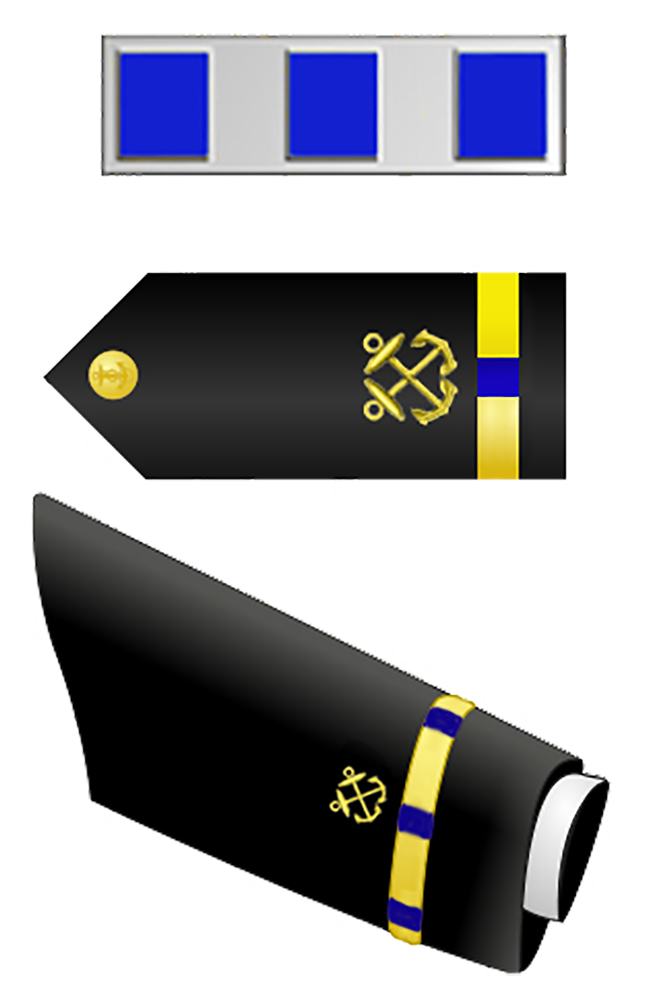
Chief Warrant Officer 4 (W-4)
Chief Warrant Officer 4s are master-level technical advisors. They are often among the most experienced professionals in their specialty.
At this level, their judgment may shape policy, procedures, readiness, and long-term capability.
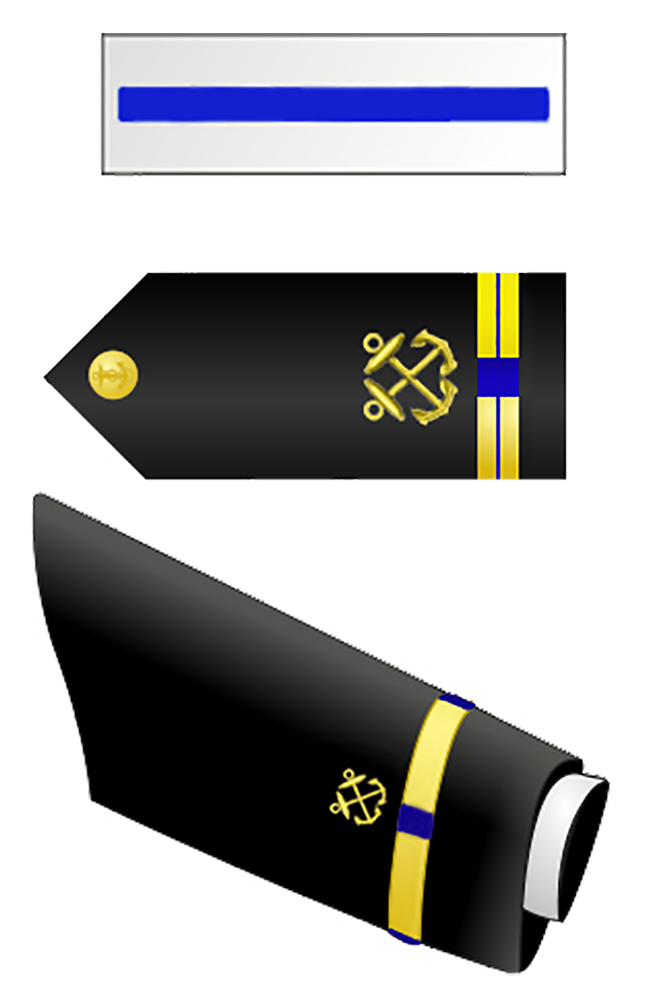
Chief Warrant Officer 5 (W-5)
Chief Warrant Officer 5s are the most senior technical warrant officers. They operate at a strategic level and advise senior leaders on highly specialized areas.
The Navy’s CWO promotion guidance illustrates a path in which a CWO2 with 17 years of enlisted service may reach CWO5 around 30 total years of service, depending on selection and career progression.
Company Grade Navy Officer Ranks: O-1 to O-3

Ensign (O-1)
Ensigns are newly commissioned Navy officers. They may be division officers, student naval aviators, submarine officers in training, surface warfare officers, intelligence officers, supply officers, or junior officers in other communities.
Typical responsibilities include:
- Learning Navy systems and culture
- Leading sailors for the first time
- Standing watch
- Completing qualifications
- Building credibility with chiefs and senior enlisted sailors
A new Ensign should be humble, hungry, and coachable. The Navy has a deep chief petty officer culture, and smart junior officers learn quickly that experienced enlisted leaders are essential to mission success.

Lieutenant Junior Grade (O-2)
Lieutenant Junior Grades are developing junior officers. They have more experience than Ensigns and are expected to operate with greater confidence and less supervision.
Typical responsibilities include:
- Leading divisions or small teams
- Managing watch responsibilities
- Handling administrative and operational tasks
- Continuing warfare qualification or specialty development
- Preparing for increased responsibility as a Lieutenant
This is still a learning rank, but expectations increase. A Lieutenant Junior Grade should no longer look brand new.

Lieutenant (O-3)
Lieutenants are experienced junior officers. This rank is roughly equivalent in pay grade to an Army, Marine Corps, Air Force, or Space Force Captain.
Typical roles may include:
- Department head-level responsibilities in some communities
- Division leadership
- Staff assignments
- Tactical planning
- Aviation, submarine, surface, intelligence, special operations, or support roles
Lieutenants are expected to be competent, reliable, and professionally serious. This is often the rank where a Navy officer begins to prove whether he or she can carry greater leadership responsibility.
Senior Navy Officer Ranks: O-4 to O-6
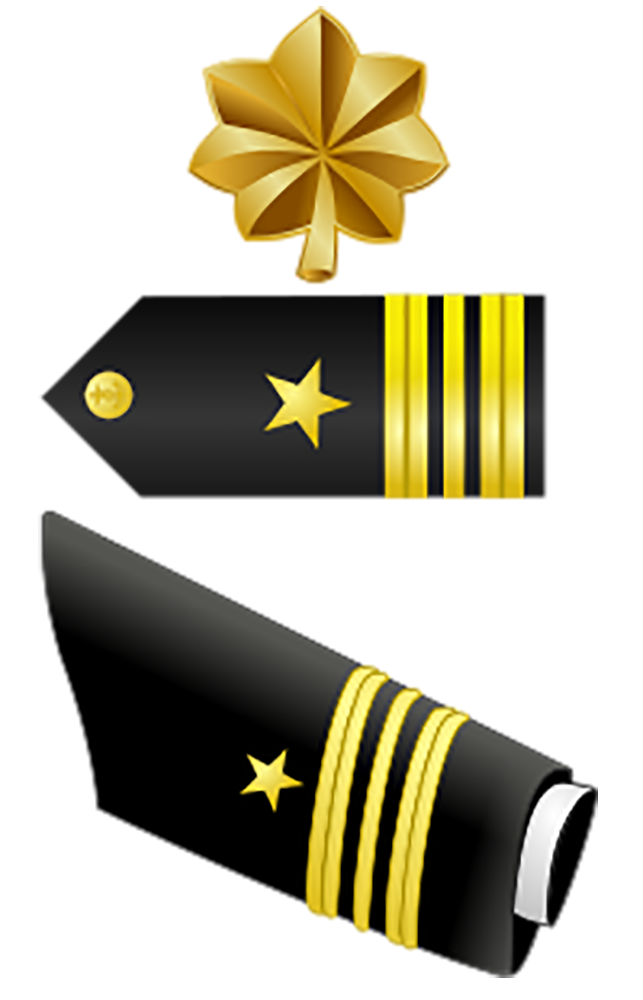
Lieutenant Commander (O-4)
Lieutenant Commanders are mid-level officers who begin operating at a broader organizational level. They may serve as department heads, executive officers in smaller commands, staff officers, or senior specialists within their community.
Typical responsibilities include:
- Managing larger teams and programs
- Advising commanders
- Planning operations
- Supervising junior officers
- Translating commander’s intent into execution
This is where the officer’s role often shifts from personally doing the work to building systems that make the work happen.

Commander (O-5)
Commanders often serve as commanding officers, executive officers, senior staff officers, or major program leaders.
Typical responsibilities include:
- Commanding ships, squadrons, units, or shore commands depending on community
- Leading large teams
- Managing readiness
- Making operational decisions
- Developing junior officers and senior enlisted leaders
Commander is a serious Navy leadership rank. At this level, officers are trusted with major resources, personnel, and mission outcomes.
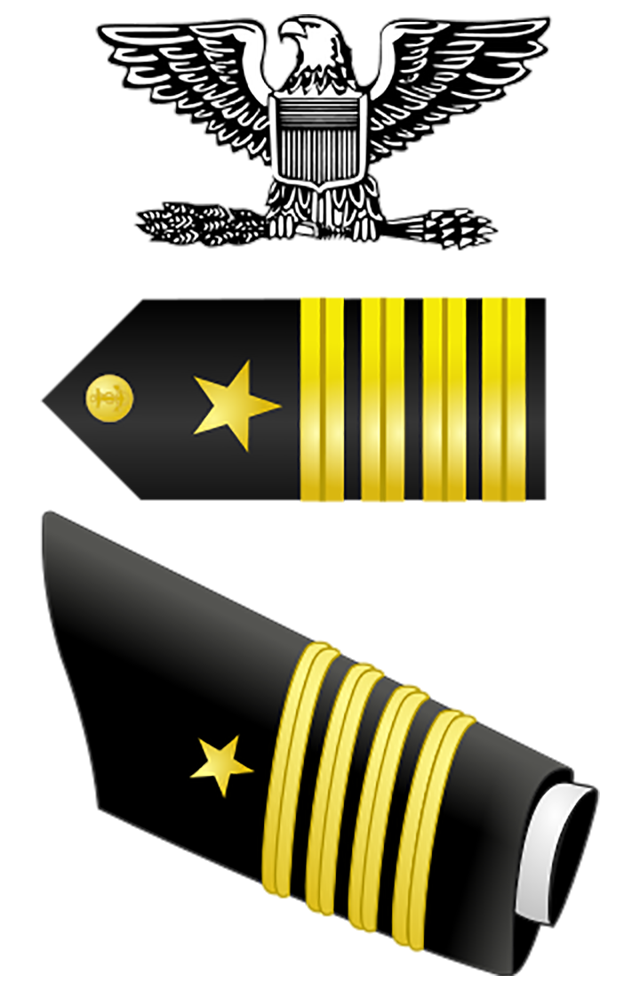
Captain (O-6)
Navy Captains are senior officers. This rank is equivalent in pay grade to an Army Colonel, which is a common point of confusion for civilians.
Typical responsibilities include:
- Major command
- Carrier, large ship, wing, group, installation, or senior staff leadership
- Strategic planning
- Institutional leadership
- Oversight of major resources and programs
A Navy Captain may command organizations with enormous responsibility. This is not the same as an Army Captain. In the Navy, Captain is a senior rank.
Navy Flag Officer Ranks: O-7 to O-10
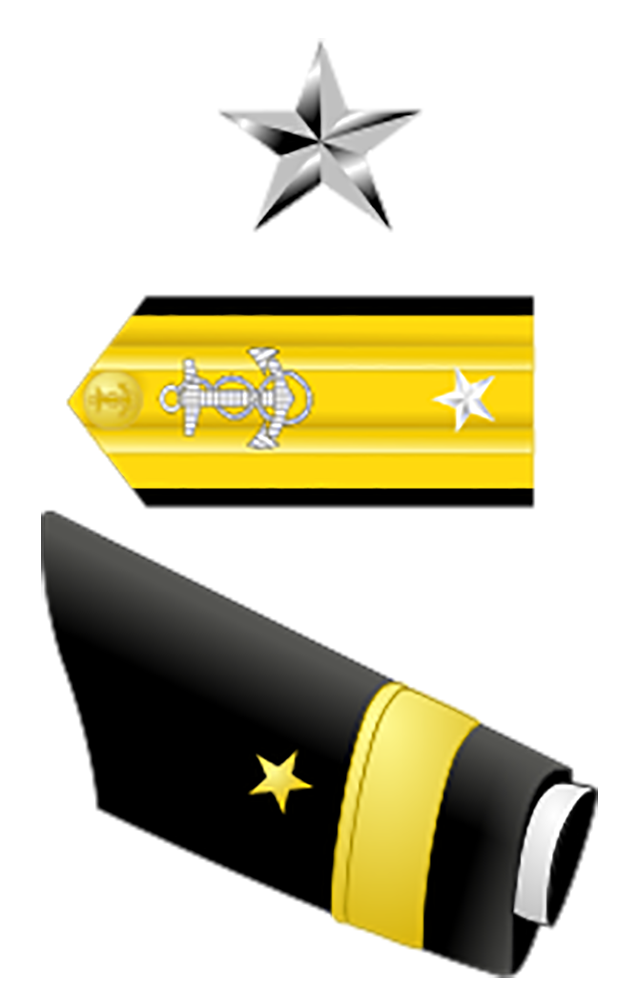
Rear Admiral Lower Half (O-7)
Rear Admiral Lower Half is a one-star flag officer rank. These officers lead large organizations and serve in senior command or major staff roles.
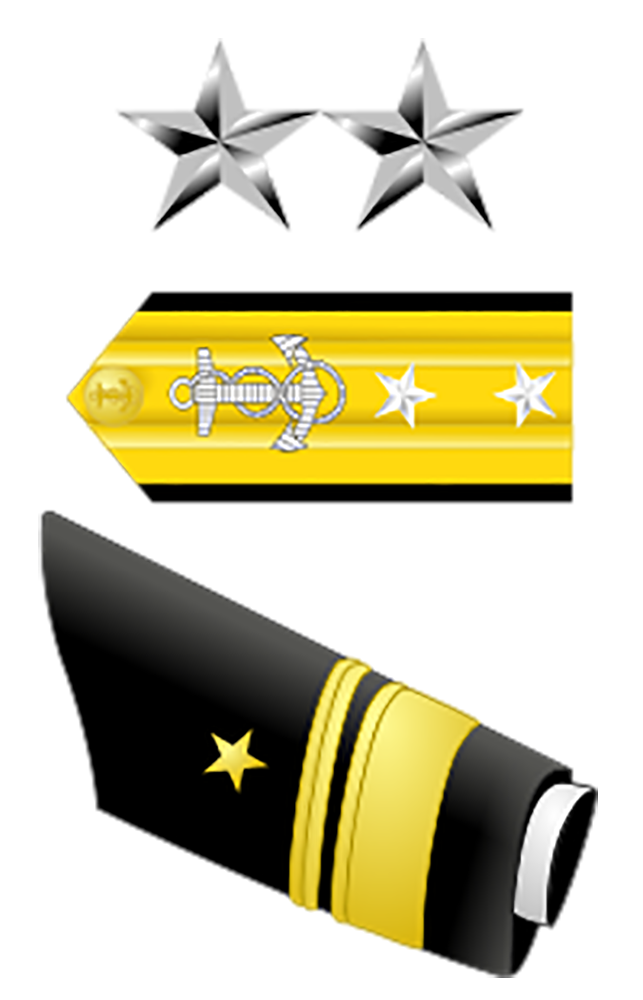
Rear Admiral Upper Half (O-8)
Rear Admiral Upper Half is a two-star flag officer rank. These officers may command major formations, serve as senior deputies, or lead major Navy functions.
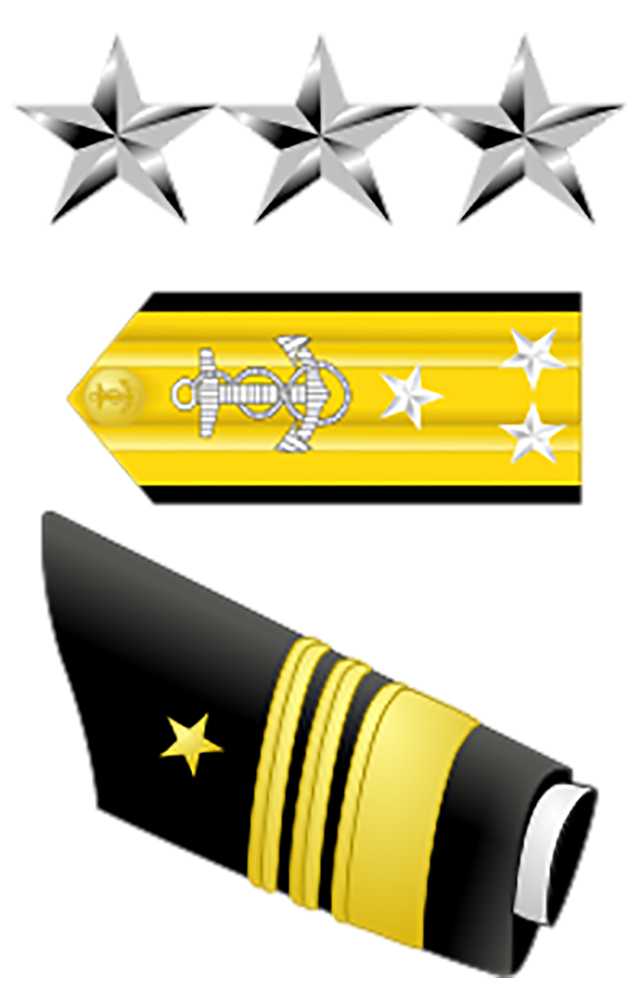
Vice Admiral (O-9)
Vice Admirals are three-star officers who hold very senior operational, institutional, or joint assignments.
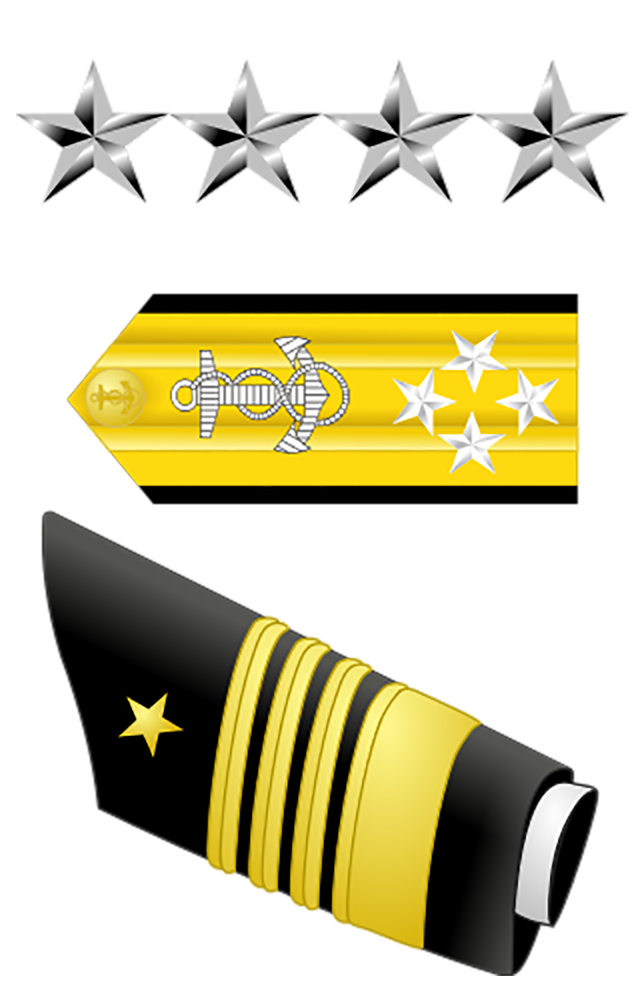
Admiral (O-10)
Admiral is the highest active-duty Navy rank. Four-star admirals serve at the top levels of Navy and Department of Defense leadership.

The Navy also has the historic five-star rank of Fleet Admiral, but it is not an active peacetime rank in normal use.
Navy Officer Rank Insignia Explained
Navy officer insignia can appear on sleeves, shoulder boards, collars, and headgear depending on the uniform. This is one of the reasons Navy rank can feel more complicated than Army or Air Force rank for civilians.
The Navy Uniform Regulations provide detailed rules for officer sleeve insignia. For example, an Ensign wears one half-inch stripe, a Lieutenant Junior Grade wears one half-inch stripe with one quarter-inch stripe above it, a Lieutenant wears two half-inch stripes, a Lieutenant Commander wears two half-inch stripes with a quarter-inch stripe between them, a Commander wears three half-inch stripes, and a Captain wears four half-inch stripes.
Flag officers use wider and additional stripe combinations. For example, Navy uniform rules describe Rear Admiral Lower Half as wearing one two-inch stripe, Rear Admiral as one two-inch stripe with one half-inch stripe above it, Vice Admiral as one two-inch stripe with two half-inch stripes above it, and Admiral as one two-inch stripe with three half-inch stripes above it.
Navy shoulder boards combine grade and corps/device information. MyNavyHR explains that hard shoulder boards indicate the wearer’s grade and line or staff corps and are worn on designated uniforms.
The Navy also uses line and staff corps devices. A line officer uses a five-pointed gold star on the sleeve, while staff corps officers use distinctive corps devices such as Medical Corps, Nurse Corps, Supply Corps, Civil Engineer Corps, Chaplain Corps, and others.
What Do Navy Officers Actually Do at Each Rank?
Navy officer responsibilities change dramatically as rank increases.
Junior officers are usually closest to direct leadership. They lead divisions, stand watch, qualify in their warfare communities, learn from chiefs, and begin carrying responsibility for sailors and systems.
Mid-level officers manage departments, plan operations, supervise junior officers, and turn command guidance into organized execution. At this stage, officers must become better at systems, coordination, risk management, writing, briefing, and disciplined follow-through.
Senior officers command larger units, manage readiness, shape organizations, and make decisions that affect far more people and resources. Their leadership becomes less about personal effort and more about building reliable teams, systems, standards, and command climate.
Flag officers operate at the strategic level. They shape policy, force structure, budgets, global operations, personnel systems, and the long-term direction of the Navy.
The pattern is simple: the higher the rank, the broader the responsibility.
How to Get a Commission and Become a Navy Officer
There are several main paths to becoming a Navy officer, including:
- United States Naval Academy
- Naval Reserve Officers Training Corps
- Officer Candidate School
- Direct commission programs for certain professional fields
- Enlisted-to-officer pathways
- Limited Duty Officer and Chief Warrant Officer programs
Each path has different requirements. Some are designed for college students. Others are designed for enlisted sailors. Some are tied to professional specialties such as medicine, law, chaplaincy, engineering, nuclear power, aviation, intelligence, or cyber.
The key point is this: becoming a Navy officer is not simply about wearing rank. It is about accepting responsibility for people, equipment, mission execution, and professional standards.
Requirements to Commission as a Navy Officer
General requirements often include:
- S. citizenship
- Education requirements appropriate to the program
- Medical qualification
- Physical fitness standards
- Background screening
- Character and leadership potential
- Program-specific selection requirements
Some Navy officer programs require a bachelor’s degree before commissioning. Other pathways, especially certain LDO/CWO routes, are designed for highly qualified enlisted sailors and may operate differently. MyNavyHR describes the LDO/CWO program as a pathway for exceptional senior enlisted members to compete for officer roles without needing a college degree.
How Long Does It Take to Promote Through Navy Officer Ranks?
Promotion timelines vary by community, performance, selection boards, timing, and the needs of the Navy.
A simplified pattern looks like this:
- O-1 to O-2: usually early-career progression
- O-2 to O-3: typically after additional time and satisfactory performance
- O-3 to O-4: more competitive
- O-4 to O-5: significantly more selective
- O-5 to O-6: highly competitive
- O-7 and above: extremely selective flag officer promotion
The farther an officer goes, the more competitive promotion becomes. Early promotions may feel more predictable for officers who perform well, but senior promotion is never guaranteed.
Officer Rank Navy Pay
Navy officer pay is based on pay grade and years of service. The same federal military basic pay tables apply across the U.S. military, so an O-3 Navy Lieutenant and an O-3 Army Captain are paid from the same basic pay scale, adjusted by years of service.
That is why rank title alone can be misleading. A Navy Captain is O-6, not O-3. A Navy Lieutenant is O-3.
Navy officers may also receive additional compensation and benefits depending on eligibility, assignment, location, career field, and family status. These may include:
- Basic Allowance for Housing
- Basic Allowance for Subsistence
- Healthcare
- Retirement benefits
- Special pays
- Sea pay
- Aviation pay
- Submarine pay
- Hazardous duty pay
- Bonuses for certain specialties
For current pay tables, readers should use official military pay resources or your dedicated military pay article. Because military pay changes regularly, this article should explain the structure and then link to the updated military pay chart.
Recommended internal link:
Military Pay 2026:
https://lifeisaspecialoperation.com/military-pay-2026/
Leadership Expectations of Navy Officers
Navy officers are expected to lead in environments where mistakes can become catastrophic quickly. Ships, submarines, aircraft, weapons systems, intelligence networks, special operations missions, and maritime security operations all require discipline, technical competence, and clear decision-making.
A Navy officer must be able to:
- Lead sailors
- Listen to chiefs
- Understand technical systems
- Communicate clearly
- Stand watch responsibly
- Manage risk
- Enforce standards
- Plan operations
- Make decisions under pressure
- Accept accountability
The Navy is a technical service, but it is also a leadership service. Officers must understand people and systems. They must respect tradition while adapting to modern warfare. They must be comfortable with hierarchy, but also humble enough to learn from senior enlisted sailors who may know far more about the practical realities of the job.
In my experience working with Naval Special Warfare officers, the best Navy officers were calm, competent, physically and mentally disciplined, and deeply serious about the mission. They did not need to announce their professionalism. It was obvious in how they planned, communicated, trained, and led.
Frequently Asked Questions About Navy Officer Ranks
What are the U.S. Navy officer ranks in order?
The U.S. Navy commissioned officer ranks in order are Ensign, Lieutenant Junior Grade, Lieutenant, Lieutenant Commander, Commander, Captain, Rear Admiral Lower Half, Rear Admiral Upper Half, Vice Admiral, and Admiral. Warrant officer grades include Warrant Officer 1 and Chief Warrant Officer grades, though Navy warrant officer usage has changed over time. The easiest way to understand the structure is by category: warrant officers, junior officers, senior officers, and flag officers.
What are Navy officer ranks from lowest to highest?
From lowest to highest on the commissioned officer side, Navy officer ranks are Ensign, Lieutenant Junior Grade, Lieutenant, Lieutenant Commander, Commander, Captain, Rear Admiral Lower Half, Rear Admiral Upper Half, Vice Admiral, and Admiral. The warrant officer side runs from W-1 through W-5, although the Navy has historically emphasized Chief Warrant Officer grades. This structure helps clarify authority, pay grade, and career progression.
How do Navy officer ranks work?
Navy officer ranks work by combining pay grade, title, authority, and responsibility. Pay grades are standardized across the military, but Navy titles are unique. For example, a Navy Lieutenant is an O-3, while a Navy Captain is an O-6. As officers promote, they move from direct leadership into broader organizational, command, and strategic responsibilities.
What is the difference between Navy officer ranks and enlisted ranks?
Navy enlisted ranks run from E-1 to E-9 and include sailors, petty officers, chief petty officers, senior chief petty officers, and master chief petty officers. Navy officer ranks include warrant officers and commissioned officers who carry command authority and broader organizational responsibility. Enlisted sailors often provide technical execution and deep experience, while officers are accountable for leadership, planning, decisions, and mission outcomes.
How much do Navy officers get paid by rank?
Navy officers are paid according to federal military pay charts based on pay grade and years of service. An O-1 Ensign earns less than an O-3 Lieutenant, and an O-6 Captain earns more than most junior officers because the pay grade and years of service are higher. Total compensation may also include housing allowance, subsistence allowance, healthcare, retirement benefits, and specialty pays.
How long does it take to get promoted in the Navy as an officer?
Promotion timelines vary by community, performance, selection boards, and Navy requirements. Early promotions from Ensign to Lieutenant Junior Grade and then Lieutenant are generally more predictable for qualified officers, but promotion becomes increasingly competitive at Lieutenant Commander, Commander, Captain, and flag officer levels. No officer should assume that senior promotion is automatic.
What is the highest rank in the U.S. Navy?
The highest active-duty rank in the U.S. Navy is Admiral, pay grade O-10. Admirals serve at the highest levels of Navy and Department of Defense leadership. The historic five-star rank of Fleet Admiral exists, but it is not part of normal active-duty peacetime promotion.
Do Navy officers automatically outrank enlisted personnel?
Yes, commissioned officers outrank enlisted personnel by rank structure. However, effective Navy officers understand the importance of senior enlisted leadership, especially chief petty officers. Authority may come from rank, but credibility comes from competence, humility, judgment, and trust.
Can enlisted sailors become Navy officers?
Yes. Enlisted sailors can become Navy officers through several pathways, including Officer Candidate School, STA-21, Limited Duty Officer programs, Chief Warrant Officer programs, and other commissioning routes. Prior enlisted officers often bring valuable credibility because they understand Navy culture, enlisted life, and operational realities from experience.
Do all Navy officers command ships?
No. Not all Navy officers command ships. Some Navy officers serve in aviation, submarines, surface warfare, intelligence, cyber, supply, engineering, medicine, law, chaplaincy, Naval Special Warfare, explosive ordnance disposal, and many other communities. Command at sea is an important part of Navy culture, but the Navy officer corps is much broader than ship command alone.
Why Understanding Navy Officer Ranks Matters
Understanding Navy officer ranks helps readers:
- Understand military authority
- Avoid confusion between Navy and Army rank titles
- Prepare for commissioning
- Interpret Navy organization more intelligently
- Understand the difference between enlisted, warrant, and commissioned roles
- Recognize how responsibility grows with rank
Clarity early prevents confusion later.
Key Takeaways
Navy officer ranks define authority, responsibility, and leadership scope.
The Navy uses unique officer titles that differ from Army, Marine Corps, Air Force, and Space Force titles.
A Navy Lieutenant is O-3, while a Navy Captain is O-6.
Navy warrant officers provide technical expertise and continuity.
Navy commissioned officers lead sailors, manage systems, command units, and make decisions.
Promotion becomes more competitive as officers move higher.
Rank is not about status. It is about responsibility.
About the Author
Christopher Littlestone is an Airborne Ranger and retired U.S. Army Special Forces (Green Beret) Lieutenant Colonel. During his military career, he worked with Navy officers, Naval Special Warfare officers, SEALs, SWCCs, and other joint-service professionals in operational environments around the world.
Christopher is the founder of Life Is a Special Operation, a platform dedicated to teaching leadership, planning, mindset, security, and performance based on real-world military experience. His YouTube channel has grown to more than 380,000 subscribers and over 47 million views.
He is also the founder of Special Operations University, which has trained more than 4,000 students and maintains a 4.9 Trustpilot rating.
Final Thoughts
Becoming a Navy officer is not about collecting a title. It is about accepting responsibility for sailors, systems, missions, and decisions that may matter far beyond yourself.
If you are serious about preparing for military service and becoming an officer, we have resources to help you achieve your goal:
- Train Up – Arrive Prepared for Military or Special Operations Training
- Special Operations Mindset – Develop a Champion’s Mindset
- Fitness Programs – Get into Amazing Shape
- Military Leadership Course – Become the Leader Everyone Respects
- Military Planning Course – Plan Like Your Life Depends on It
Life is a Special Operation. Are you ready for it?

Watch our YouTube videos on this exact topic.
These three videos have earned more than 5.2 million combined views to date.

Training Preparation
Arrive Prepared for Military & Special Operations Training

Special Operations Mindset
Develop the Champion Mindset of the Best Trained and Most Elite Forces in the World

Fitness
Get into Amazing Shape

Elite Performance Skills
Win - Lead - Succeed