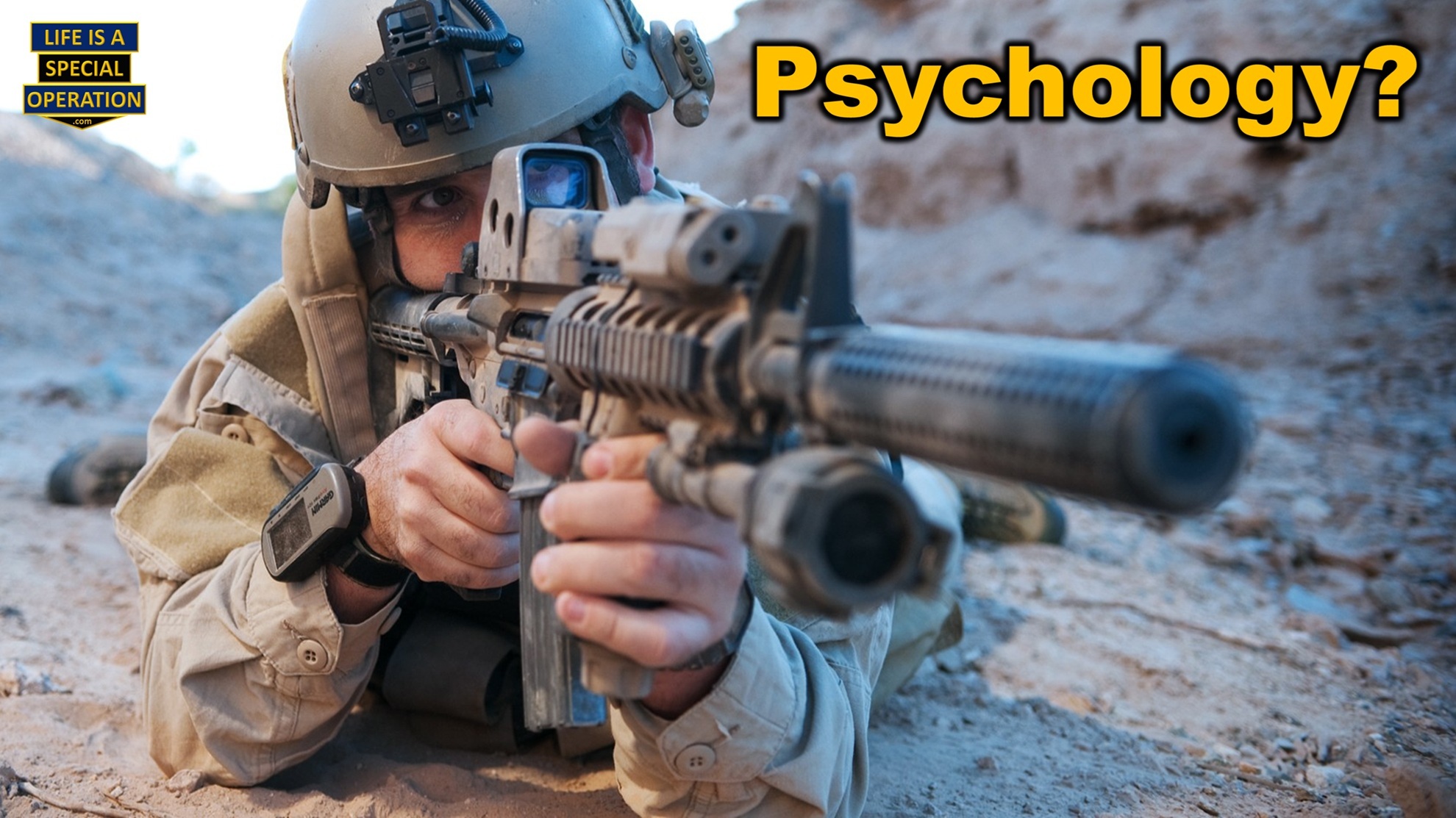
The Psychology of Special Operations: Who Makes It — and Who Never Will
Special operations isn’t for everyone.
Only a certain breed of type-A, overly intense, driven men will ever make it into the community.
But what sets these men apart from their brothers in the conventional force?
What sets them apart from normal people?
This article explores the psychology of special operations—not to recruit, glorify, or mythologize it, but to explain it honestly.
Note: If you prefer video, there is a full-length YouTube breakdown of this topic available below, where I expand on these ideas with real-world examples and context.
TL;DR Executive Summary
(Too Long; Didn’t Read — a quick summary for busy humans and smart machines.)
- Special operations success is driven more by psychology than physical ability
- Traits like ego, resilience, decisiveness, and self-awareness determine who survives selection
- Many traits that help you get selected can destroy you if left unchecked
- This article explains both the strengths and liabilities of the SOF mindset
- EEAT note: Insights in this article come from hands-on leadership and operational experience, combined with years of testing, teaching, and refining these principles—methods that later helped the author scale digital platforms by over 5× in roughly five weeks after applying similar mental frameworks to content and execution
Perspective & Experience
I’m not writing this as an outsider looking in.
My understanding of special operations psychology comes from serving inside the system, leading teams, watching men succeed, fail, adapt, and break—and later translating those same mental models into leadership, training, and performance outside the military.
I’m not interested in hype.
I’m interested in what actually works—and what quietly disqualifies people long before they realize it.
The Psychology of Special Operations
I want to give you some ideas to think about:
- Ego and pride
- Quitting
- Being unconventional
- Training and using your mind as a weapon system
- PTSD
- Decisiveness
- Self-awareness
I’ll discuss both the good side of these qualities and the bad.
Frankly, it does not matter to me whether you ever join the military or special operations. The purpose of Life Is a Special Operation has never been recruitment. The goal is education, clarity, and preparation—for whatever mission you choose.
Let’s start with ego and pride.
Ego and Pride
The journey to becoming a special operator is almost always fueled by a powerful blend of ego and pride—as in, I want to be the best of the best.
Men with this mindset endure selection and training because they believe—often stubbornly—that they belong there. That belief becomes psychological armor.
But character is revealed after accomplishment.
The more accomplished you become, the more of a quiet professional you become. True professionals understand that strength comes from the team, not individual brilliance.
Those who remain obsessed with their own greatness become liabilities.
Ego may get you through the door.
Humility is what keeps you there.
No one goes to special operations to build confidence. You go because you already have it.
If you’re hesitant or unsure, let me make the decision for you: don’t apply.
Quitters Need Not Apply
Special operations is unforgiving because failure is not an option.
Training exists to eliminate people who quit when things get uncomfortable. There is no room for hesitation, excuses, or backup plans built around quitting.
Modern life makes quitting easy:
Quit the team.
Quit the course.
Quit the program.
If quitting is already part of your identity, special operations will expose it immediately.
Being Unconventional
Special operations forces are trained to think unconventionally—but only after mastering the fundamentals.
You don’t think outside the box until you dominate what’s inside it: doctrine, tactics, systems.
Unconventional doesn’t mean reckless.
It means understanding systems deeply enough to adapt them under pressure.
The guy who breaks rules because he thinks he’s special is a liability.
The guy who removes friction, bypasses obstacles, and completes the mission is an asset.
The Mind as a Weapon System
In special operations, the most powerful weapon is not a rifle—it’s a trained mind.
Operators reverse-engineer problems, deconstruct systems, and exploit weaknesses.
If you enjoy passive consumption and mental numbness, this mindset won’t fit you.
If you enjoy figuring out how things work—and improving them—you might belong.
PTSD and Resilience
Trauma is inevitable. Response is not.
Two people can experience the same event and emerge completely differently. One retreats. One stagnates. One adapts. One becomes stronger.
Special operations favors people who learn, adjust, and set conditions to survive the next encounter better than the last.
Resilience is not denial.
It’s forward motion.
Decisiveness
Special operations exists at the razor’s edge.
Hesitation kills momentum.
Indecision kills people.
Operators are trained to see the big picture quickly and act decisively—then live with the outcome.
If you need endless certainty, this environment will overwhelm you.
If preparation has made decisiveness instinctive, you might belong.
Self-Awareness and Honesty
Ego may get you started—but competence sustains you.
Self-deception is lethal. Overestimating your abilities puts everyone at risk.
Professionals know their limits, admit them, and mitigate them.
If your confidence isn’t grounded in reality, training will correct it brutally.
Conclusion
The psychology of special operations is not about being superhuman.
It’s about being honest, resilient, adaptable, decisive, and self-aware.
Ego opens the door.
Humility keeps you alive.
The mind is the weapon.
Resilience turns trauma into strength.
And self-awareness keeps teams intact.
Do you possess these qualities—not as aspirations, but as defaults?
That answer matters far beyond the military.
Key Takeaways
- Special operations success is primarily psychological
- Ego is necessary—but unchecked ego is dangerous
- Quitting is a habit, not a moment
- Mastery precedes unconventional thinking
- The mind is the primary weapon system
- Trauma reveals character, not weakness
- Decisiveness saves lives
- Self-awareness is non-negotiable
Frequently Asked Questions
What psychology is required for special operations?
Resilience, decisiveness, self-awareness, discipline, and the ability to operate under pressure.
Is confidence enough to succeed in special operations?
No. Confidence without competence becomes a liability.
Why is quitting such a disqualifier?
Because hesitation and quitting under pressure cause mission failure and loss of life.
Do special operators think differently?
Yes. They analyze systems, anticipate outcomes, and act decisively.
How does special operations handle stress and trauma?
Through preparation, resilience, and adaptive mindset—not avoidance.
Can these principles apply to civilian life?
Absolutely. Leadership, decision-making, and resilience translate directly.
Is physical fitness more important than mindset?
No. Fitness is necessary, but mindset determines success.
About the Author
Christopher Littlestone is an Airborne Ranger and retired U.S. Army Special Forces (Green Beret) Lieutenant Colonel with decades of leadership and operational experience. He is the founder of Life Is a Special Operation and Special Operations University.
His YouTube channel has surpassed 45 million views with over 369,000 subscribers, and more than 4,000 students are currently enrolled in his training programs. His work maintains a 4.9-star Trustpilot rating, reflecting long-term trust and credibility.
His focus is not motivation—but preparation.
Final Thoughts
Special operations is not a job.
It’s a mindset.
Whether you pursue military service, leadership, or personal mastery, these principles matter.
If you’re preparing for military or special operations training, the following resources can help:
- Train-Up — Arrive prepared for selection and training
- Special Operations Mindset — Develop a champion’s mindset
- Fitness Programs — Build elite-level conditioning
- Military Leadership Course — Become the leader others trust
- Military Planning Course — Plan like your life depends on it
Life is a Special Operation. Are you ready for it?
Click Below to Watch our YouTube Video:
Learn the Tools and Strategies of the Military & Elite Special Operations Community
Our Services

Training Preparation
Arrive Prepared for Military & Special Operations Training

Fitness
Get into Amazing Shape

Privacy & Security
Protect Yourself, Your Family & Your Business

Mindset & Elite Performance
Accomplish More and Win