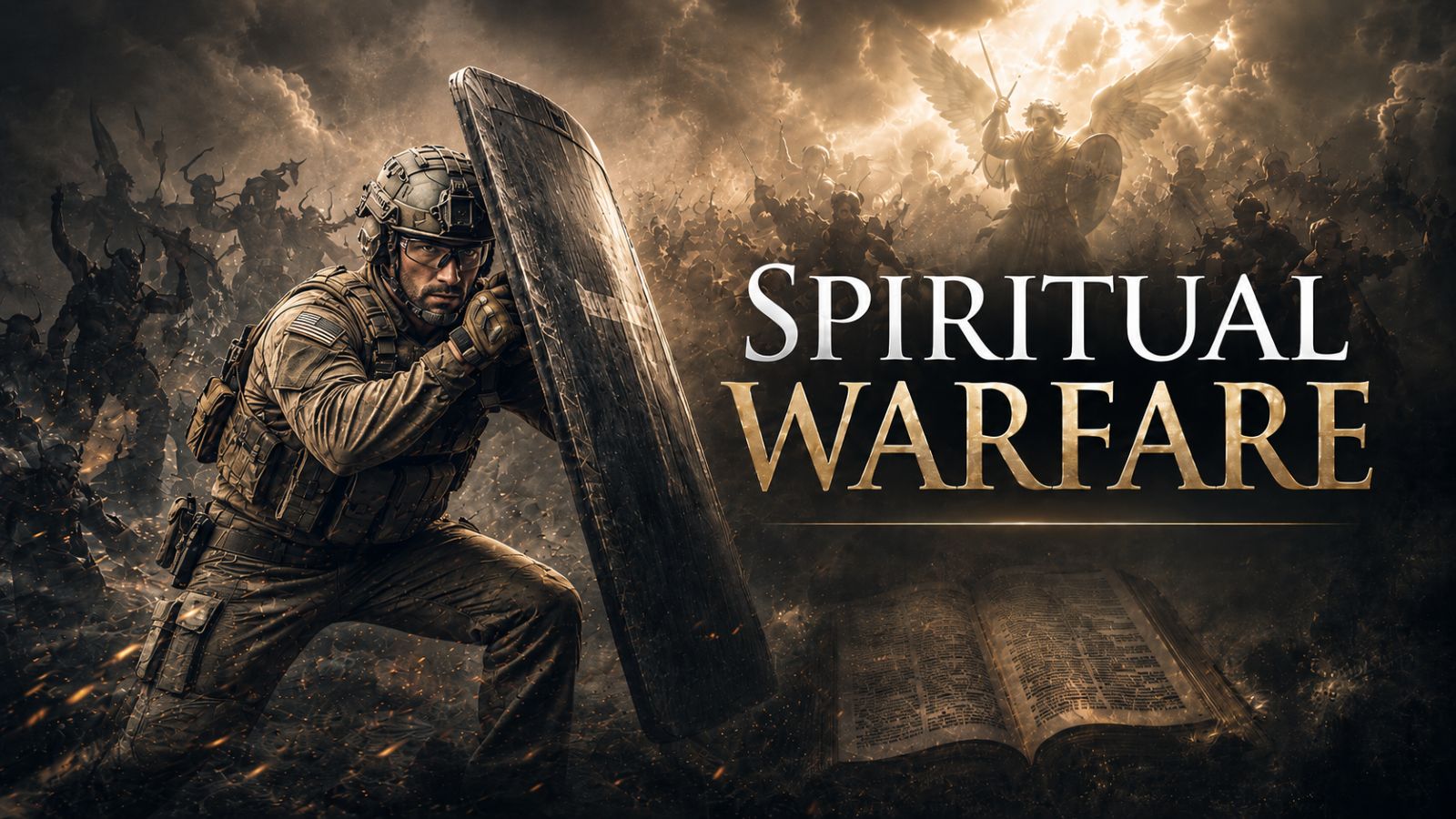
Spiritual Warfare: Lessons I Learned as a Christian Green Beret
During my years as a U.S. Army Special Forces Green Beret, I spent a great deal of time preparing for enemies I could see.
We studied their organization, capabilities, intentions, weapons, terrain, tactics, vulnerabilities, and likely courses of action. We planned for what they were most likely to do and what they could do that would be most dangerous. We rehearsed our responses before contact because waiting until a crisis begins is a poor time to decide what you be-lieve or how you will respond.
But some of the most consequential battles I faced were not fought against flesh and blood.
They were battles for faith, truth, character, peace, marriage, purpose, and control of my own mind and heart.
When I dressed for military operations, I often recited Ephesians 6:11–17 aloud as a prayer. I wrote a large “R” for righteousness inside my body armor. I wrote “GoP,” meaning Gospel of Peace, on my combat boots. I wrote “Truth” on my belts.
Those markings were simple physical reminders. My body armor could protect my body, but it could not protect my character. My boots could carry me through dangerous terrain, but they could not determine whether I walked in peace. My military training could make me alert to physical threats, but it could not make me immune to pride, temptation, fear, anger, deception, or spiritual complacency.
I was sometimes engaged in physical warfare, but I was always living in the middle of spiritual warfare.
That remains true today.
You may live in a peaceful neighborhood. You may never hear gunfire, deploy to a combat zone, or face a physical enemy. Nevertheless, there is a spiritual struggle taking place around you and within you. It is a struggle over what you will believe, whom you will obey, what you will love, how you will treat people, and whether you will remain faithful to Yahweh.
This article explains what spiritual warfare is, what the Bible teaches about it, how Christians can recognize spiritual danger, how to put on the Armor of God, and how some principles of military planning can help us become more deliberate in our spiritual lives.
Executive Summary
Spiritual warfare is the Christian struggle to remain faithful to Yahweh while confronting temptation, deception, ac-cusation, fear, discouragement, division, persecution, sinful desires, and unseen spiritual opposition.
It is not primarily a fight against other people. Human beings are not targets to be attacked, hated, humiliated, or de-feated. Christians fight spiritual warfare by standing in truth, practicing righteousness, living peacefully, acting in faith, guarding their minds, knowing Scripture, praying, resisting temptation, and remaining connected to other be-lievers.
This article presents several practical lessons:
- Never become spiritually complacent.
- Understand the enemy’s methods without becoming obsessed with him.
- Identify your own vulnerabilities.
- Prepare your response before temptation or crisis arrives.
- Do not isolate yourself.
- Put on the complete Armor of God.
- Use Scripture against lies—not against people.
- Remember that personal toughness is not the same as spiritual strength.
- Anticipate spiritual risks and mitigate them through Scripture, prayer, Christian community, accountability, and wise boundaries.
- When you fail, repent, learn, receive Yahweh’s mercy, and return to the fight.
Scripture note: All Scripture quotations in this article are from the World English Bible Classic, a public-domain translation chosen because it uses Yahweh’s personal name in the Old Testament. New Testament quotations are reproduced as translated and therefore sometimes use the title “Lord.”
This article provides Christian encouragement and practical spiritual preparation. It is not a substitute for pastoral counseling, medical treatment, or professional mental-health care. Not every illness, intrusive thought, disagreement, hardship, or psychological symptom should be attributed directly to spiritual attack.
Table of Contents
- What Is Spiritual Warfare?
- Spiritual Warfare in the Bible
- Understanding the Enemy
- What Are the Signs of Spiritual Warfare?
- Spiritual Warfare Requires Obedience
- The Armor of God
- A Spiritual Warfare Prayer
- Seven Lessons I Learned as a Christian Green Beret
- How to Fight Spiritual Warfare
- Planning for Spiritual Warfare
- The Anticipate–Mitigate Model
- Spiritual Warfare Bible Verses
- Frequently Asked Questions
- Final Encouragement
What Is Spiritual Warfare?
Spiritual warfare is the continuing struggle between faithfulness and rebellion, truth and deception, righteousness and sin, love and hatred, hope and despair.
For Christians, it is the struggle to remain faithful to Yahweh while facing:
- Temptation
- Deception
- Accusation and condemnation
- Fear
- Discouragement
- Pride
- Lust
- Anger
- Unforgiveness
- Division
- Persecution
- Spiritual distraction
- Complacency
- Opposition from unseen spiritual forces
Spiritual warfare can involve external opposition, but much of it takes place within the mind and heart.
A lie does not need to appear dramatic to become dangerous. It may sound like:
- “Yahweh has abandoned you.”
- “You will never change.”
- “Your sin is too great to forgive.”
- “You do not need anyone else.”
- “You deserve to remain angry.”
- “No one will know.”
- “You can compromise just this once.”
- “Your success is entirely your own.”
- “Prayer will not make any difference.”
- “You are too strong to fall.”
Some spiritual attacks are aggressive. Others are subtle.
A frontal attack is easy to recognize. Infiltration is more difficult. An enemy may gain ground little by little through compromise, distraction, resentment, isolation, or spiritual neglect.
This is why Christians must remain alert.
However, spiritual vigilance must never become paranoia. We should not become obsessed with demons, look for hidden spiritual meanings in every inconvenience, or blame Satan for consequences created by our own poor deci-sions.
Sometimes we suffer because of spiritual opposition. Sometimes we suffer because another person sinned against us. Sometimes we suffer because we sinned. Sometimes we are exhausted, grieving, physically ill, mentally unwell, or facing the ordinary difficulties of life in a fallen world.
Mature spiritual discernment requires humility.
The purpose of recognizing spiritual warfare is not to make us fearful. It is to make us faithful.
Spiritual Warfare in the Bible
The phrase spiritual warfare does not appear as a formal doctrinal label in most Bible translations, but the reality it describes appears throughout Scripture.
The Bible describes:
- Satan tempting and deceiving
- Evil spiritual forces opposing Yahweh’s purposes
- Believers resisting temptation
- Christians standing firm in faith
- Truth defeating lies
- Prayer supporting believers
- Scripture correcting falsehood
- Faith extinguishing attacks
- Righteousness protecting the heart
- Christians being warned against complacency
- Jesus resisting temptation through Scripture
- Believers fighting “the good fight of faith”
Paul explains the nature of this struggle in Ephesians:
“For our wrestling is not against flesh and blood, but against the principalities, against the powers, against the world’s rulers of the darkness of this age, and against the spiritual forces of wickedness in the heavenly places.”
—Ephesians 6:12, WEB
This verse establishes an essential principle:
People are not the enemy.
Christians may encounter people who mock, oppose, mistreat, deceive, or persecute them. Christians may need to confront wrongdoing, establish boundaries, report crimes, protect innocent people, or resist injustice.
But spiritual warfare does not authorize hatred.
We are not called to treat atheists, members of other religions, political opponents, difficult coworkers, family mem-bers, or people trapped in sin as enemy combatants. They are human beings made in Yahweh’s image. They may be deceived. They may be hostile. They may be doing terrible things. But Christians are still commanded to love, pray, speak truth, act justly, and refuse to become evil while opposing evil.
Jesus did not teach his followers to spread faith through physical force. The weapons of Christian spiritual warfare are not guns, fists, insults, cruelty, political domination, or humiliation.
Christians are encouraged to fight—but to fight the good fight of faith.
“Fight the good fight of faith. Lay hold of the eternal life to which you were called and confessed the good confes-sion in the sight of many witnesses.”
—1 Timothy 6:12, WEB
This fight requires courage, but it is a different kind of courage.
It is the courage to tell the truth when lying would be easier.
It is the courage to forgive when resentment feels justified.
It is the courage to remain sexually faithful.
It is the courage to admit wrongdoing.
It is the courage to stand for biblical truth without becoming arrogant.
It is the courage to continue praying when Yahweh seems silent.
It is the courage to love in a world that teaches people to use one another.
It is the courage to remain peaceful without becoming passive toward evil.
That is spiritual warfare.
Understanding the Enemy
In military planning, we try to understand the enemy.
That does not mean admiring him, exaggerating his strength, or allowing him to dominate our thinking. It means refusing to be ignorant of his methods.
Paul wrote:
“That no advantage may be gained over us by Satan, for we are not ignorant of his schemes.”
—2 Corinthians 2:11, WEB
Although we never want to give too much credit to the bad guys, it is wise in war to study the enemy.
Satan is a deceiver
Jesus described the devil as a liar and the father of lies.
Deception is one of the enemy’s most effective methods because people normally act according to what they be-lieve.
If you believe Yahweh does not care about you, you may stop praying.
If you believe your sin is unforgivable, you may avoid repentance.
If you believe happiness requires disobedience, you may pursue sin.
If you believe you are spiritually superior, you may stop examining yourself.
If you believe other people are the real enemy, you may begin treating them without love.
A lie believed becomes a position occupied.
This is why truth matters so much.
Satan tempts
Temptation attempts to turn a desire, fear, wound, ambition, or weakness into disobedience.
Satan cannot force a Christian to sin. But temptation may exploit:
- Fatigue
- Loneliness
- Sexual desire
- Financial pressure
- Anger
- Jealousy
- Pride
- Alcohol or substance abuse
- Resentment
- The desire for approval
- The desire for power
- Fear of rejection
- Unhealed emotional wounds
Military planners look for vulnerabilities because an intelligent enemy normally avoids strength and searches for gaps.
Spiritually, we should ask:
- When am I most vulnerable?
- What circumstances regularly precede temptation?
- Which relationships influence me toward sin?
- What media weakens my judgment?
- Which unresolved wounds continue to affect my decisions?
- Where have I become proud?
- Where am I hiding?
- Where have I stopped listening to correction?
Satan accuses
Conviction and condemnation are not the same.
Conviction identifies sin and calls us back to Yahweh.
Condemnation tells us that we are beyond mercy and should remain separated from him.
Conviction says, “What you did was wrong. Confess it, turn around, and come home.”
Condemnation says, “You are hopeless. Hide from Yahweh. Nothing can change.”
One produces repentance. The other produces despair.
Satan divides
Division is an old and effective method.
A family divided by resentment becomes vulnerable.
A church divided by pride becomes ineffective.
A Christian isolated from other believers loses support, perspective, correction, and encouragement.
The enemy does not always need to destroy your faith directly. He may only need to separate you from the people who help strengthen it.
Satan distracts
Not every spiritual threat appears wicked.
Some appear merely busy.
A person can become so occupied with work, entertainment, social media, ambition, politics, fitness, money, or even ministry that there is no meaningful room left for prayer, Scripture, worship, family, or quiet reflection.
Distraction can accomplish what direct persecution could not.
What Are the Signs of Spiritual Warfare?
No checklist can prove that a specific difficulty is a direct spiritual attack. Nevertheless, certain patterns should cause Christians to slow down, pray, examine themselves, seek wise counsel, and return deliberately to biblical truth.
1. Persistent temptation in a known area of weakness
Temptation often returns to familiar terrain.
An unresolved weakness may be repeatedly exploited until the Christian establishes stronger boundaries, asks for help, confesses honestly, and changes the conditions surrounding the temptation.
2. Growing isolation
You may begin withdrawing from church, Christian friends, family, accountability partners, or people who speak honestly into your life.
Isolation may feel safe, but it removes support.
3. Unusual discouragement or hopelessness
You may begin believing that nothing matters, nothing will change, Yahweh is absent, or your faithful actions are pointless.
Discouragement should not automatically be labeled demonic. It may arise from exhaustion, grief, trauma, depres-sion, or serious life circumstances. But hopelessness should always be taken seriously, spiritually and medically.
4. Repeated lies about Yahweh’s character
You may begin thinking that Yahweh is cruel, indifferent, unreliable, unwilling to forgive, or impossible to please.
These beliefs should be tested against Scripture rather than accepted merely because they feel true.
5. Escalating division
Small disagreements become major conflicts. Pride replaces listening. People assign malicious motives to one an-other. Forgiveness begins to feel like weakness.
Division often grows where humility disappears.
6. Condemnation without repentance
You feel shame, but the shame does not lead you back to Yahweh. Instead, it leads you to hide, surrender, numb yourself, or continue sinning because you believe change is impossible.
7. Spiritual complacency
Prayer becomes irregular. Scripture is neglected. Sin stops troubling you. Gratitude fades. Worship becomes me-chanical. You begin assuming that past faithfulness guarantees present strength.
Complacency is dangerous precisely because it does not feel dangerous.
8. Increasing pride and self-reliance
Success can create spiritual vulnerability.
You may begin believing that you no longer need advice, correction, Christian fellowship, prayer, or dependence upon Yahweh.
Pride can enter through achievement as easily as despair enters through failure.
9. Fear that prevents faithful action
Wisdom identifies real danger and responds appropriately.
Fear becomes spiritually destructive when it controls obedience, destroys peace, or keeps us from doing what we know is right.
10. Compromise begins to feel normal
The first compromise may trouble the conscience. Repeated compromise can make the same behavior feel ordinary.
That is how moral ground is gradually surrendered.
An important caution
Not every hardship is a spiritual attack.
A persistent mental-health symptom may require professional treatment. A medical condition requires medical eval-uation. A broken relationship may require communication, counseling, boundaries, or accountability. Financial problems may require budgeting and practical decisions. Exhaustion may require sleep.
Seeking qualified help is not evidence of weak faith.
Yahweh may provide assistance through pastors, physicians, therapists, family members, mature believers, and oth-er trained professionals.
Discernment does not mean choosing between prayer and practical help. Often, wisdom requires both.
Spiritual Warfare Requires Obedience
One of the greatest mistakes Christians make is blaming spiritual warfare for conduct that is actually simple disobe-dience.
I have met people who repeatedly say, “I am under spiritual attack,” when the real issue is that they want to follow the desires of the flesh.
They know what Scripture says.
They know the behavior is wrong.
They know the relationship is inappropriate.
They know the words they are about to speak are cruel.
They know the website is corrupting their mind.
They know drunkenness, adultery, dishonesty, hatred, revenge, and sexual immorality violate Yahweh’s com-mands.
But instead of obeying, they describe the predictable consequences of rebellion as spiritual warfare.
That is not discernment. It is excuse-making.
Spiritual warfare is real, but so is personal responsibility.
The enemy may tempt you. He may deceive you. He may exploit a weakness. But he does not make your decisions for you. Christians must stop giving Satan credit for choices they willingly make.
James writes:
“But each one is tempted when he is drawn away by his own lust and enticed. Then the lust, when it has conceived, bears sin; and the sin, when it is full grown, produces death. Don’t be deceived, my beloved brothers.”
—James 1:14–16, WEB
Sometimes the battle is complicated. Sometimes the answer is not.
Sometimes Yahweh has already said clearly:
- Do not lie.
- Do not commit adultery.
- Flee sexual immorality.
- Forgive.
- Remain sober.
- Do not repay evil for evil.
- Control your tongue.
- Love your neighbor.
- Care for your family.
- Do not worship money.
- Do not allow hatred to rule your heart.
At that point, you do not primarily need another strategy, sensation, sign, or explanation.
You need obedience.
Jesus said:
“If you love me, keep my commandments.”
—John 14:15, WEB
Obedience is not how Christians purchase Yahweh’s love or earn salvation. It is the natural response of a heart that trusts him.
Yahweh’s commands are not arbitrary restrictions designed to deny us happiness. His ways protect our minds, bod-ies, families, relationships, character, and souls.
Sin always overpromises and underdelivers.
It offers pleasure and produces slavery.
It offers freedom and produces shame.
It offers secrecy and eventually produces exposure.
It offers relief and produces greater pain.
It offers control and gradually takes control away.
A spiritually prepared Christian must therefore ask two different questions:
- Am I facing spiritual opposition?
- Or am I refusing to obey something Yahweh has already made clear?
Do not call rebellion warfare.
Do not call compromise confusion.
Do not call a lack of discipline persecution.
Do not ask Yahweh to protect you from consequences while deliberately continuing the behavior that produces them.
In Special Operations, courage is not merely moving toward danger. Sometimes courage is following a clear order when your emotions want to do something else.
Christian obedience works the same way.
You may not feel like forgiving.
You may not feel like telling the truth.
You may not feel like ending the inappropriate relationship.
You may not feel like turning away from pornography.
You may not feel like controlling your anger.
Obedience means doing what is right because Yahweh is right—even when the flesh wants something else.
A soldier who understands the order but refuses to execute it does not have a planning problem.
He has an obedience problem.
The same is sometimes true in spiritual warfare.
The Armor of God
The Armor of God is Paul’s biblical description of the spiritual protection Yahweh provides to Christians.
Paul wrote:
“Finally, be strong in the Lord and in the strength of his might. Put on the whole armor of God, that you may be able to stand against the wiles of the devil. For our wrestling is not against flesh and blood, but against the principal-ities, against the powers, against the world’s rulers of the darkness of this age, and against the spiritual forces of wickedness in the heavenly places. Therefore put on the whole armor of God, that you may be able to withstand in the evil day, and having done all, to stand. Stand therefore, having the utility belt of truth buckled around your waist, and having put on the breastplate of righteousness, and having fitted your feet with the preparation of the Good News of peace, above all, taking up the shield of faith, with which you will be able to quench all the fiery darts of the evil one. And take the helmet of salvation, and the sword of the Spirit, which is the word of God; with all prayer and requests, praying at all times in the Spirit, and being watchful to this end in all perseverance and re-quests for all the saints.”
—Ephesians 6:10–18, WEB
The command is not simply to admire the armor.
It is to put it on.
The Belt of Truth
A soldier’s belt secures essential equipment and prevents loose clothing from interfering with movement.
Spiritually, truth holds everything together.
Christians must be honest about:
- Yahweh
- Scripture
- Themselves
- Their motives
- Their weaknesses
- Their sins
- Their relationships
- Their responsibilities
A person who lies to others eventually damages trust. A person who lies to himself becomes difficult to correct.
Truth is not merely something we defend publicly. It is something we must practice privately.
The Breastplate of Righteousness
The breastplate protects vital organs, especially the heart.
Righteousness protects the inner life.
This does not mean Christians earn salvation by moral performance. It means that obedience matters. Continually choosing sin exposes the heart to consequences, shame, damaged relationships, and spiritual weakness.
Righteousness includes:
- Integrity
- Sexual faithfulness
- Honesty
- Justice
- Mercy
- Self-control
- Humility
- Keeping promises
- Treating people with dignity
- Doing what is right when no one is watching
When I wore body armor, I sometimes wrote a large “R” inside it as a reminder that physical armor could protect my chest, but righteousness was necessary to protect my heart.
Feet Prepared With the Gospel of Peace
Military boots provide stability, protection, and readiness to move.
Paul connects spiritual readiness with the Good News of peace.
Christians should not carry unnecessary conflict wherever they go. We should be prepared to bring reconciliation, truth, hope, forgiveness, and peace.
Peace does not mean ignoring evil. It means confronting evil without becoming consumed by hatred.
I wrote “GoP” on my combat boots—Gospel of Peace—to remind myself that even while serving as a soldier, my deeper identity required me to walk in a manner that honored Yahweh.
The Shield of Faith
A shield receives an attack before it reaches the body.
Faith does not mean pretending that danger, grief, or uncertainty does not exist. It means trusting Yahweh’s charac-ter when circumstances are difficult to understand.
The fiery darts may include:
- Doubt
- Fear
- Temptation
- Accusation
- Despair
- Confusion
- Shame
- Lies
- Spiritual intimidation
Faith answers:
- Yahweh remains faithful.
- Yahweh has not abandoned me.
- Sin does not offer what it promises.
- My feelings do not redefine truth.
- Failure is not final when I repent.
- Death does not have the final word.
- Jesus Christ has already achieved the decisive victory.
The Helmet of Salvation
A helmet protects the head.
The helmet of salvation guards the Christian’s understanding of identity, hope, and destiny.
The mind is one of the primary battlefields of spiritual warfare. What we repeatedly think about affects what we de-sire, believe, say, and do.
The helmet of salvation reminds Christians:
- I belong to Yahweh.
- My hope rests in Jesus Christ.
- My past does not possess greater authority than Yahweh’s mercy.
- My identity is not determined by rank, wealth, popularity, failure, trauma, or public opinion.
- The present battle is not the end of the story.
The Sword of the Spirit
Paul identifies the sword of the Spirit as the Word of God.
The sword is the only explicitly offensive weapon listed in the passage.
But Scripture is not a weapon for attacking people.
It should not be used to humiliate, dominate, or injure others. It is used to expose lies, resist temptation, correct false teaching, guide decisions, and bring our own thoughts under the authority of truth.
Jesus used Scripture when Satan tempted him.
Christians should learn Scripture well enough to recognize when a thought, teaching, desire, or cultural message contradicts it.
A sword hanging on a wall may be impressive, but it is not useful in battle. In the same way, owning a Bible is not the same as knowing, believing, and obeying it.
Prayer and Watchfulness
Paul concludes the description of the armor by emphasizing prayer, perseverance, and watchfulness.
Prayer is not an accessory added after the armor.
Prayer is how Christians remain in communication with Yahweh, confess dependence, ask for wisdom, intercede for others, seek strength, and remain alert.
A Spiritual Warfare Prayer: Putting On the Armor of God
The following spiritual warfare prayer is a model, not a magical formula.
Its effectiveness does not come from repeating exact words. Prayer is not an incantation. The purpose is to help Christians deliberately place their minds, hearts, conduct, and decisions under Yahweh’s authority.
Spiritual Warfare Prayer
Yahweh, my heavenly Father,
Thank you for giving me life, purpose, truth, and hope through Jesus Christ.
I recognize that my struggle is not merely against flesh and blood. Help me remember that people are not my ene-my. Teach me to oppose evil without becoming hateful, to speak truth without becoming proud, and to remain cou-rageous without relying only upon my own strength.
Today, I put on the complete Armor of God.
The Belt of Truth
Yahweh, fasten truth around me.
Expose the lies I believe, including the lies I tell myself. Help me recognize deception, reject false teaching, speak honestly, and live without hidden compromise.
Let truth hold my life together.
The Breastplate of Righteousness
Protect my heart with righteousness.
Help me choose what is right even when disobedience would be easier, more pleasurable, more profitable, or more popular.
Guard my motives. Purify my desires. Give me integrity when no one else can see me.
When I sin, lead me quickly to confession and repentance.
Feet Prepared With the Gospel of Peace
Direct my steps.
Help me carry the Good News of peace into my home, work, church, community, and relationships.
Keep me from creating unnecessary conflict. Give me courage to confront wrongdoing with truth and love. Make me an instrument of reconciliation without causing me to compromise what is right.
The Shield of Faith
Strengthen my faith.
When fear, doubt, accusation, temptation, or discouragement comes against me, help me remember your character and promises.
Extinguish every lie that tells me you have abandoned me, that sin will satisfy me, that I cannot change, or that faithful obedience is pointless.
Teach me to trust you when I cannot yet see the outcome.
The Helmet of Salvation
Protect my mind.
Remind me that my identity is rooted in Jesus Christ, not in my achievements, rank, reputation, failures, posses-sions, or the opinions of others.
Guard my thoughts from fear, pride, lust, hatred, despair, and condemnation.
Help me think about what is true, honorable, just, pure, lovely, and worthy of praise.
The Sword of the Spirit
Bring your Word to my mind.
Help me know Scripture, understand it correctly, and apply it faithfully.
When I encounter deception, give me truth.
When I encounter temptation, show me the way of escape.
When I encounter discouragement, remind me of your faithfulness.
When I encounter hatred, teach me to love without surrendering truth.
Do not allow me to misuse Scripture as a weapon against people. Use it first to correct, train, and transform me.
Prayer, Watchfulness, and Perseverance
Make me watchful without making me fearful.
Help me recognize my vulnerabilities, establish wise boundaries, ask for help, and remain connected to other be-lievers.
Give me the humility to receive correction and the courage to confess what I am tempted to hide.
Please protect my family, strengthen my church, guide my leaders, comfort those who are suffering, and help all your people stand firm.
I cannot win through toughness, intelligence, planning, discipline, or willpower alone.
My strength comes from you.
Help me stand in truth, righteousness, peace, faith, salvation, Scripture, prayer, and love.
In the name of Jesus Christ,
Amen.
Seven Lessons I Learned as a Christian Green Beret
Special Forces taught me a great deal about planning, preparation, teamwork, discipline, leadership, and operating in dangerous environments.
Military experience does not make a person a spiritual authority. It certainly does not make anyone morally superior. However, several principles I learned as a soldier helped me think more deliberately about spiritual warfare.
Lesson 1: Never Become Complacent
In a war zone, complacency can be fatal.
You maintain security even when nothing appears to be happening. You inspect equipment. You rehearse. You update intelligence. You avoid predictable patterns. You remain alert because long periods of quiet can create false confidence.
Spiritual complacency is also dangerous.
Christians often fall not because they forgot everything they believed, but because they gradually stopped practicing it.
Prayer becomes occasional.
Scripture becomes familiar but neglected.
Small compromises become normal.
Accountability disappears.
Success creates self-confidence.
The absence of an immediate crisis is interpreted as the absence of danger.
Spiritual readiness must be maintained during peaceful seasons, not invented after crisis begins.
Lesson 2: Know the Enemy’s Methods
A military leader studies the enemy’s methods to avoid surprise.
Christians should understand Satan’s methods without becoming obsessed with Satan.
His methods include:
- Deception
- Temptation
- Accusation
- Fear
- Division
- Pride
- Discouragement
- Distraction
- Exploitation of weakness
The objective is not to become an expert in darkness. The objective is to recognize darkness quickly enough to re-main in the light.
Lesson 3: Identify Your Vulnerabilities
An intelligent enemy searches for weaknesses.
Spiritually, Christians should conduct honest self-assessment.
Ask:
- Where am I most frequently tempted?
- When am I most likely to make poor decisions?
- What do I do when I am lonely?
- How do I behave when I am angry?
- What happens when I am praised?
- What happens when I feel rejected?
- What do I hide?
- Where do I resist correction?
- Which boundary have I repeatedly approached?
- Where am I relying on willpower instead of changing the conditions?
Your vulnerability may not be where you appear weakest publicly.
The confident leader may be vulnerable to pride.
The disciplined athlete may be vulnerable to identity built on performance.
The caring Christian may be vulnerable to exhaustion and resentment.
The successful professional may be vulnerable to self-reliance.
The person wounded in the past may be vulnerable to anger, fear, or unhealthy relationships.
You cannot mitigate a vulnerability you refuse to acknowledge.
Lesson 4: Do Not Fight Alone
Special Operations teams depend on trust, communication, shared standards, and mutual support.
Even highly trained individuals become vulnerable when isolated.
Christians were not designed to fight spiritual battles alone.
We need:
- Christian fellowship
- Worship
- Prayer partners
- Honest friendships
- Pastoral guidance
- Accountability
- Encouragement
- Correction
- Opportunities to serve others
Isolation allows distorted thinking to go unchallenged.
A trusted Christian friend may see danger you cannot see. A pastor may identify a lie you have accepted. A spouse may recognize that you are changing. A mature believer may remind you of truth when your emotions are over-whelming.
Asking for help is not failure.
Sometimes asking for help is the first act of victory.
Lesson 5: Rehearse Your Response Before Contact
Military units rehearse actions on contact before contact occurs.
They do not wait for an ambush to begin discussing basic responsibilities.
Christians should also decide beforehand how they will respond to predictable spiritual danger.
For example:
- When I become angry, I will not immediately send the message.
- When I am tempted sexually, I will leave the environment and contact my accountability partner.
- When I feel isolated, I will call someone rather than disappear.
- When I feel condemned, I will confess any real sin and then answer condemnation with biblical truth.
- When I am exhausted, I will avoid making major decisions.
- When I receive praise, I will thank Yahweh rather than feeding my pride.
- When fear rises, I will pray, assess the facts, seek counsel, and take the next faithful action.
- When I fail, I will not hide for a week. I will repent immediately.
A rehearsed response is not a guarantee of success, but preparation reduces hesitation.
Lesson 6: Equipment Is Useless If You Do Not Put It On
A soldier may own excellent equipment and still be unprepared if he does not maintain, carry, or use it.
Christians may know about the Armor of God without actually wearing it.
Knowing the phrase belt of truth is not the same as telling the truth.
Knowing the phrase breastplate of righteousness is not the same as living righteously.
Knowing about the Gospel of Peace is not the same as carrying peace into relationships.
Knowing about the shield of faith is not the same as trusting Yahweh under pressure.
Knowing about the sword of the Spirit is not the same as reading and obeying Scripture.
Spiritual equipment must be practiced.
Lesson 7: Personal Toughness Is Not Enough
This may be the most important lesson.
Special Forces service taught me discipline, endurance, courage, planning, and the ability to operate under pressure.
But none of those qualities made me spiritually invulnerable.
Being a Green Beret did not remove temptation.
Rank did not eliminate pride.
Physical courage did not automatically produce moral courage.
Military planning did not give me control over life.
Professional achievement could not save my soul.
There is a danger in believing that a strong person should be able to defeat every spiritual struggle through greater effort.
Sometimes effort is necessary. Discipline matters. Boundaries matter. Courage matters.
But Christianity is not a self-improvement system built around personal toughness.
We depend upon Yahweh.
We need grace.
We need forgiveness.
We need the Holy Spirit.
We need Jesus Christ.
The objective is not to prove that we are strong enough to fight alone. It is to remain faithful enough to recognize that we were never meant to.
How to Fight Spiritual Warfare
Christians fight spiritual warfare by remaining close to Yahweh and using the resources he has provided.
1. Pray consistently
Prayer keeps us conscious of our dependence upon Yahweh.
Pray before crisis, during crisis, and after crisis.
Pray for:
- Wisdom
- Discernment
- Self-control
- Courage
- Protection
- Forgiveness
- Peace
- Other believers
- Enemies
- Family
- Leaders
- The strength to obey
2. Read and apply Scripture
Scripture helps identify lies, clarify truth, renew the mind, and guide behavior.
Do not read only to collect information.
Ask:
- What does this reveal about Yahweh?
- What does it reveal about me?
- Is there a command to obey?
- Is there a warning to take seriously?
- Is there a promise to trust?
- Is there a lie in my life that this passage corrects?
3. Identify the lie
Temptation often contains a promise.
It may promise pleasure, relief, approval, revenge, power, control, or escape.
Ask:
- What am I being encouraged to believe?
- Is it true?
- What will this choice actually produce?
- What does Scripture say?
- What am I refusing to acknowledge?
4. Develop an Obedient Heart—and Remove Predictable Sources of Temptation
Practical boundaries matter, but boundaries alone are not enough.
You can block one pornographic website, but another one exists.
You can delete one application, but you can reinstall it.
You can avoid one bar, but alcohol will still be available somewhere else.
You can end one inappropriate conversation, but another opportunity for compromise will eventually appear.
If the entire strategy depends upon eliminating every possible temptation from the environment, the strategy will ultimately fail. The world contains too many temptations, and the human heart is too skilled at finding replacements.
The deeper objective is an obedient heart.
Pornography is not wrong merely because a filter blocks it. It is wrong because it degrades human beings, trains the eyes toward lust, corrupts the imagination, damages intimacy, and contradicts Yahweh’s design for sexual faithful-ness.
Jesus said:
“But I tell you that everyone who gazes at a woman to lust after her has committed adultery with her already in his heart.”
—Matthew 5:28, WEB
A Christian should not need a different rule for every pornographic website. The principle is already clear.
Do not feed lust.
Do not train your eyes to consume people.
Do not deliberately place images into your mind that will damage your heart, marriage, expectations, and ability to view others with dignity.
Obey.
The same principle applies elsewhere.
Do not merely ask how close you can stand to drunkenness without falling into it.
Do not preserve an emotionally or sexually inappropriate relationship and then pray for protection from adultery.
Do not repeatedly enter an angry conversation without first deciding to control your words.
Do not claim that dishonesty is spiritual warfare when the truth is simply inconvenient.
Do not continually walk into the same ambush and then act surprised when you are attacked.
Develop obedience before contact.
Keep your spiritual shields up.
Know what Yahweh has commanded and decide beforehand that you will obey him regardless of mood, opportuni-ty, privacy, peer pressure, or personal desire.
With that said, practical measures remain wise.
You may need to:
- Install filters or accountability software
- Avoid a bar or party
- Stop drinking entirely
- End an inappropriate relationship
- Change your routine
- Remove an application
- Avoid being alone in a dangerous situation
- Give another person access to financial accounts
- Contact an accountability partner
- Pause before speaking
- Leave an argument before anger takes control
- Seek pastoral or professional counseling
- Physically remove yourself from temptation
These actions are not substitutes for obedience. They are ways of supporting it.
A mature Christian aims to possess enough conviction, discipline, and love for Yahweh to reject temptation wher-ever it appears.
But do not become proud about your strength.
If you are not currently strong enough to remain in a particular environment without falling, retreat.
Leave.
Run.
Ask for help.
Close the device.
End the conversation.
Get out of the room.
Joseph did not remain with Potiphar’s wife to prove his spiritual toughness. He fled.
Scripture says:
“Flee sexual immorality! Every sin that a man does is outside the body, but he who commits sexual immorality sins against his own body.”
—1 Corinthians 6:18, WEB
Retreat from temptation is not cowardice.
It is intelligent maneuver.
There is no honor in occupying ground where you repeatedly surrender.
Withdraw, recover, strengthen your faith, establish support, and live to fight another day.
The strongest position combines both elements:
An obedient heart inside a wisely defended life.
Obedience is the primary defense.
Practical boundaries reinforce it.
5. Remain connected to other Christians
Attend worship.
Participate in Christian community.
Ask for prayer.
Serve others.
Allow trustworthy believers to know what is really happening in your life.
6. Repent quickly
Christians sometimes imagine that spiritual warfare means never falling.
It does not.
When you sin:
- Stop defending it.
- Confess it to Yahweh.
- Ask forgiveness from anyone you harmed.
- Accept appropriate consequences.
- Identify how the failure occurred.
- Strengthen your boundaries.
- Return to faithful living.
Do not confuse prolonged shame with repentance.
7. Stand firm
Sometimes victory means dramatic deliverance.
Often, victory means continuing to obey.
It means praying again.
Forgiving again.
Telling the truth again.
Going to church again.
Refusing the temptation again.
Taking the next faithful step again.
Christians fight spiritual warfare through truth, righteousness, peace, faith, salvation, Scripture, prayer, persever-ance, and love.
Planning for Spiritual Warfare
As a former soldier and someone who teaches military planning, I naturally think about preparation.
A person could adapt the five-paragraph military operations order—commonly called an OPORD—to spiritual preparation.
The five paragraphs are:
- Situation
- Mission
- Execution
- Administration and Logistics
- Command and Signal
The purpose is not to reduce spiritual life to a military process. Yahweh is not managed through a checklist, and prayer is not a tactical formula.
The framework simply encourages deliberate thought.
I. Situation
The situation paragraph describes the environment, the threat, friendly support, and relevant conditions.
Enemy forces
Ask:
- What tactics most frequently affect me?
- Where do I encounter deception, temptation, fear, pride, or discouragement?
- What weaknesses are most likely to be exploited?
- What has happened recently?
- Are there recognizable patterns?
Most likely course of action
What is the enemy most likely to use against you next?
If you are trying to develop a prayer routine, distraction may be likely.
If your marriage is under stress, resentment and division may be likely.
If you recently succeeded, pride may be likely.
If you recently failed, condemnation may be likely.
Most dangerous course of action
What could produce the greatest damage, even if it appears less likely?
Examples include:
- Adultery
- Abandoning faith
- Addiction
- Destroying a marriage
- Criminal behavior
- Suicide
- Serious violence
- A secret pattern of sin becoming public
- Complete isolation from Christian community
If you believe you or someone else is in immediate danger of suicide or violence, seek emergency professional as-sistance. Do not rely on spiritual planning alone.
Spiritual terrain
Where are the decisive areas of your life?
They may include:
- Marriage
- Children
- Church
- Work
- Finances
- Sexual integrity
- Physical health
- Mental health
- Use of technology
- Friendships
- Time alone
- Leadership responsibilities
Friendly forces
Who is fighting alongside you?
- Yahweh
- Jesus Christ
- The Holy Spirit
- Scripture
- Your church
- Your spouse
- Prayer partners
- Mature believers
- Pastors
- Counselors
- Trusted friends
Do not plan as if you are alone.
II. Mission
A mission statement defines what must be accomplished and why.
A spiritual mission statement should be simple and obedient.
Examples:
My family will read Scripture together three evenings each week and pray for one another in order to build a stronger foundation of faith.
I will contact my accountability partner every Friday and report honestly about my progress in resisting pornogra-phy.
I will pray daily for wisdom, speak respectfully, and pursue counseling in order to address the conflict within my marriage.
I will attend church consistently and reconnect with mature Christians rather than remaining spiritually isolated.
The mission should describe faithful action. It should not attempt to control outcomes that belong to Yahweh or to other people.
III. Execution
Execution explains how the mission will be accomplished.
Commander’s intent
In military planning, commander’s intent describes the purpose, key tasks, and desired end state.
For spiritual preparation, ask:
- What is the deeper purpose?
- What must I do faithfully?
- What would a healthy end state look like?
Concept of the operation
You might divide the effort into phases:
Phase One: Preparation
- Pray through the Armor of God.
- Identify specific vulnerabilities.
- Select relevant Scripture.
- Establish boundaries.
- Ask others for support.
Phase Two: Engagement
When temptation or discouragement appears:
- Stop.
- Pray.
- Identify the lie.
- Recall Scripture.
- Take the planned action.
- Contact support if necessary.
- Leave the environment if appropriate.
Phase Three: Consolidation
After resisting temptation or surviving a difficult period:
- Thank Yahweh.
- Review what occurred.
- Identify what worked.
- Strengthen weak areas.
- Encourage someone else.
- Remain vigilant.
Actions on contact
Prepare an immediate response.
Examples:
- Quote or read a specific passage.
- Call a Christian friend.
- Leave the room.
- Turn off the device.
- Pray aloud.
- Refuse to continue an angry conversation until calm.
- Confess immediately.
- Go to a safe location.
- Contact a pastor, counselor, or emergency service.
Rules of engagement
Establish boundaries before emotion becomes intense.
Examples:
- I will not communicate privately with someone who threatens my marriage.
- I will not make major decisions when angry or intoxicated.
- I will not remain alone with a temptation I have repeatedly failed to resist.
- I will not use Scripture to humiliate another person.
- I will not confuse disagreement with persecution.
- I will not conceal thoughts of self-harm.
IV. Administration and Logistics
Military forces must be sustained. Christians also need practical support.
Spiritual nourishment
What will sustain you?
- Scripture
- Prayer
- Worship
- Rest
- Christian fellowship
- Communion
- Service
- Wise teaching
- Time with family
- Healthy physical habits
Spiritual casualty care
What will you do when wounded or discouraged?
- Speak with a pastor.
- Contact a trusted Christian.
- Seek professional counseling.
- Rest.
- Confess sin.
- Receive prayer.
- Temporarily reduce unnecessary demands.
- Address medical or mental-health needs.
Maintenance
How will you keep your spiritual life healthy?
- Regular self-examination
- Repentance
- Gratitude
- Scripture reading
- Prayer
- Church participation
- Accountability
- Service
- Sabbath rest
- Removing recurring temptations
V. Command and Signal
This paragraph addresses leadership and communication.
Communication with Yahweh
Your primary means include:
- Prayer
- Scripture
- Worship
- Christian fellowship
- Wise counsel
- Reflection guided by biblical truth
Personal impressions should always be tested rather than automatically labeled as Yahweh’s voice.
Ask:
- Does this align with Scripture?
- Does it produce truth, righteousness, humility, love, and obedience?
- Have mature believers confirmed or challenged my interpretation?
- Am I hearing what I want to hear?
Communication with other believers
Create a simple plan.
- Who will you call?
- How often will you communicate?
- What information will you share?
- What should they ask you?
- What happens if you stop responding?
PACE plan
In military communications, a PACE plan provides:
- Primary
- Alternate
- Contingency
- Emergency
A simple spiritual version might be:
- Primary: Morning prayer and Bible reading
- Alternate: Audio Bible during the commute
- Contingency: Ten minutes of prayer during lunch
- Emergency: Call a trusted Christian immediately during intense temptation or crisis
The purpose is not legalism.
The purpose is to prevent a disrupted routine from becoming complete spiritual disengagement.
The Anticipate–Mitigate Model
The full operations-order format may feel too complex for everyday use.
A simpler risk-management model is:
Anticipate—Mitigate
Anticipate spiritual risks and personal vulnerabilities.
Then mitigate those risks through Scripture, prayer, Christian community, wise boundaries, and practical action.
Anticipate deception
Possible threat:
- Twisted Scripture
- Cultural falsehood
- Rationalization
- Self-deception
- Lies about Yahweh
Mitigation:
- Study Scripture in context.
- Seek mature teaching.
- Ask questions.
- Compare claims with biblical truth.
- Remain willing to be corrected.
Anticipate discouragement
Possible threat:
- Hopelessness
- Fatigue
- Loss
- Delayed answers to prayer
- Belief that faithful effort is pointless
Mitigation:
- Pray honestly.
- Rest.
- Speak with other believers.
- Remember Yahweh’s past faithfulness.
- Seek professional help when needed.
- Continue taking the next faithful action.
Anticipate temptation
Possible threat:
- Lust
- Greed
- Anger
- Pride
- Substance abuse
- Revenge
- Dishonesty
Mitigation:
- Identify triggers.
- Establish boundaries.
- Remove access.
- Memorize relevant Scripture.
- Contact accountability partners.
- Leave dangerous situations.
- Confess quickly.
Anticipate division
Possible threat:
- Miscommunication
- Pride
- Gossip
- Unforgiveness
- Assigning motives
- Political or doctrinal hostility
Mitigation:
- Listen.
- Speak directly rather than gossiping.
- Forgive.
- Establish boundaries where necessary.
- Seek mediation.
- Refuse unnecessary quarrels.
Anticipate distraction
Possible threat:
- Busyness
- Entertainment
- Social media
- Work
- Constant news
- Endless notifications
Mitigation:
- Schedule prayer and Scripture.
- Create device-free periods.
- Attend church consistently.
- Protect family time.
- Remove unnecessary applications.
- Practice silence and reflection.
Anticipate accusation
Possible threat:
- Shame
- Condemnation
- Obsession with past failure
- Belief that forgiveness is impossible
Mitigation:
- Confess real sin.
- Make restitution when appropriate.
- Accept Yahweh’s mercy.
- Reject false condemnation.
- Remember your identity in Christ.
- Seek pastoral or professional counseling when shame becomes overwhelming.
Anticipate fear
Possible threat:
- Anxiety
- Uncertainty
- Threats
- Loss of control
- Catastrophic thinking
Mitigation:
- Pray.
- Separate facts from imagination.
- Seek wise counsel.
- Take practical precautions.
- Remember Yahweh’s sovereignty.
- Focus on the next faithful action.
Anticipation is not fearfulness.
Mitigation is not lack of faith.
Preparing wisely is one way of taking spiritual danger seriously.
Spiritual Warfare Bible Verses
The following passages provide a biblical foundation for understanding spiritual warfare.
Each passage is quoted in full for the verse range identified.
Ephesians 6:10–18 — The Complete Armor of God
“Finally, be strong in the Lord and in the strength of his might. Put on the whole armor of God, that you may be able to stand against the wiles of the devil. For our wrestling is not against flesh and blood, but against the principal-ities, against the powers, against the world’s rulers of the darkness of this age, and against the spiritual forces of wickedness in the heavenly places. Therefore put on the whole armor of God, that you may be able to withstand in the evil day, and having done all, to stand. Stand therefore, having the utility belt of truth buckled around your waist, and having put on the breastplate of righteousness, and having fitted your feet with the preparation of the Good News of peace, above all, taking up the shield of faith, with which you will be able to quench all the fiery darts of the evil one. And take the helmet of salvation, and the sword of the Spirit, which is the word of God; with all prayer and requests, praying at all times in the Spirit, and being watchful to this end in all perseverance and re-quests for all the saints.”
—Ephesians 6:10–18, WEB
This is the foundational Armor of God passage. It identifies the nature of the struggle and describes truth, righteous-ness, peace, faith, salvation, Scripture, prayer, watchfulness, and perseverance as essential equipment.
1 Peter 5:6–9 — Remain Humble, Watchful, and Firm
“Humble yourselves therefore under the mighty hand of God, that he may exalt you in due time, casting all your worries on him, because he cares for you. Be sober and self-controlled. Be watchful. Your adversary, the devil, walks around like a roaring lion, seeking whom he may devour. Withstand him steadfast in your faith, knowing that your brothers who are in the world are undergoing the same sufferings.”
—1 Peter 5:6–9, WEB
The response to spiritual danger begins with humility—not bravado. Christians cast their worries upon Yahweh, remain sober and watchful, and resist steadfastly in faith.
James 4:7–8 — Submit, Resist, and Draw Near
“Be subject therefore to God. Resist the devil, and he will flee from you. Draw near to God, and he will draw near to you. Cleanse your hands, you sinners; and purify your hearts, you double-minded.”
—James 4:7–8, WEB
The sequence matters.
First, submit to Yahweh.
Then resist the devil.
Then draw near to Yahweh, cleanse your conduct, and purify your heart.
Spiritual warfare is not merely shouting against evil. It includes repentance and renewed obedience.
2 Corinthians 2:11 — Know the Enemy’s Schemes
“That no advantage may be gained over us by Satan, for we are not ignorant of his schemes.”
—2 Corinthians 2:11, WEB
Christians should recognize the enemy’s methods without giving him excessive attention. Awareness reduces the likelihood of surprise.
1 Corinthians 10:13 — Look for the Way of Escape
“No temptation has taken you except what is common to man. God is faithful, who will not allow you to be tempt-ed above what you are able, but will with the temptation also make the way of escape, that you may be able to en-dure it.”
—1 Corinthians 10:13, WEB
Temptation often creates the impression that sin is unavoidable. This verse teaches Christians to look for the way of escape.
The escape may be prayer, leaving, calling someone, confessing, turning off a device, refusing another drink, or changing the environment.
2 Timothy 1:7 — Power, Love, and Self-Control
“For God didn’t give us a spirit of fear, but of power, love, and self-control.”
—2 Timothy 1:7, WEB
Christian courage is not reckless aggression.
It combines power with love and self-control.
If an action is powerful but hateful, or courageous but uncontrolled, it does not reflect the complete biblical stand-ard.
Romans 8:1 — Reject False Condemnation
“There is therefore now no condemnation to those who are in Christ Jesus, who don’t walk according to the flesh, but according to the Spirit.”
—Romans 8:1, WEB
This verse does not make sin unimportant. It distinguishes the saving work of Jesus Christ from the hopeless con-demnation that drives people away from Yahweh.
Conviction calls Christians to repent.
Condemnation tells them there is no reason to return.
Philippians 4:6–8 — Guard the Mind
“In nothing be anxious, but in everything, by prayer and petition with thanksgiving, let your requests be made known to God. And the peace of God, which surpasses all understanding, will guard your hearts and your thoughts in Christ Jesus. Finally, brothers, whatever things are true, whatever things are honorable, whatever things are just, whatever things are pure, whatever things are lovely, whatever things are of good report; if there is any virtue, and if there is any praise, think about these things.”
—Philippians 4:6–8, WEB
Prayer, thanksgiving, peace, and disciplined thinking are deeply connected.
Christians cannot always prevent a troubling thought from appearing, but they can decide whether to welcome, feed, rehearse, and obey it.
John 8:44 — Satan Is the Father of Lies
“You are of your father, the devil, and you want to do the desires of your father. He was a murderer from the be-ginning, and doesn’t stand in the truth, because there is no truth in him. When he speaks a lie, he speaks on his own; for he is a liar, and the father of lies.”
—John 8:44, WEB
Jesus clearly identifies deception as central to Satan’s character.
Truth is therefore not a minor Christian virtue. It is central to spiritual resistance.
1 Timothy 6:12 — Fight the Good Fight of Faith
“Fight the good fight of faith. Lay hold of the eternal life to which you were called and confessed the good confes-sion in the sight of many witnesses.”
—1 Timothy 6:12, WEB
The Christian fight is a fight of faith.
It is fought through endurance, obedience, truth, love, prayer, courage, and hope.
Frequently Asked Questions About Spiritual Warfare
What is spiritual warfare?
Spiritual warfare is the Christian struggle to remain faithful to Yahweh while facing temptation, deception, fear, ac-cusation, discouragement, division, persecution, sinful desires, and unseen spiritual opposition.
It is not primarily a conflict against other human beings.
Christians fight spiritual warfare through truth, righteousness, peace, faith, salvation, Scripture, prayer, repentance, Christian fellowship, and perseverance.
Is spiritual warfare sometimes just disobedience?
Yes. Christians sometimes describe the consequences of deliberate sin as spiritual warfare.
Satan may tempt, deceive, or exploit weakness, but Christians remain responsible for their decisions. If Scripture clearly commands or prohibits something, the primary response is obedience.
A person who continues lying, pursuing pornography, remaining in an adulterous relationship, feeding hatred, abus-ing alcohol, or refusing to forgive should not use spiritual warfare as an excuse to avoid repentance.
The proper response is to:
- Admit the behavior is wrong
- Confess it to Yahweh
- Repent
- Obey Scripture
- Make appropriate restitution
- Establish practical boundaries
- Ask other believers for accountability
Spiritual warfare is real, but it does not eliminate personal responsibility. Sometimes the most important spiritual-warfare strategy is simply to obey what Yahweh has already said.
What does spiritual warfare mean in the Bible?
Spiritual warfare in the Bible refers to the conflict between Yahweh’s truth and spiritual evil.
The Bible describes Satan tempting, deceiving, accusing, and opposing. It also instructs believers to resist the devil, remain watchful, stand firm in faith, pray, pursue righteousness, and put on the complete Armor of God.
Ephesians 6:12 emphasizes that the struggle is not against flesh and blood.
What are the signs of spiritual warfare?
Possible signs may include:
- Persistent temptation
- Increasing isolation
- Unusual discouragement
- Repeated lies about Yahweh’s character
- Escalating division
- Fear that prevents obedience
- Condemnation that drives a person away from repentance
- Increasing pride
- Spiritual complacency
- Compromise becoming normal
These signs do not prove that every difficulty is a direct demonic attack. Medical, psychological, relational, and practical causes should also be addressed responsibly.
How do Christians fight spiritual warfare?
Christians fight spiritual warfare by:
- Submitting to Yahweh
- Praying
- Reading and obeying Scripture
- Identifying and rejecting lies
- Resisting temptation
- Pursuing righteousness
- Establishing wise boundaries
- Remaining connected to other Christians
- Repenting quickly
- Persevering in faith
- Treating people with truth and love
Christians do not fight spiritual warfare by attacking, humiliating, or hating people.
What is a spiritual warfare prayer?
A spiritual warfare prayer is a prayer asking Yahweh for protection, discernment, courage, self-control, truth, right-eousness, peace, faith, and perseverance.
Many Christians pray through the Armor of God described in Ephesians 6:10–18.
The prayer itself is not a magical formula. Its purpose is to express dependence upon Yahweh and prepare the Christian to live faithfully.
What is the Armor of God?
The Armor of God is Paul’s description in Ephesians 6 of the spiritual resources Yahweh provides:
- Belt of truth
- Breastplate of righteousness
- Feet prepared with the Good News of peace
- Shield of faith
- Helmet of salvation
- Sword of the Spirit, which is the Word of God
- Prayer, watchfulness, and perseverance
The armor must be practiced, not merely recognized.
What is the best Bible verse for spiritual warfare?
Ephesians 6:11–12 is one of the clearest foundational passages:
“Put on the whole armor of God, that you may be able to stand against the wiles of the devil. For our wrestling is not against flesh and blood, but against the principalities, against the powers, against the world’s rulers of the dark-ness of this age, and against the spiritual forces of wickedness in the heavenly places.”
However, no single verse contains the entire biblical teaching. James 4:7–8, 1 Peter 5:6–9, 1 Corinthians 10:13, and 2 Corinthians 2:11 are also important.
Can spiritual warfare affect the mind?
Yes. Spiritual warfare frequently involves beliefs, thoughts, temptations, fear, shame, accusation, and deception.
Christians should respond through prayer, Scripture, wise counsel, disciplined thinking, and Christian fellowship.
However, persistent intrusive thoughts, severe anxiety, depression, psychosis, trauma symptoms, or thoughts of self-harm require qualified professional attention. Seeking mental-health care is not spiritual failure.
Is every hardship a spiritual attack?
No.
Hardship may result from:
- Living in a fallen world
- Another person’s actions
- Personal sin
- Poor decisions
- Physical illness
- Mental-health conditions
- Grief
- Exhaustion
- Financial problems
- Relationship conflict
- Natural consequences
Spiritual opposition may intersect with these difficulties, but Christians should not use spiritual explanations to avoid responsibility or reject appropriate help.
Can Christians create a spiritual warfare plan?
Yes, provided the plan remains grounded in Scripture, prayer, humility, and dependence upon Yahweh.
A simple plan can identify:
- Spiritual vulnerabilities
- Common temptations
- Relevant Scripture
- Wise boundaries
- Prayer routines
- Accountability partners
- Immediate actions during temptation
- Sources of pastoral or professional support
Planning does not replace faith. It helps translate conviction into deliberate action.
Can a Christian lose a spiritual battle?
Christians can yield to temptation, believe lies, damage relationships, become complacent, or fall into sin.
Failure should lead to confession, repentance, accountability, learning, stronger boundaries, and renewed depend-ence upon Yahweh.
A lost engagement does not mean the entire war is lost.
Do not remain on the ground simply because you fell.
Should Christians be afraid of spiritual warfare?
Christians should take spiritual warfare seriously, but they should not live in terror.
The biblical response is humility, watchfulness, faith, prayer, obedience, and confidence in Yahweh.
Fear gives the enemy too much attention.
Faith directs attention back to Yahweh.
Final Encouragement
If you have read this far, you may be studying spiritual warfare because you are already in a difficult fight.
You may feel tempted, discouraged, isolated, ashamed, afraid, spiritually numb, or uncertain about what to do next.
Begin with the next faithful action.
Pray.
Tell the truth.
Open your Bible.
Call another Christian.
Confess what you are hiding.
Leave the dangerous environment.
Forgive.
Ask for professional help.
Go back to church.
Rest.
Put on the complete Armor of God.
You do not need to pretend that the battle is easy. Christianity does not promise a life without hardship. Faithfulness may produce opposition. Obedience may be costly. Some battles may last longer than you expected.
But you are not alone.
Yahweh cares for you.
Other believers throughout the world face the same struggle.
Jesus Christ has already achieved the decisive victory over sin and death.
Your responsibility is not to control every outcome. Your responsibility is to remain faithful.
Be humble.
Be sober.
Be self-controlled.
Be watchful.
Resist the enemy.
Stand firm in faith.
And when you fall, repent, receive Yahweh’s mercy, learn from what happened, and stand again.
“Humble yourselves therefore under the mighty hand of God, that he may exalt you in due time, casting all your worries on him, because he cares for you. Be sober and self-controlled. Be watchful. Your adversary, the devil, walks around like a roaring lion, seeking whom he may devour. Withstand him steadfast in your faith, knowing that your brothers who are in the world are undergoing the same sufferings.”
—1 Peter 5:6–9, WEB
You are not alone.
Remain close to Yahweh.
Put on the complete armor.
And stand firm.
About the Author
Christopher Littlestone is a retired U.S. Army Special Forces Green Beret Lieutenant Colonel, Airborne Ranger, military planner, leader, educator, author, and lifelong student of the Bible.
During his military career, he served in demanding assignments where disciplined planning, preparation, teamwork, and leadership were essential. He is the founder of Life is a Special Operation and Special Operations Universi-ty, where he teaches military leadership, military planning, security, mindset, and practical lessons drawn from the Special Operations community.
Christopher is no stranger to physical or spiritual conflict. This article reflects his personal Christian beliefs, his study of Scripture, and lessons learned through military service and life.
The 4 Pillars of
"Life is a Special Operation"
What's Your Mission?

Training Preparation
Arrive Prepared for Military & Special Operations Training
Special Operations Mindset
Become the Hero in the Story of Your Life

Fitness
View our Training Plans

Elite Performance
Win - Lead - Succeed