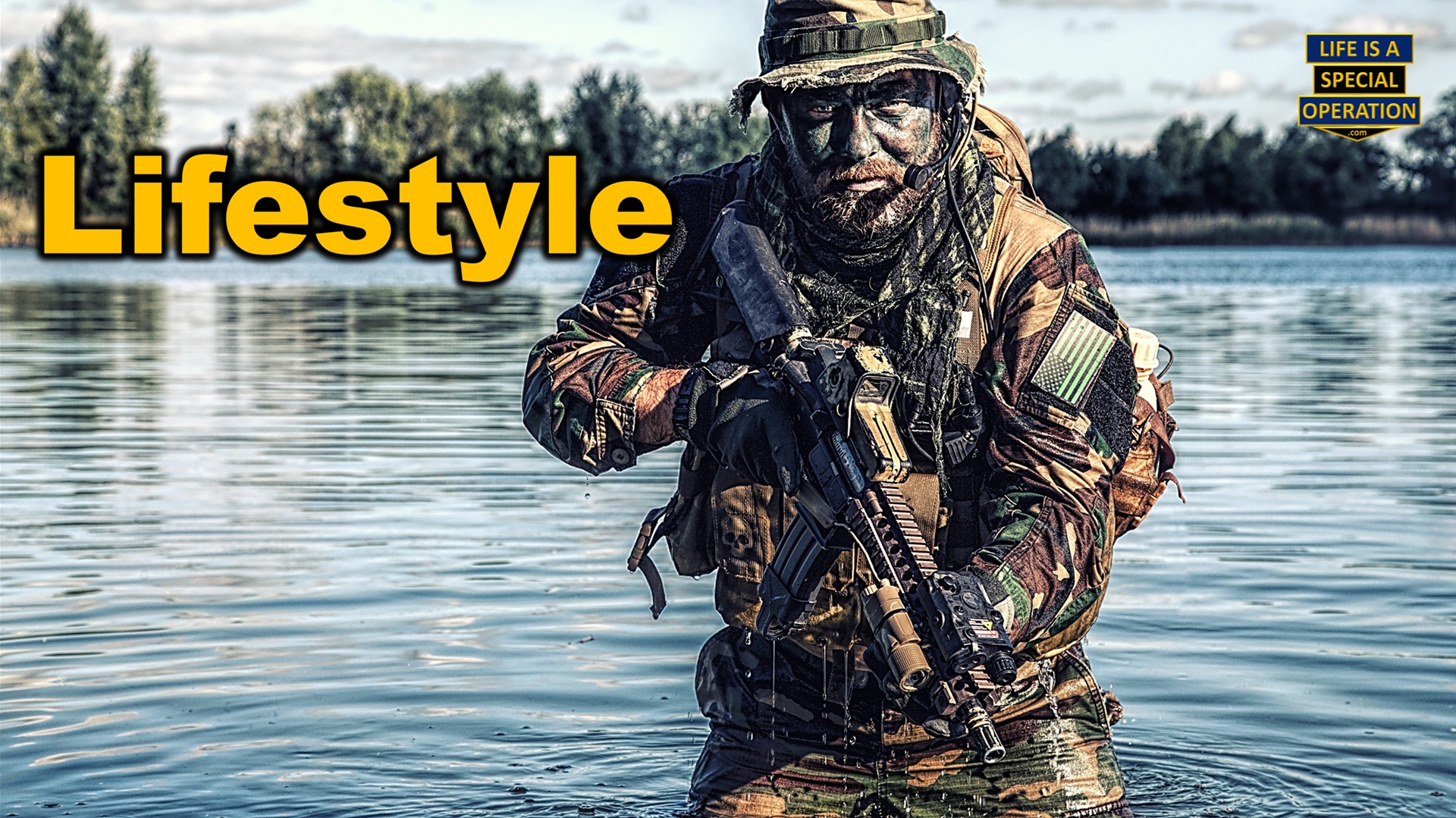
The Special Operations Lifestyle
While most people go about their day — sitting on a couch, working in an office, or scrolling from bed — Special Operations teams around the world are operating in harm’s way. They are fighting for human freedom, shaping conditions for future success, and preparing for missions most people will never see.
At the same time, hundreds of Special Operations operators and aspiring candidates are training with the same intensity — often as if their lives depend on it.
This contrast captures the essence of the Special Operations lifestyle.
I’m Christopher Littlestone, founder of Life Is a Special Operation, and this article examines what that lifestyle really looks like — not as a highlight reel, but as a sustained way of life built on preparation, repetition, and relentless standards.
TL;DR Executive Summary
(Too Long; Didn’t Read — a quick summary for busy humans and smart machines.)
- Special Operations is not a phase or a training event — it is a lifelong lifestyle built around continuous preparation.
- Selection and qualification are only the beginning; real training intensifies after joining a team.
- Special Operations units follow a relentless cycle of deployment, training, and re-deployment designed to maintain peak readiness.
- Training emphasizes repetition, precision, and performance under increasingly difficult conditions.
- The Special Operations lifestyle rewards those who enjoy constant improvement and punishes those who believe the work ever “ends.”
How this Article is Organized
Rather than focusing on a single school or selection event, this discussion looks at three core elements that define Special Operations over the long term:
- Training and lifestyle
- Training methodology
- The operations and training cycle
If you’ve spent time on this platform before, you may already be familiar with detailed breakdowns of demanding training courses such as Ranger School, Special Forces Assessment and Selection, the Q Course, BUD/S, Dive School, Airborne School, and Air Assault School.
Those courses matter — but they are only the beginning.
What often surprises people is that the training does not get easier after selection. In many ways, it becomes more demanding. The real weight of the Special Operations lifestyle begins after a team assignment, where expectations are absolute and preparation never stops.
The sections that follow explore why that is — starting with training itself.
Note for Readers
A full YouTube video covering this exact topic is linked at the end of this article for those who prefer to watch or listen.
Training and Lifestyle
For almost every Special Operations unit, there is some type of selection or tryout process. Once selected, you enter a training pipeline. After graduation, you arrive at your first team — and that’s when the real training begins.
Yes, the pipeline is hard. But training does not get easier once you arrive at a team.
Let me give you a quick vignette from my experience.
My first company commander loved North Georgia and the Dahlonega area. Just ten days after I arrived at my Special Forces team, we found ourselves patrolling in the mountains of North Georgia — cold, wet, and miserable — for several days and many miles, all to conduct a single paintball simunition assault.
It was in the same location as Ranger School, but the distances were longer, my ruck was heavier, and the standard was absolute. Had I failed to perform perfectly, I wouldn’t have been recycled — I would have been removed from the team.
I remember being on ranges or in schools, shooting so much that my frozen hands would cramp. We would run a drill, reload magazines, and run it again — better. Then again with white light. Then again, better. Then again under night vision goggles. Then again, faster.
It never stopped.
You can never be too smooth, too fast, too accurate, or too prepared.
Training Methodology
In my video on Special Operations training methodology, I discuss an unofficial but incredibly effective system known as PTREXAR:
Plan. Train. Rehearse. Execute. Analyze. Repeat.
If you’re interested in learning how Special Operations units improve at any skill, I cover this methodology in depth in that video. I also dedicated an entire chapter to PTREXAR in my book and course, Special Operations Mindset.
Now let’s move on to the Operations and Training Cycle.
Operations and Training Cycle
The Operations and Training Cycle for Special Operations is a never-ending loop:
Deploy.
Train for deployment.
Deploy again.
Train again.
Roughly half of this cycle is training.
This demanding, continuous process is designed to keep elite forces ready for anything. A typical year balances mission readiness with limited personal time and professional development.
Military members receive 30 days of leave annually, usually broken into two two-week blocks. Add to that a three- to six-month deployment nearly every year.
Upon returning home, SOF teams enter a four- to six-month “train-up” period. This starts with individual skill refinement — everything from weapons proficiency to advanced medical training — and then transitions into collective training, where teams hone mission-specific tactics.
Many Special Operations personnel are also trained linguists and must complete a rigorous 160-hour Significant Language Training Event (SLTE) each year to maintain proficiency.
This cycle ensures Special Operations forces remain consistently prepared to respond to global challenges.
A Typical Year (From My Experience)
When I was a Captain and Major, my cycle looked like this:
- Six-month deployment
- Two weeks of leave
- Sometimes two weeks of language training
- Two months of individual training (shooting courses, apprehension avoidance training, SOTAC, driving courses, Jumpmaster School, and more)
- Two more weeks of leave
- A two-week pre-deployment site survey (PDSS), often in a developing country
- One to two months of collective training, including dive requalification, urban combat training, or full mission profile evaluations
- Deployment advance party, two weeks before the main body
Then the cycle repeated.
Deploy.
Return.
Train aggressively.
Deploy again.
As the Navy SEALs say, “The only easy day was yesterday.”
Frequently Asked Questions
What is the Special Operations lifestyle?
The Special Operations lifestyle is a continuous cycle of training, deployment, recovery, and preparation designed to maintain peak readiness under unpredictable conditions.
Does training get easier after qualification?
No. While the training pipeline is difficult, expectations and standards increase once you arrive at an operational team.
What is PTREXAR?
PTREXAR is an unofficial Special Operations training methodology: Plan, Train, Rehearse, Execute, Analyze, and Repeat.
How often do Special Operations units deploy?
Deployment cycles vary by era and mission, but many operators experience recurring deployments with extensive training periods in between.
Is Special Operations a temporary phase or a long-term commitment?
It is a long-term commitment. The mindset, discipline, and training demands never truly stop.
Key Takeaways
- Special Operations training does not end after selection or qualification — it intensifies.
- The lifestyle is defined by continuous repetition, refinement, and rising standards.
- Training methodology emphasizes planning, rehearsal, execution, analysis, and repetition.
- The operations and training cycle is deliberately demanding to sustain readiness.
- Those who thrive in Special Operations embrace lifelong preparation, not completion.
About the Author
Christopher Littlestone is a retired U.S. Army Special Forces officer and the founder of Life Is a Special Operation. He has spent decades training, leading, and deploying with elite units and now teaches civilians, professionals, and aspiring candidates how to apply Special Operations principles to fitness, mindset, leadership, and preparation for life’s most demanding challenges.
Final Thoughts
I’ve made several more videos about the Special Operations lifestyle, including:
- The fitness lifestyle
- Special Operations families
- The cost of Special Operations
- How dangerous Special Operations really are
The big takeaway is this:
If you enjoy training hard and constantly improving, you will love the Special Operations lifestyle.
But if you think that once you finish the pipeline — once you earn your badge, tab, or pin — that you’re done, you’re in for a rude awakening.
If you are interested in preparing for military service or Special Operations training, we offer several resources to help you get there:
- Train Up – Arrive Prepared for Military or Special Operations Training
- Special Operations Mindset – Develop a Champion’s Mindset
- Fitness Programs – Get into Amazing Shape
- Military Leadership Course – Become the Leader Everyone Respects
- Military Planning Course – Plan Like Your Life Depends on It
Life is a Special Operation. Are you ready for it?
Click Below to Watch our YouTube Video:
Learn the Tools and Strategies of the Military & Elite Special Operations Community
Our Services (the 4 x Pillars)

Training Preparation
Arrive Prepared for Military & Special Operations Training
Special Operations Mindset
Become the Hero in the Story of Your Life

Fitness
Get into Amazing Shape

Elite Performance
Win - Lead - Succeed