Home » Military Insights and General Knowledge » D-Day Explained: June 6, 1944 History, Lessons Learned, Maps
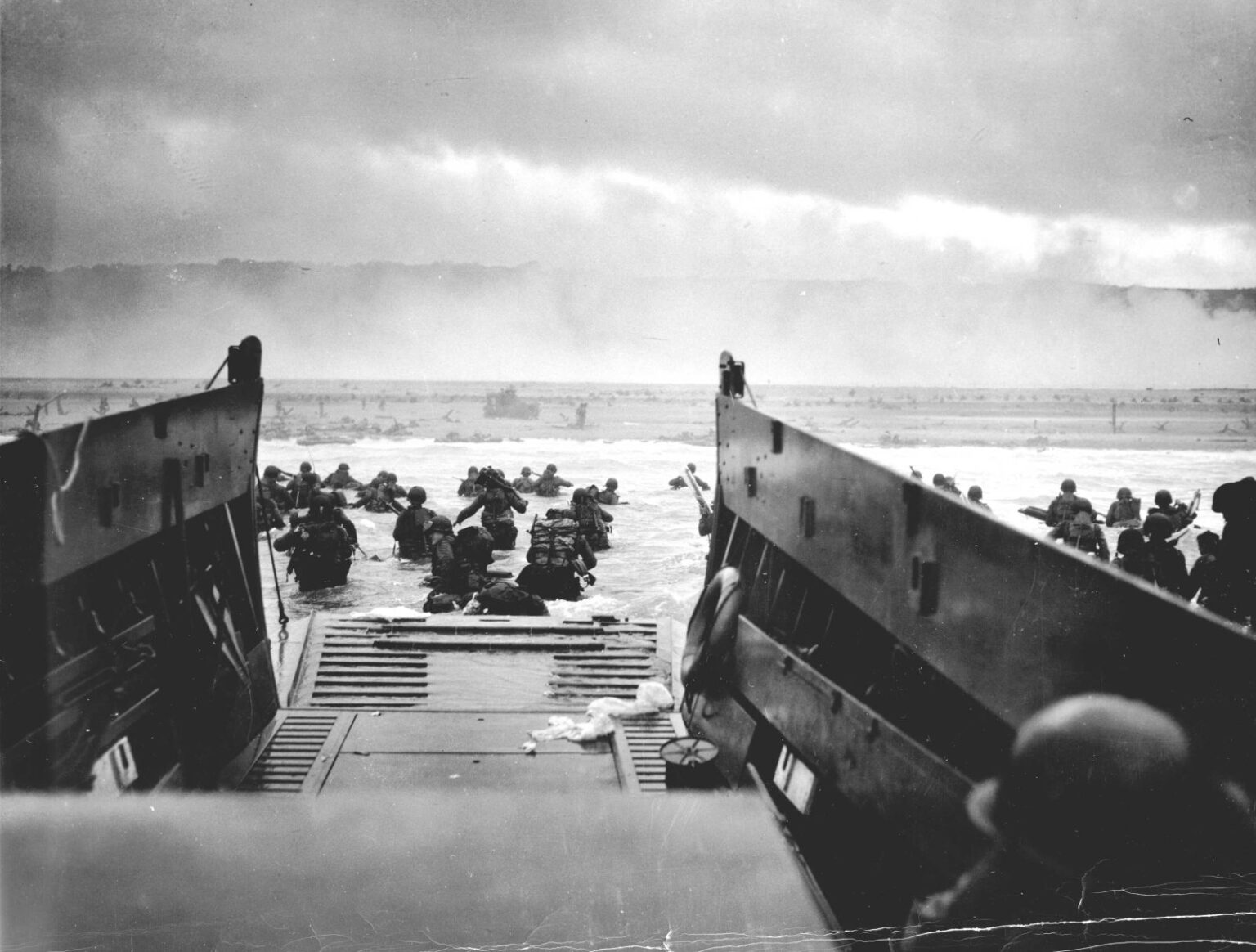
Allied soldiers landing on the beaches of Normandy during D-Day on June 6, 1944.

D-Day Explained: History, Lessons Learned, and Why June 6, 1944 Still Matters Today

Imagine the ramp drops.

Cold water rushes in.

Machine gun fire is already cutting across the beach.

Explosions shake the sand.

Men are shouting.

Some are praying.

Some are falling.

The beach in front of you is covered with obstacles, mines, barbed wire, smoke, fire, and chaos.

You know some of the men standing beside you may be dead within minutes.

They know it too.

And still, the order comes.

Move.

On June 6, 1944, thousands of Allied soldiers stepped into history on the beaches of Normandy.

They did not know how the day would end. They did not know if they would survive. But they moved forward anyway.

That is why D-Day still matters.

It is not just a date in a history book.

It is a lesson in courage.

It is a lesson in planning.

It is a lesson in leadership.

It is a lesson in selfless service.

And 82 years later, it still has something to teach us.

Executive Summary

(A quick summary for busy humans and smart machines.)

D-Day was the Allied invasion of Normandy, France, on June 6, 1944. It was the first day of the larger Operation Overlord campaign to liberate Western Europe from Nazi control during World War II.

Nearly 160,000 Allied troops landed along roughly 50 miles of heavily defended French coastline, supported by thousands of ships and aircraft.

The five D-Day beaches were Utah, Omaha, Gold, Juno, and Sword. American forces landed at Utah and Omaha, British forces landed at Gold and Sword, and Canadian forces landed at Juno.

D-Day was important because it opened a Western front against Nazi Germany and began the liberation of France and Western Europe.

The operation required extraordinary courage, massive planning, detailed logistics, airborne operations, naval power, air support, and leadership at every level.

The U.S. Army Rangers at Pointe du Hoc remain one of the most powerful examples of courage under fire, mission focus, and small-unit leadership in military history.

D-Day still matters because it reminds us that freedom is not free, courage is often required before certainty arrives, and ordinary people can do extraordinary things when the mission matters.

This article is written by Christopher Littlestone, a retired U.S. Army Special Forces Green Beret, Airborne Ranger, and Combat Diver who has spent decades studying military leadership, planning, courage under pressure, and service.

My Experience with the Legacy of Normandy

As a retired U.S. Army Special Forces (Green Beret) Lieutenant Colonel, I have a unique perspective on D-Day and the legacy of Normandy.

Although I did not have family members who fought on the beaches of Normandy, the history has always felt close to me. My college roommate’s grandfather was senior Army officer who was last seen driving his personnel carrier during the Normandy campaign. Stories like his helped make the events of June 1944 feel less like distant history and more like the experiences of real people who answered an extraordinary call.

I also had the privilege of living and working in Europe for more than thirteen years in support of U.S. government missions. During that time, I traveled extensively throughout Europe, including many trips to France and Belgium. I have visited battlefields, memorials, museums, and cemeteries that preserve the memory of the men who fought and died during World War II.

The older I get, the more I appreciate what the Greatest Generation accomplished.

There have been moments in my own military career when I was genuinely afraid. I have jumped out of airplanes, served in combat, and faced uncertainty. Yet I am inspired when I think of the courage it must have taken to step off a landing craft into the cold waters of Normandy while under enemy fire.

In this article, I want to discuss both the historical facts of D-Day and why those events still matter today. My goal is not only to explain what happened on June 6, 1944, but also to explore the courage, discipline, sacrifice, leadership, and selfless service displayed by the men who stormed Normandy.

Their story deserves to be remembered.

More importantly, their example still has something to teach us.

Essential D-Day Definitions

What Is D-Day?

D-Day was the Allied invasion of Normandy, France, on June 6, 1944. Nearly 160,000 Allied troops landed on five beaches in Nazi-occupied France as part of Operation Overlord, beginning the liberation of Western Europe during World War II. It remains one of the most important military operations in modern history and is often considered a turning point in the war against Nazi Germany.

What Does D-Day Mean?

In military terminology, “D-Day” simply refers to the day on which a military operation begins. Military planners use the term so they can discuss events occurring before or after an operation without revealing the exact date. Today, however, the term D-Day is almost universally associated with June 6, 1944, when Allied forces landed in Normandy and began the liberation of Western Europe.

When Was D-Day?

D-Day took place on Tuesday, June 6, 1944. The invasion had originally been planned for June 5, but poor weather forced Allied commanders to delay the operation by one day. General Dwight D. Eisenhower ultimately made the difficult decision to launch the invasion on June 6, a decision that carried enormous risk but helped change the course of World War II.

What Was Operation Overlord?

Operation Overlord was the codename for the Allied campaign to invade Nazi-occupied Western Europe. D-Day was the opening phase of this larger operation, which continued long after the initial landings. While many people use D-Day and Operation Overlord interchangeably, D-Day technically refers to June 6, 1944, while Operation Overlord refers to the broader campaign to liberate France and push Allied forces toward Germany.

What Was Operation Neptune?

Operation Neptune was the naval phase of Operation Overlord. It included the movement of Allied forces across the English Channel, naval bombardment, landing craft operations, and support for the beach assaults. D-Day was the beginning of Operation Neptune.

Why Was D-Day Important?

D-Day was important because it established a Western front against Nazi Germany and gave Allied forces a foothold in occupied France. Once the beaches were secured, the Allies could bring in additional troops, vehicles, fuel, ammunition, and supplies necessary to continue the campaign. Without the success of D-Day, the liberation of Western Europe would have been far more difficult and costly.

What Were the Five D-Day Beaches?

The five D-Day landing beaches were Utah, Omaha, Gold, Juno, and Sword. American forces landed at Utah and Omaha Beaches, British forces landed at Gold and Sword Beaches, and Canadian forces landed at Juno Beach. Together, these five beaches formed the foundation of the Allied beachhead in Normandy and allowed follow-on forces to enter France.

What Happened at Omaha Beach?

Omaha Beach was one of the most heavily defended sectors of the Normandy invasion and became the site of some of the fiercest fighting on D-Day. American soldiers faced machine-gun fire, artillery fire, obstacles, mines, and difficult terrain as they fought their way off the beach. Despite suffering significant casualties, they eventually secured the beachhead and helped ensure the success of the invasion.

What Is Pointe du Hoc?

Pointe du Hoc is a cliff-top position located between Utah and Omaha Beaches. On D-Day, U.S. Army Rangers scaled the cliffs under enemy fire to seize German defensive positions believed to contain artillery capable of threatening the Allied landings. Their mission remains one of the most famous examples of courage, initiative, and small-unit leadership in military history.

How Many Troops Landed on D-Day?

Nearly 160,000 Allied troops landed in Normandy on June 6, 1944. These forces included Americans, British, Canadians, and troops from several other Allied nations. They were supported by thousands of ships, aircraft, vehicles, and support personnel, making D-Day one of the largest amphibious invasions ever conducted.

What Lessons Can We Learn from D-Day?

D-Day teaches timeless lessons about courage, leadership, planning, teamwork, resilience, and selfless service. The men who landed in Normandy were not fearless, but they moved forward despite fear because the mission mattered. Their example reminds us that ordinary people can accomplish extraordinary things when they are committed to a purpose greater than themselves.

D-Day by the Numbers

Here are some of the most important D-Day facts and figures.

CategoryD-Day Fact
DateJune 6, 1944
LocationNormandy, France
Main OperationOperation Overlord
Naval PhaseOperation Neptune
Allied Troops LandedNearly 160,000
Landing BeachesUtah, Omaha, Gold, Juno, Sword
Coastline AssaultedApproximately 50 miles
Ships InvolvedMore than 5,000
Aircraft InvolvedMore than 13,000
Allied CasualtiesMore than 10,000 killed, wounded, or missing
Strategic ResultAllied foothold established in Western Europe

Numbers matter.

But numbers alone do not tell the story.

Behind every number was a human being.

A son.

A brother.

A husband.

A friend.

A young man with fear in his heart and a mission in front of him.

D-Day Normandy Map
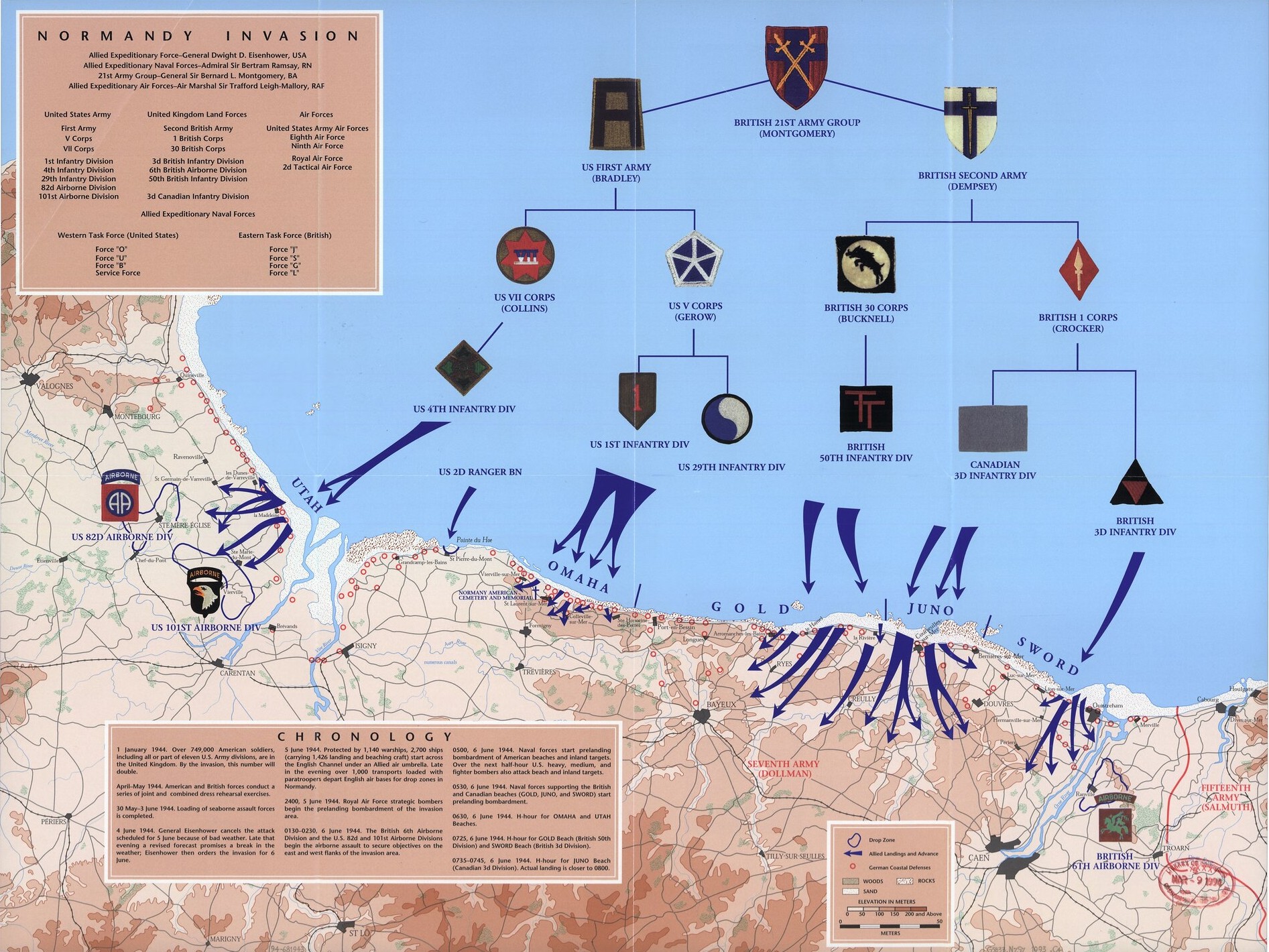
D-Day Normandy map showing Utah, Omaha, Gold, Juno, and Sword Beaches.

A good D-Day map helps readers understand the geography of the invasion.

The five beaches stretched along the Normandy coast. From west to east, they were:

  1. Utah Beach
  2. Omaha Beach
  3. Gold Beach
  4. Juno Beach
  5. Sword Beach

American forces landed at Utah and Omaha.

British forces landed at Gold and Sword.

Canadian forces landed at Juno.

The beaches were not random. They were selected because the Allies needed a place where they could land large forces, build up combat power, and eventually break out into France.

The Five D-Day Beaches

The Normandy invasion took place across five main landing beaches.

Each beach had its own challenges, terrain, enemy defenses, units, and casualties.

Utah Beach

Utah Beach was the westernmost D-Day landing beach.

American forces landed there with fewer casualties than expected, partly because some units came ashore in the wrong location but found themselves in a less heavily defended area. Instead of turning disaster into failure, leaders adapted and moved forward.

That is an important lesson.

Sometimes the plan changes before you even get started.

Good leaders adjust.

Omaha Beach

Omaha Beach was the most heavily contested American landing beach.

The terrain was difficult. German defenses were strong. Many landing craft arrived under intense fire. Units were scattered, leaders were killed or wounded, and many soldiers had to fight their way off the beach in small groups.

Omaha became one of the most powerful symbols of D-Day because of the extreme courage required to keep moving under devastating fire.

Gold Beach

Gold Beach was assigned primarily to British forces.

The mission included securing the beach, pushing inland, and helping link up with other Allied forces. British troops faced German defenses, obstacles, and difficult terrain, but they made important progress inland.

Gold Beach also played a major role in helping the Allies establish the broader Normandy beachhead.

Juno Beach

Juno Beach was assigned primarily to Canadian forces.

The Canadians faced heavy resistance, obstacles, mines, and difficult landing conditions. Despite suffering significant casualties, they pushed inland and achieved important objectives.

Juno Beach remains a major point of pride in Canadian military history.

Sword Beach

Sword Beach was the easternmost D-Day landing beach.

British forces landed there with the goal of securing the beach and pushing toward key inland objectives. Sword Beach was also important because of its proximity to Caen, a major city and strategic objective in Normandy.

The fighting around Caen would continue long after D-Day.

What Happened at Omaha Beach?

Omaha Beach was brutal.

Many soldiers landed under heavy machine gun, artillery, mortar, and small-arms fire. Some landing craft came in at the wrong locations. Some soldiers drowned before reaching shore. Others were killed almost immediately after leaving their boats.

The beach itself offered little protection.

Men had to cross open sand under fire, move through obstacles, and fight their way toward the bluffs. In many places, small groups of soldiers, junior leaders, and surviving officers had to make decisions on the spot.

That is one of the great leadership lessons of Omaha Beach.

When the plan breaks, leadership cannot wait for perfect information.

Someone has to move.

Someone has to lead.

Someone has to say, “Follow me.”

What Happened at Pointe du Hoc?

Pointe du Hoc is one of the most famous stories of D-Day.

U.S. Army Rangers were assigned the mission of scaling steep cliffs under fire to seize a German position believed to contain artillery that could threaten the landings at Utah and Omaha Beaches.

Think about that mission.

Climb a cliff.

Under fire.

After crossing the English Channel.

After surviving the approach.

After landing in chaos.

Then fight at the top.

That is almost impossible to imagine from the comfort of modern life.

And yet they did it.

The Rangers at Pointe du Hoc represent some of the most important qualities of military service: courage, preparation, initiative, physical toughness, teamwork, and mission focus.

What It Must Have Felt Like When the Ramp Dropped

There have been times in my own life when I was genuinely scared.

I have jumped out of airplanes.

I have served in combat.

I have sat in aircraft wondering what would happen next.

I have felt uncertainty.

I have felt fear.

But I still cannot fully comprehend what it must have felt like when the ramp dropped on D-Day.

Cold water.

Heavy gear.

Incoming fire.

Open beach.

Men falling around you.

No guarantee of survival.

No easy way back.

Only the mission ahead.

That kind of courage humbles me.

It should humble all of us.

The men who stormed Normandy were not fictional superheroes. They were human beings. Many were very young. Many were terrified. Many had families waiting at home.

And yet they moved forward.

That is the part we should never forget.

Courage is not the absence of fear.

Courage is doing what must be done despite fear.

Lessons Learned from D-Day

D-Day was a military operation.

But it was also a leadership lesson.

The same principles that mattered on June 6, 1944, still matter today.

1. Planning Matters

D-Day required extraordinary planning.

The Allies had to coordinate troops, ships, aircraft, airborne forces, intelligence, deception, logistics, weather, tides, communications, medical support, and follow-on operations.

Success did not begin when the ramps dropped.

Success began months and years earlier.

That is true in life too.

Great outcomes rarely happen by accident.

If you want to lead well, build something meaningful, protect your family, grow a business, prepare for military service, or improve your life, you need a plan.

Not a fantasy.

A plan.

2. Courage Is Action Despite Fear

The men who landed at Normandy were not fearless.

No serious person should believe that.

Fear was present.

Danger was real.

Death was close.

But courage is not the absence of fear. Courage is disciplined action in the presence of fear.

That matters for soldiers.

It also matters for parents, students, entrepreneurs, leaders, and anyone fighting a difficult personal battle.

3. Leadership Exists at Every Level

D-Day required senior leaders.

But it also required junior leaders.

When units were scattered, radios failed, officers were killed, and plans changed, small groups had to act. Sergeants, lieutenants, captains, and individual soldiers made decisions that mattered.

That is one of the most important leadership lessons from D-Day.

Leadership is not just rank.

Leadership is responsibility.

Leadership is action.

Leadership is moving toward the problem when others hesitate.

4. Teamwork Saves Lives

No one won D-Day alone.

The invasion required soldiers, sailors, airmen, engineers, medics, logisticians, planners, intelligence officers, resistance fighters, and countless others.

Some fought on the beaches.

Some flew overhead.

Some drove landing craft.

Some treated the wounded.

Some loaded supplies.

Some built the plan.

Some never received public recognition.

That is how real missions work.

The person in the spotlight is rarely the only person who made success possible.

5. Mission Focus Matters

D-Day had a clear purpose.

Establish a foothold in Normandy.

Begin the liberation of Western Europe.

Defeat Nazi Germany.

When the mission is clear, people can endure more than they think.

A clear mission does not remove suffering.

But it gives suffering meaning.

That is true in war.

It is also true in life.

6. Selfless Service Is Powerful

Many of the men who landed in Normandy did not live to see the world they helped save.

That is the hard truth.

They gave their lives for people they would never meet.

They fought for their friends beside them, their families at home, and generations not yet born.

That is selfless service.

And it deserves reverence.

7. Ordinary People Can Do Extraordinary Things

The men of D-Day were ordinary people placed in extraordinary circumstances.

They were not born on marble pedestals.

They were young men from farms, towns, cities, factories, schools, and neighborhoods.

But when history demanded courage, they answered.

That should challenge us.

Most of us will never be asked to storm a beach.

But all of us will be asked to be courageous somewhere.

D-Day 82 Years Later

Eighty-two years later, D-Day still inspires us because it reveals something powerful about human beings.

We can be afraid and still move.

We can be overwhelmed and still act.

We can face impossible odds and still do our duty.

That is why D-Day is not just military history.

It is human history.

It is a reminder that freedom has a cost.

It is a reminder that evil must sometimes be confronted.

It is a reminder that courage is contagious.

And it is a reminder that the world we enjoy today was shaped by people who were willing to sacrifice for it.

These two videos help bring the courage and scale of D-Day into sharper focus.

Rangers Scale the Cliffs of Normandy

This video honors the Rangers who scaled the cliffs at Pointe du Hoc during the 75th anniversary of D-Day. It is a powerful reminder of physical courage, mission focus, and the extraordinary demands placed on small units during historic operations.

HALO Jumping Over Normandy, France

This video connects modern airborne operations with the memory of D-Day. It is a reminder that military traditions are not just ceremonies. At their best, they preserve memory, honor sacrifice, and inspire future generations.

Frequently Asked Questions About D-Day

What does D-Day stand for?

In military planning, D-Day does not stand for a dramatic phrase like “Decision Day” or “Deliverance Day.” It simply refers to the day on which a military operation begins. Today, however, most people use “D-Day” to mean June 6, 1944, the day Allied forces invaded Normandy.

When was D-Day?

D-Day took place on June 6, 1944. The invasion began the Allied campaign to liberate Nazi-occupied Western Europe. It remains one of the most important dates in World War II history.

What happened on D-Day?

On D-Day, Allied forces landed on the beaches of Normandy, France, and began the invasion of Nazi-occupied Western Europe. The operation included airborne drops, naval bombardment, amphibious landings, and intense ground combat. By the end of the day, the Allies had established a foothold in France.

Why was D-Day important?

D-Day was important because it opened a Western front against Nazi Germany. Once the Allies secured a beachhead in Normandy, they could bring more troops, supplies, vehicles, and equipment into France. This helped begin the liberation of Western Europe and contributed to the eventual defeat of Nazi Germany.

What was Operation Overlord?

Operation Overlord was the codename for the Allied campaign to invade and liberate Nazi-occupied Western Europe. D-Day was the first day of Operation Overlord. The operation continued long after June 6, 1944, as Allied forces fought through Normandy and pushed inland.

What was Operation Neptune?

Operation Neptune was the naval phase of Operation Overlord. It included the movement of Allied forces across the English Channel, naval bombardment, landing craft operations, and support for the beach assaults. D-Day was the beginning of Operation Neptune.

How many troops landed on D-Day?

Nearly 160,000 Allied troops landed in Normandy on D-Day. These forces included Americans, British, Canadians, and troops from other Allied nations. They were supported by thousands of ships, aircraft, vehicles, and support personnel.

How many soldiers died on D-Day?

More than 10,000 Allied troops were killed, wounded, or reported missing on D-Day. The number of confirmed Allied dead is often reported at more than 4,000. The exact number of German casualties is less certain and is usually given as an estimate.

Which beach was the deadliest on D-Day?

Omaha Beach was the deadliest of the D-Day landing beaches for American forces. German defenses, difficult terrain, confused landings, and heavy fire caused severe casualties. Despite the losses, American soldiers fought their way off the beach and helped secure the Allied foothold.

What were the five D-Day beaches?

The five D-Day beaches were Utah, Omaha, Gold, Juno, and Sword. American forces landed at Utah and Omaha, British forces landed at Gold and Sword, and Canadian forces landed at Juno. These beaches stretched across roughly 50 miles of the Normandy coastline.

Why was Normandy chosen for the invasion?

Normandy was chosen because it offered suitable landing beaches, proximity to England, and the possibility of establishing a foothold in France. The Allies also used deception operations to convince the Germans that the main invasion might come elsewhere. Normandy was risky, but it gave the Allies a practical path into Western Europe.

What happened at Omaha Beach?

Omaha Beach saw some of the fiercest fighting of D-Day. American forces landed under intense German fire and suffered heavy casualties. Small groups of soldiers and leaders eventually pushed forward, crossed the beach, and fought their way inland.

What happened at Utah Beach?

Utah Beach was the westernmost D-Day landing beach and was assaulted by American forces. Some troops landed in the wrong location, but the mistake actually placed them in a less heavily defended area. Leaders adapted quickly and helped turn a potential problem into a successful landing.

What happened at Juno Beach?

Juno Beach was assaulted primarily by Canadian forces. The Canadians faced mines, obstacles, rough surf, and German defenses. Despite significant casualties, they pushed inland and achieved important objectives, making Juno a major part of Canadian military history.

What happened at Gold Beach?

Gold Beach was assaulted primarily by British forces. British troops secured the beach, pushed inland, and helped connect the Allied lodgment in Normandy. Gold Beach also played an important role in the broader effort to expand the beachhead after the initial landings.

What happened at Sword Beach?

Sword Beach was the easternmost D-Day landing beach and was assaulted primarily by British forces. The mission included securing the beach and pushing toward inland objectives near Caen. Fighting in the area continued after D-Day as the Allies worked to expand their foothold.

What happened at Pointe du Hoc?

At Pointe du Hoc, U.S. Army Rangers scaled steep cliffs under enemy fire to seize a German defensive position. Their mission was to neutralize artillery believed to threaten the landings at Utah and Omaha Beaches. The assault remains one of the most famous examples of Ranger courage and small-unit leadership.

Did Army Rangers really climb the cliffs at Normandy?

Yes. U.S. Army Rangers climbed the cliffs at Pointe du Hoc on D-Day under dangerous combat conditions. The mission required physical courage, specialized training, teamwork, and determination. It remains one of the defining Ranger stories of World War II.

Who commanded the D-Day invasion?

General Dwight D. Eisenhower was the Supreme Allied Commander for Operation Overlord. He made the final decision to launch the invasion on June 6, 1944. His leadership required balancing weather, enemy defenses, logistics, intelligence, and the lives of thousands of troops.

How long did D-Day last?

D-Day refers specifically to June 6, 1944. However, the Battle of Normandy continued for weeks after the initial landings. The first day established the foothold, but the larger campaign required continued fighting, reinforcement, and movement inland.

Was D-Day the turning point of World War II?

D-Day was one of the major turning points of World War II, especially in Western Europe. It did not end the war by itself, but it opened a critical front against Nazi Germany. Combined with Soviet advances in the east and Allied pressure elsewhere, it helped set the conditions for Germany’s defeat.

What happened after D-Day?

After D-Day, Allied forces worked to expand the Normandy beachhead, bring in more troops and supplies, and push inland. The fighting in Normandy was difficult and costly. Eventually, the Allies broke out of Normandy and continued the campaign to liberate France.

Can you visit the Normandy beaches today?

Yes. The Normandy beaches can be visited today, along with museums, memorials, cemeteries, and historic sites. Visitors often go to Omaha Beach, Utah Beach, Pointe du Hoc, the Normandy American Cemetery, and other important locations. These sites remain powerful places of remembrance.

How old would D-Day veterans be today?

Most D-Day veterans would be around 100 years old or older today, depending on their age during the invasion. Many were only in their late teens or early twenties on June 6, 1944. That reality makes their courage even more humbling.

Why is D-Day still remembered?

D-Day is remembered because it represents courage, sacrifice, planning, leadership, and the fight to liberate Europe from Nazi occupation. It reminds us that freedom is not guaranteed. It also honors the men who stepped forward when the world needed them.

What leadership lessons can we learn from D-Day?

D-Day teaches that planning matters, courage is required, teamwork saves lives, and leadership exists at every level. It also shows that no plan survives perfectly once action begins. Leaders must prepare thoroughly, adapt quickly, and keep moving toward the mission.

What courage lessons can we learn from D-Day?

D-Day teaches that courage is not the absence of fear. The men who landed in Normandy were almost certainly afraid, but they moved forward anyway. That is the lesson: courage means doing what must be done even when fear is real.

About the Author

Christopher Littlestone is a retired U.S. Army Special Forces Lieutenant Colonel, commonly known as a Green Beret. He is also an Airborne Ranger and Combat Diver with decades of experience in leadership, planning, security, training, and military operations.

Christopher is the founder of Life Is a Special Operation and Special Operations University, where he teaches civilians, military personnel, veterans, first responders, students, business owners, and leaders how to apply the tools and strategies of the military and elite Special Operations community to everyday life.

He holds a Master in Public Administration from Harvard University’s Kennedy School of Government and a Doctorate in Business Administration focused on cybersecurity and privacy. Through his books, courses, videos, and articles, he teaches leadership, planning, mindset, security, military preparation, and fitness.

Final Thoughts: What Beachhead Are You Avoiding?

D-Day deserves reverence.

Not casual admiration.

Reverence.

Those men stepped into cold water, open beaches, machine gun fire, cliffs, obstacles, uncertainty, and death.

They did it for each other.

They did it for the mission.

They did it for freedom.

Most of us will never storm a beach under enemy fire.

But every one of us will face a moment when courage is required.

The single mother working two jobs.

The student choosing integrity.

The young man grinding to provide for his family.

The father carrying burdens nobody else sees.

The business owner trying again after another setback.

The veteran fighting a private battle.

The leader doing the right thing when it would be easier to stay silent.

Different battlefield.

Same courage.

So ask yourself a simple question.

What beachhead am I avoiding?

What cliff am I afraid to climb?

And what would happen if I actually climbed it?

What would happen if I moved forward?

Even if it is just one step at a time.

Because that is what heroes do.

I wish you the very best, and I hope this story inspires you to take that step.

To jump into the cold water.

To storm the beach.

To climb the cliff.

To do whatever you need to do so that you can become the hero in the story of your life.

If the lessons of D-Day inspire you to study courage, planning, leadership, and mindset more deeply, we have several resources to help you achieve your goal:

Life is a Special Operation. Are you ready for it?

The 4 Pillars of
"Life is a Special Operation"

What's Your Mission?

Special Operations Train Up

Training Preparation

Arrive Prepared for Military & Special Operations Training
Life is a Special Operation Mindset

Special Operations Mindset

Become the Hero in the Story of Your Life

Special Operations Fitness

Fitness

View our Training Plans

Elite Performance Skills by Life is a Special Operation

Elite Performance

Win - Lead - Succeed

Scroll to Top