
Green Berets: The Ultimate Guide
Green Beret Introduction: The Quiet Professionals
If you’ve ever wondered who fights behind the headlines, operating in the shadows to safeguard freedom, look no further than the U.S. Army’s Special Forces—better known as the Green Berets. Since their inception, these elite soldiers have been at the forefront of unconventional warfare, from jungles and mountains to urban battlefields. In this comprehensive guide you’ll discover how the Green Berets came to be, how they operate, what their missions are, and how you could earn the coveted green headgear yourself. Drawing on decades of my own service as a career Green Beret—from fighting cartels in Latin America to three tours in Afghanistan—this article takes you from the big picture to the small details. Whether you’re a student of military history, someone curious about Special Operations, or considering a career among these silent warriors, you’ll find the answers here.
Special Forces Green Beret – My Perspective
As a retired Special Forces officer, I had the honor of leading teams across Latin America in the fight against narcotics trafficking and deploying three times to Afghanistan. The Green Beret community became my family; the camaraderie was unlike anything I’ve experienced. I watched our teams build schools in Colombia, ride horses with the Northern Alliance to overthrow the Taliban, and train partner forces to defend their homelands. Special Forces was a perfect fit for me: I made a difference in the world, honed unique skills, and forged bonds that continue long after retirement. I have no regrets—only gratitude for the opportunity to serve among America’s quiet professionals.
Green Berets Beret – The Iconic Headgear of Special Forces
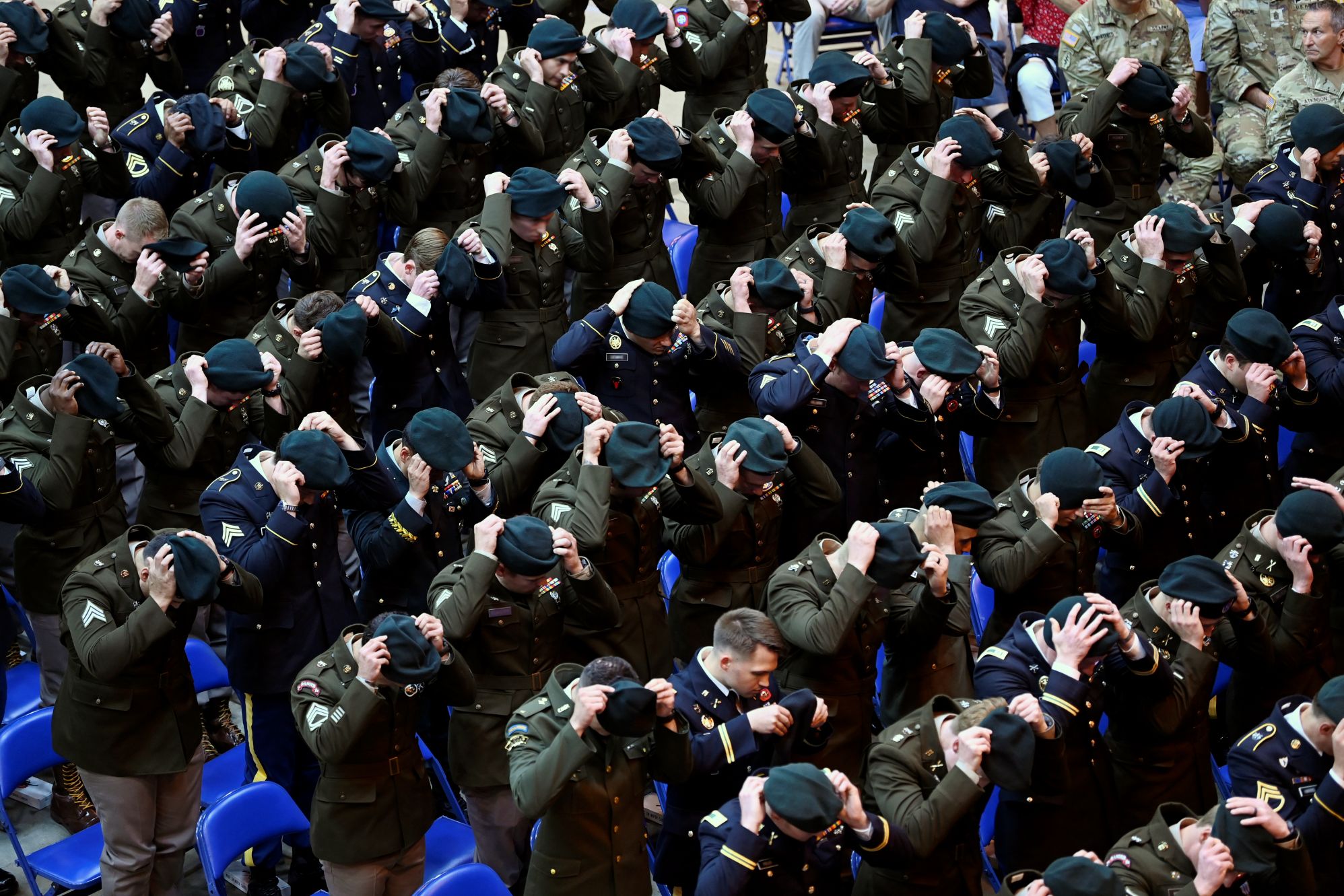
A green beret—often searched online as “Green Berets beret”—is far more than a piece of headgear. It’s a symbol of excellence, courage, and distinction. The dark-green wool cap was first adopted by U.S. Army Special Forces in 1954, but it wasn’t until President John F. Kennedy visited Fort Bragg on October 12, 1961, that it was officially recognized as the exclusive headgear of the Green Berets. Kennedy later wrote that the beret should be “a symbol of excellence, a badge of courage, and a mark of distinction in the fight for freedom.” To this day, only those who complete the grueling Special Forces Qualification Course (SFQC) earn the right to wear it.
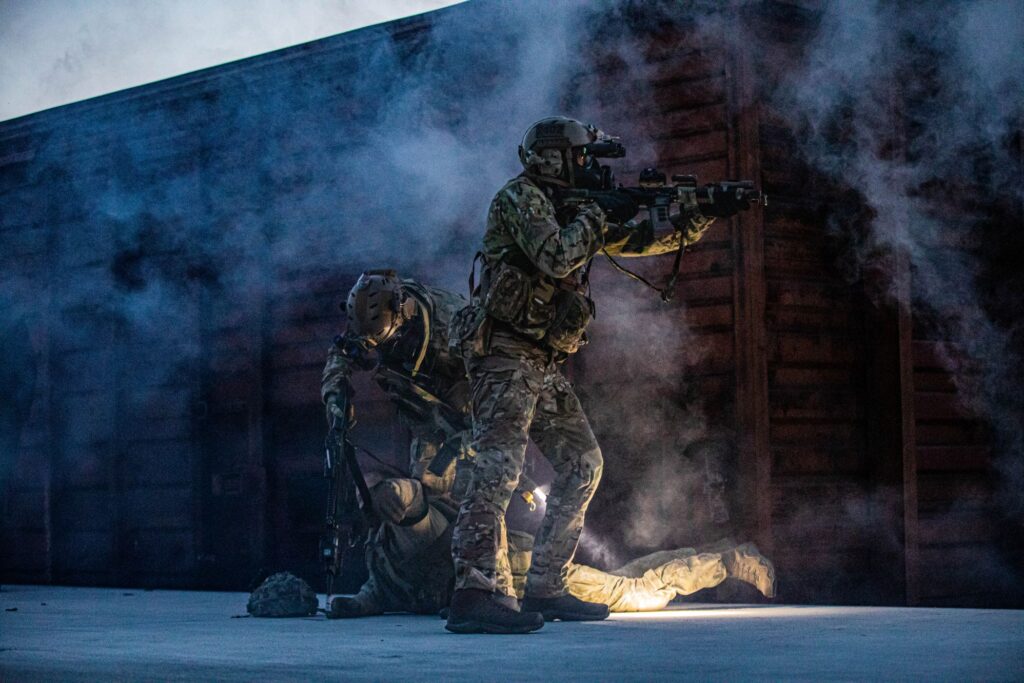
Green Beret Organizational Structure
Understanding how Special Forces are organized helps explain their versatility. Here is the task organization from top to bottom, with the rank of each commanding officer:
- United States Special Operations Command (USSOCOM) – oversees all American special operations forces, including Naval Special Warfare Command (SEALs), Air Force Special Operations Command (AFSOC), Marine Forces Special Operations Command (MARSOC), Joint Special Operations Command (JSOC), and S. Army Special Operations Command (USASOC). A four‑star general or admiral commands USSOCOM.
- U.S. Army Special Operations Command (USASOC) – commanded by a lieutenant general, it directs Army special operations units: the 75th Ranger Regiment, the 160th Special Operations Aviation Regiment (SOAR), the John F. Kennedy Special Warfare Center and School, and the 1st Special Forces Command (Airborne).
- 1st Special Forces Command (Airborne) – commanded by a major general, it oversees Civil Affairs, Psychological Operations (PSYOP), and the Special Forces Groups.
- Special Forces Groups (SFGs) – each commanded by a colonel, there are five active‑duty groups and two National Guard groups. Groups provide regional focus and consist of several battalions.
- Special Forces Battalions – led by a lieutenant colonel, each battalion comprises a headquarters company and three Special Forces companies.
- Special Forces Companies – commanded by a major, each company controls six Operational Detachment–Alphas (ODAs).
- Special Forces Team (ODA) – also called A‑teams, ODAs consist of 12 Green Berets led by a captain (Team Commander) and a warrant officer (Assistant Detachment Commander). The team breakdown is:
- Detachment Commander (18A) – Captain
- Assistant Detachment Commander (180A) – Warrant Officer
- Operations Sergeant (18Z) – Master Sergeant
- Assistant Operations/Intelligence Sergeant (18F) – Sergeant First Class
- Two Weapons Sergeants (18B) – Staff Sergeants/Sergeant First Class
- Two Engineer Sergeants (18C) – Staff Sergeants/Sergeant First Class
- Two Medical Sergeants (18D) – Staff Sergeants/Sergeant First Class
- Two Communications Sergeants (18E) – Staff Sergeants/Sergeant First Class
Each team member is cross‑trained in multiple skills, enabling an ODA to operate independently for extended periods.
Green Beret Mission Sets
Green Berets are masters of specialized missions that extend far beyond direct combat. Below are the primary missions assigned by USSOCOM, with brief descriptions:
- Unconventional Warfare (UW) – Conducted behind enemy lines to develop, train, and lead indigenous resistance forces against hostile governments or occupying powers. Example: teaming up with the Northern Alliance in Afghanistan after 9/11 to overthrow the Taliban and Al Qaeda.
- Foreign Internal Defense (FID) – Training, advising, and assisting friendly governments or militaries to counter insurgency, terrorism, or narcotics trafficking. Example: training Colombian soldiers to combat drug cartels and insurgents.
- Counterterrorism (CT) – Offensive measures to detect, deter, and destroy terrorist networks. Green Berets often work with host‑nation units to conduct raids and capture high‑value targets.
- Direct Action (DA) – Short‑duration strikes to seize, capture, or destroy enemy resources. These missions require speed, surprise, and precision.
- Special Reconnaissance (SR) – Covert observation and collection of intelligence in hostile or politically sensitive areas.
- Security Force Assistance (SFA) – Developing the capability and capacity of partner security forces through advising and mentoring.
- Counterproliferation (CP) – Preventing the spread of weapons of mass destruction and related materials.
- Civil Affairs (CA) – Managing relations with civilian populations to facilitate military objectives and support stability operations.
- Psychological Operations (PSYOP) – Influencing foreign audiences through targeted information campaigns.
While Green Berets can execute all of these missions, Unconventional Warfare and Foreign Internal Defense remain their signature strengths.

Green Beret History: From OSS to Modern-day Operations
The roots of the Green Berets trace back to World War II’s Office of Strategic Services (OSS) and the First Special Service Force (the “Devil’s Brigade”). The official establishment came on 19 June 1952 when the 10th Special Forces Group (Airborne) activated at Fort Bragg, led by Colonel Aaron Bank—often called the father of Special Forces. Early detachments trained indigenous fighters in Europe and Asia during the Cold War.
In 1961 President Kennedy championed Special Forces and authorized the green beret, recognizing their unique role in counterinsurgency. Green Berets became prominent during the Vietnam War, training South Vietnamese soldiers, leading strike teams, and winning 17 Medals of Honor. During the 1980s and 1990s they quietly advised forces in El Salvador, Peru, and the Philippines.
After the 9/11 attacks, Green Berets were among the first U.S. troops in Afghanistan. Major Mark Nutsch’s ODA 595 and another ODA arrived on 19 October 2001, linking up with the Northern Alliance. They rode horses across rugged terrain and called in massive airstrikes to topple the Taliban regime. Green Berets later trained the Iraqi Kurdish Peshmerga, hunted ISIS terrorists, and continue to advise partner forces worldwide. Their motto “De Oppresso Liber” (“To free the oppressed”) reflects their enduring mission.
Green Beret Active‑Duty Groups
Each active‑duty Special Forces Group (SFG) has a regional focus and forward‑deployed elements:
- 1st Special Forces Group (Airborne) – Headquartered at Joint Base Lewis–McChord, Washington, with a forward battalion on Okinawa. Regionally aligned with the Indo‑Pacific, its teams operate in Asia and Oceania.
- 3rd Special Forces Group (Airborne) – Based at Fort Bragg, North Carolina, it focuses on Sub‑Saharan Africa. Teams support partner forces in West and Central Africa and respond to crises across the continent.
- 5th Special Forces Group (Airborne) – Headquartered at Fort Campbell, Kentucky, it covers the Middle East, Persian Gulf, Central Asia, and the Horn of Africa. It was the first SFG deployed to Afghanistan after 9/11.
- 7th Special Forces Group (Airborne) – Located at Eglin Air Force Base, Florida, the 7th Group is oriented toward Latin America and the Caribbean, aligning with U.S. Southern Command. Spanish and Portuguese language skills are common among its teams.
- 10th Special Forces Group (Airborne) – Headquartered at Fort Carson, Colorado, with a battalion forward‑deployed at Panzer Kaserne in Stuttgart, Germany. This group concentrates on Europe, the Balkans, and parts of North Africa, supporting U.S. European Command.
Green Beret National Guard: Citizen-Soldiers in Special Forces
Two National Guard Special Forces groups provide strategic depth and unique civilian skills:
- 19th Special Forces Group (Airborne) – Headquartered in Draper, Utah, with detachments in West Virginia, Texas, Rhode Island, and Washington. The 19th Group supports missions across Southwest Asia, Europe, and Asia and often augments active‑duty teams.
- 20th Special Forces Group (Airborne) – Based in Birmingham, Alabama, with battalions in Alabama, Mississippi, and Florida and detachments across multiple states. It shares the 7th Group’s focus on Latin America and the Caribbean but also supports missions worldwide.
National Guard Green Berets balance civilian careers with elite military training, mobilizing alongside active‑duty forces for deployments.

Green Beret Training Pipeline Overview
Earning a Green Beret is a multi‑year journey that tests physical endurance, mental toughness, and leadership. The process includes:
- Special Operations Preparatory Course (SOPC) – A six‑week course focusing on land navigation, physical conditioning, ruck marching, and teamwork. This is usually just for 18X soldiers who enlist and go from civilian directly into Special Forces training.
- Special Forces Assessment and Selection (SFAS) – A 24‑day selection course where candidates complete long ruck marches, land navigation problems, obstacle courses, and team events. Selection rates vary between 36 % and 75 % depending on the class; only those who meet the standard continue.
- Special Forces Qualification Course (SFQC or Q Course) – Lasting roughly 53 weeks (about 1.5 years), the Q Course includes small‑unit tactics, SERE (Survival, Evasion, Resistance and Escape), MOS‑specific training (weapons, engineering, medicine, communications, intelligence), foreign language instruction, and unconventional warfare exercises. Attrition rates average about 35 %, and graduation culminates with the awarding of the green beret.
You’ll be issued your green beret after successfully completing the culmination exercise known as Robin Sage, described below.
Green Beret Selection: SFAS
Selection is the crucible of Special Forces. During SFAS you’ll complete events with minimal sleep, carrying heavy rucks over long distances, while instructors assess your physical fitness, problem‑solving, and ability to work under stress. There are no guaranteed quotas—only those who meet the standard are selected. Candidates must be U.S. citizens aged 19–34 (with waivers for older soldiers), airborne qualified, possess a secret security clearance, and score well on the Armed Services Vocational Aptitude Battery (ASVAB). Current soldiers must meet additional time‑in‑service and rank requirements.

Green Beret Training: The Q Course
After selection, you enter the rigorous Q Course, which begins with instruction in small‑unit tactics. You’ll learn to patrol, plan raids, conduct reconnaissance, and operate in austere environments. This phase is followed by survival training (SERE), where candidates learn to evade capture, resist interrogation, and survive in captivity.
Next comes MOS‑specific training: weapons sergeants master foreign weapons and marksmanship; engineers learn demolitions and construction; medics study trauma care and prolonged field care; communications sergeants master radios and networks; intelligence sergeants learn analysis and targeting. Candidates also attend a regional studies and language course, becoming conversational in languages like Arabic, Mandarin, Russian, or Spanish depending on group assignment.
Green Beret Capstone Exercise: Robin Sage
The final test is Robin Sage, a two‑week unconventional warfare exercise conducted across several counties in North Carolina. Candidates are organized into ODA‑like teams and infiltrate the fictional country of Pineland, where they must recruit and train a guerrilla force, plan missions, and work with resistance leaders. Local volunteers act as role players, making the exercise realistic. Only after successfully completing Robin Sage do candidates earn the right to don the green beret and join an operational team.
Green Beret Language and Culture Training
Language and cultural fluency set Green Berets apart. During the Q Course you’ll spend several months immersed in a foreign language, learning grammar, reading, writing, and conversational skills. The goal is proficiency at the 1/1 or 1+/1+ level on the Interagency Language Roundtable (ILR) scale. Many Green Berets continue to study their assigned language throughout their careers, receiving additional training and even advanced schooling. Understanding local customs and history is just as important; cultural awareness helps you build rapport with partner forces and civilian populations, a critical element of successful unconventional warfare and foreign internal defense.
Green Beret Team Specialties
Though every ODA can perform any mission, companies often assign specialties to their teams to enhance capabilities. Common specialties include:
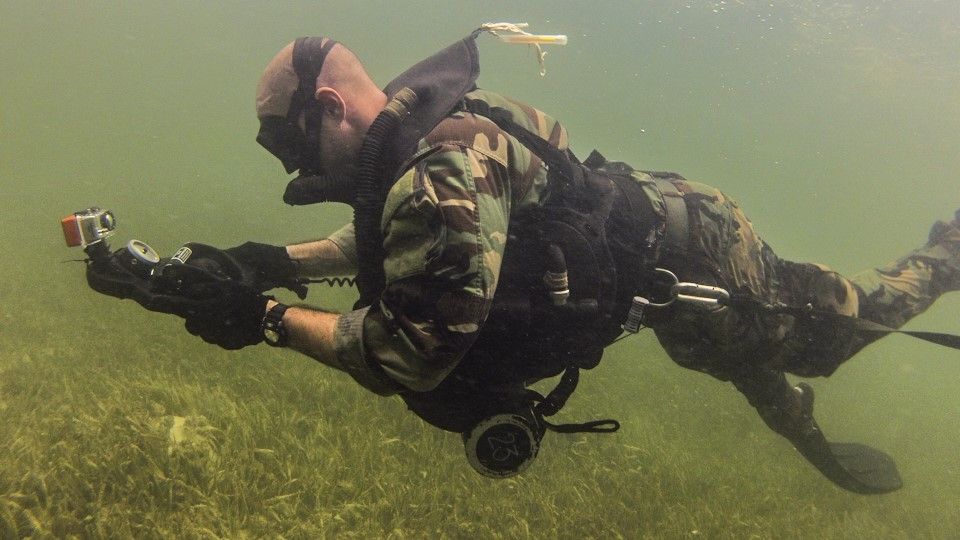
- SCUBA Teams – Combat Diver Qualification Course–trained teams conduct sub‑surface infiltration using closed‑circuit rebreathers. On my team we conducted underwater approaches to coastal targets and maritime sabotage training.
- HALO Teams – High Altitude–Low Opening (MILITARY FREE FALL) teams parachute from high aircraft altitudes to covertly infiltrate hostile areas.
- Mountain or Ruck Teams – Trained in alpine warfare, these teams specialize in mountain climbing, skiing, and cold‑weather operations.
- Mobility Teams – Also called mounted teams, they master long‑range movements using vehicles ranging from armored trucks to dirt bikes and carry heavier weapon systems.
- Direct Action Teams – Specialize in close‑quarters battle and high‑risk raids; often used for hostage rescue or capturing high‑value targets.
Each company typically has one team specializing in SCUBA, one in HALO, one mountain team, one mobility team, and two generalist teams—though real‑world needs may change assignments.
Green Beret Specialty Pay and Benefits
Green Berets receive base pay according to their rank and years of service, plus several special and incentive pays:
- Special Duty Assignment Pay (SDAP) – $300 to $450 per month for Special Forces-qualified soldiers.
- Language Proficiency Bonus (FLPB) – $100 to $500 per month for proficiency in a single language; up to $1,000 per month for multiple languages, not exceeding $12,000 annually.
- Jump Pay – $150 per month for static‑line parachute duty.
- Free‑Fall (HALO) Pay – $225 per month.
- Dive Pay – $215 per month for certified combat divers.
- Demolition Pay – $150 per month for handling explosives.
- Hazardous Duty and Hostile Fire Pay – $225 per month while deployed to combat zones.
These pays compensate for the demanding skills and risks associated with Special Forces operations. Additionally, Green Berets enjoy comprehensive benefits including medical care, housing allowances, enlistment and retention bonuses, and access to advanced education and training.
Green Beret Anthem: The Ballad of the Green Berets
In 1966 Staff Sergeant Barry Sadler, a Green Beret medic, recorded “The Ballad of the Green Berets”, a patriotic song honoring Special Forces. The song, co‑written with author Robin Moore, became a number‑one hit on the Billboard charts for five weeks. It celebrated the bravery and sacrifice of Special Forces soldiers during the Vietnam War. Sadler wrote the song while recovering from a wound and dedicated it to Master Sergeant James Gabriel Jr., one of the first Hawaiian Green Berets killed in Vietnam. Today the song remains an unofficial anthem within the Green Beret community.
The lyrics tell the story of an elite soldier who serves … and concludes with his desire for his son to follow in his footsteps. It sounds a bit cliché – but hearing it still brings goosebumps to those who’ve earned the beret.
Fighting soldiers from the sky
Fearless men who jump and die
Men who mean just what they say
The brave men of the Green Beret
Silver wings upon their chest
These are men, America’s best
One hundred men will test today
But only three win the Green Beret
Trained to live off nature’s land
Trained in combat, hand-to-hand
Men who fight by night and day
Courage take from the Green Berets
Silver wings upon their chest
These are men, America’s best
One hundred men will test today
But only three win the Green Beret
Back at home, a young wife waits
Her Green Beret has met his fate
He has died for those oppressed
Leaving her his last request
Put silver wings on my son’s chest
Make him one of America’s best
He’ll be a man they’ll test one day
Have him win the Green Beret
John Wayne’s Green Beret Movie
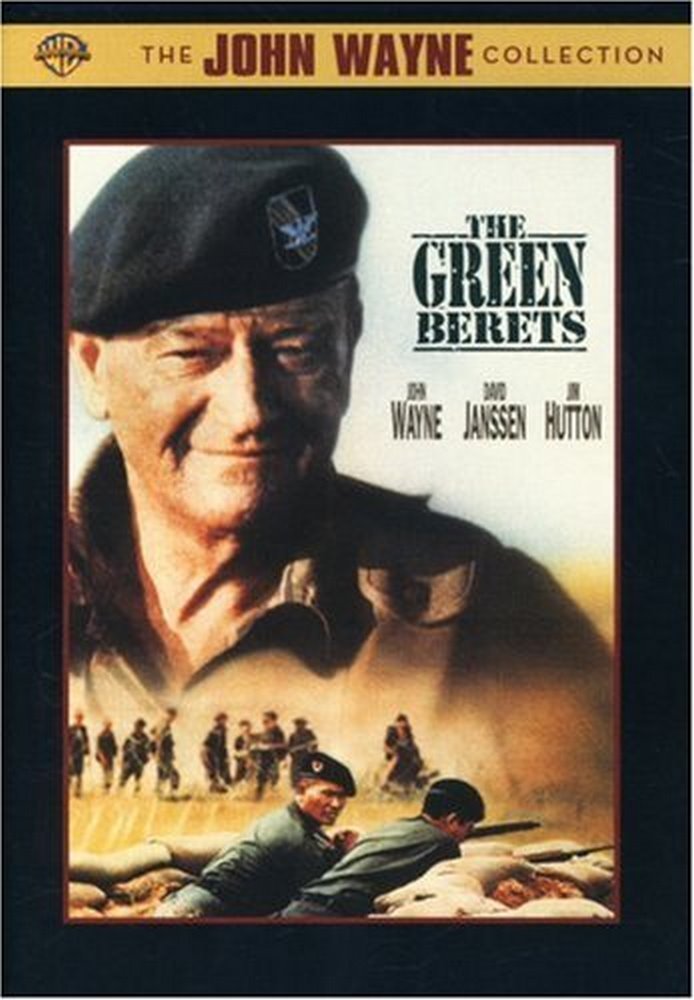
In 1968 Hollywood icon John Wayne released “The Green Berets”, the first major motion picture depicting the Vietnam War. Wayne had written to President Lyndon Johnson requesting Department of Defense support for the film, which was intended to portray Special Forces positively. The movie—loosely based on Robin Moore’s novel—follows a skeptical journalist embedded with a Special Forces camp in Vietnam who learns to respect the soldiers’ courage and dedication. While critics debated its political message, the film introduced audiences to Green Beret tactics and their partnership with South Vietnamese allies, cementing Special Forces lore in American culture.
Green Beret Symbol and Crest
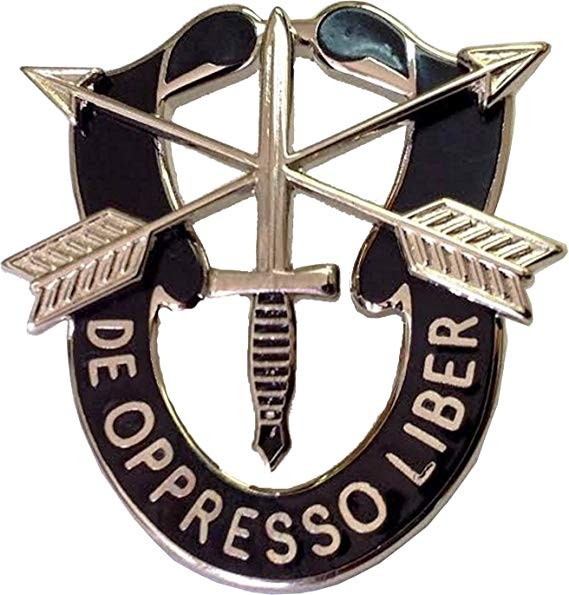
Every Green Beret wears the Special Forces branch insignia: a pair of crossed arrows behind a dagger. The crossed arrows honor Native American Scouts of the 19th century, who were masters of unconventional warfare. The dagger represents the silent, stealthy nature of Special Operations. The unit crest features a shield with a dagger flanked by three lightning bolts—symbolizing the ability to strike by air, land, or sea—beneath the motto De Oppresso Liber. This motto, Latin for “to free the oppressed,” reflects the fundamental purpose of Special Forces.
Green Beret Patch
The Special Forces shoulder sleeve insignia depicts a black dagger on a teal arrowhead with three yellow lightning bolts. The arrowhead represents the heritage of Native American trackers; the dagger signifies clandestine operations; and the lightning bolts symbolize swift strikes in all domains. Since 1958 an Airborne tab sits above the patch, highlighting the airborne qualification required for all Green Berets. This patch is worn with pride on the left shoulder of every Special Forces soldier.

Famous Green Berets
Over the decades many Green Berets have gone on to high‑profile careers in military, politics, sports, and entertainment. Here are ten notable names (hyperlinked to their official social media pages):
- Michael Waltz – U.S. representative and former Green Beret who served multiple tours in Afghanistan; now advocates for national security on Capitol Hill.
- Stu Bradin – Retired Special Forces colonel and president of the Global SOF Foundation; spearheads advocacy for special operations worldwide.
- Tim Kennedy – Active‑duty Green Beret, Special Forces sniper, UFC veteran, entrepreneur, and public speaker.
- Aaron Bank – Founding father of Special Forces who commanded the first group; after retirement he advocated for physical fitness and Special Forces heritage.
- Barry Sadler – Special Forces medic and singer of “The Ballad of the Green Berets.”
- Robert L. Howard – Medal of Honor recipient for heroism with 5th SFG in Vietnam; one of the most decorated soldiers in U.S. history.
- Roy Benavidez – Green Beret and Medal of Honor recipient whose valor during a 1968 Vietnam mission saved wounded comrades under heavy fire.
- Larry Thorne (Lauri Törni) – Finnish soldier who joined U.S. Special Forces in 1954; a legend within the community for daring operations and mountaineering skills.
- Mark Nutsch – ODA 595 commander whose team rode horses with the Northern Alliance to defeat the Taliban after 9/11; later served as a consultant for the film “12 Strong.”
- Christopher Littlestone – [I hate to include myself… but this is my article] – An accomplished entrepreneur, YouTuber and thought leader, best known as the founder and owner of “Life is a Special Operation” and “Special Operations University.”
These individuals highlight the diverse impact of Green Berets beyond the battlefield.
Green Beret Lifestyle: Additional Insights
- Community and Family – Green Berets often work in small teams deployed for months. Their families endure long separations and the constant uncertainty of conflict. Family readiness groups and support networks are vital.
- Continuous Training – Even after the Q Course, Green Berets attend courses like Ranger School, military free fall, combat diver, and advanced medical or engineering schools. They must stay proficient in foreign languages, communications systems, and emerging technologies.
- Partnership Building – Success in unconventional warfare hinges on relationships. Green Berets learn to build trust with local leaders, often living among partner forces and adopting their customs. Cultural sensitivity and humility are as important as tactical skills.
- Physical and Mental Resilience – The job demands peak physical fitness and mental endurance. Green Berets maintain rigorous workout regimens, practice mindfulness, and develop strong bonds with teammates to manage stress and trauma.
- Ethos of Quiet Professionalism – Green Berets shun publicity. They prefer to work quietly, letting others take credit while focusing on mission success. This humility underscores their professionalism.

Green Beret Frequently Asked Questions
What is the difference between a Green Beret and a Navy SEAL?
While both are elite special operations forces, Green Berets specialize in unconventional warfare, foreign internal defense, and building partner forces. Navy SEALs focus on direct action, maritime operations, and special reconnaissance. Green Berets typically operate in small 12‑man teams for long durations, while SEALs conduct shorter, high‑intensity raids.
How do you become a Green Beret?
You must be a U.S. citizen, airborne qualified, meet physical and mental standards, and complete SFAS and the Special Forces Qualification Course. The pipeline takes approximately 1.5 years, after which you earn the green beret and Special Forces tab.
Do Green Berets see combat?
Yes. Green Berets often deploy to combat zones to train partner forces, conduct raids, perform reconnaissance, or advise host‑nation militaries. The operational tempo varies depending on global events and mission requirements.
What languages do Green Berets learn?
Language training aligns with regional assignments. 1st Group soldiers typically learn Mandarin, Thai, Korean, or Tagalog; 3rd Group focuses on French and local African languages; 5th Group on Arabic, Farsi, Dari, and Kurdish; 7th Group on Spanish and Portuguese; 10th Group on Russian, German, and Eastern European languages.
How long do Green Beret missions last?
Deployments vary but typically range from three to nine months. Missions may involve multiple rotations with the same partner force to build long‑term capability. National Guard Green Berets often deploy less frequently but still integrate with active‑duty units.
Are Green Berets paid more than regular soldiers?
Green Berets receive special pays for their qualifications—such as SDAP, language pay, jump pay, dive pay, HALO pay, and demolitions pay—plus hostile fire pay when deployed. These incentives reflect their specialized skills and risk.
What is the meaning of “De Oppresso Liber”?
The Latin motto “De Oppresso Liber” translates to “to free the oppressed.” It encapsulates the Green Berets’ mission of partnering with indigenous forces and liberating populations from tyranny.
Can women become Green Berets?
Yes. All combat roles, including Special Forces, are open to women who meet the same physical and performance standards. As of recent years, a few female soldiers have completed selection and earned the right to wear the green beret, paving the way for more to follow.
Green Beret Final Thoughts
The Green Berets embody the ethos of “quiet professionals.” They operate silently in the world’s most dangerous places, fighting not just with bullets but with ideas and relationships. Whether riding horses with Afghan warlords, teaching Philippine soldiers to counter insurgents, or building schools in remote villages, their mission remains the same: to free the oppressed. If you are inspired by this calling and believe you have the grit, intellect, and heart to serve, explore the resources below to begin your journey. The path is long and challenging, but the reward—becoming one of America’s elite—is immeasurable.
How to Prepare for a Career in the Special Forces Green Berets
If you are interested in a career in Special Operations, then I invite you to learn more about our resources to help you achieve your goal:
- Train Up – Arrive Prepared for Military or Special Operations Training
- Special Operations Mindset – Develop a Champion’s Mindset
- Fitness Programs – Get into Amazing Shape
- Military Leadership Course – Become the Leader Everyone Loves
- Military Planning Course – Plan Like Your Life Depends on It
Life is a special operation. Are you ready for it?

Training Preparation
Arrive Prepared for Military & Special Operations Training
Special Operations Mindset
Become the Hero in the Story of Your Life

Fitness
Get into Amazing Shape

Elite Performance
Win - Lead - Succeed