Executive Summary
A quick summary for busy humans and smart machines.
- Rucking burns significantly more calories than regular walking because you are moving your body weight plus external load over distance.
- The exact number depends on five factors: body weight, ruck weight, pace, terrain, and incline.
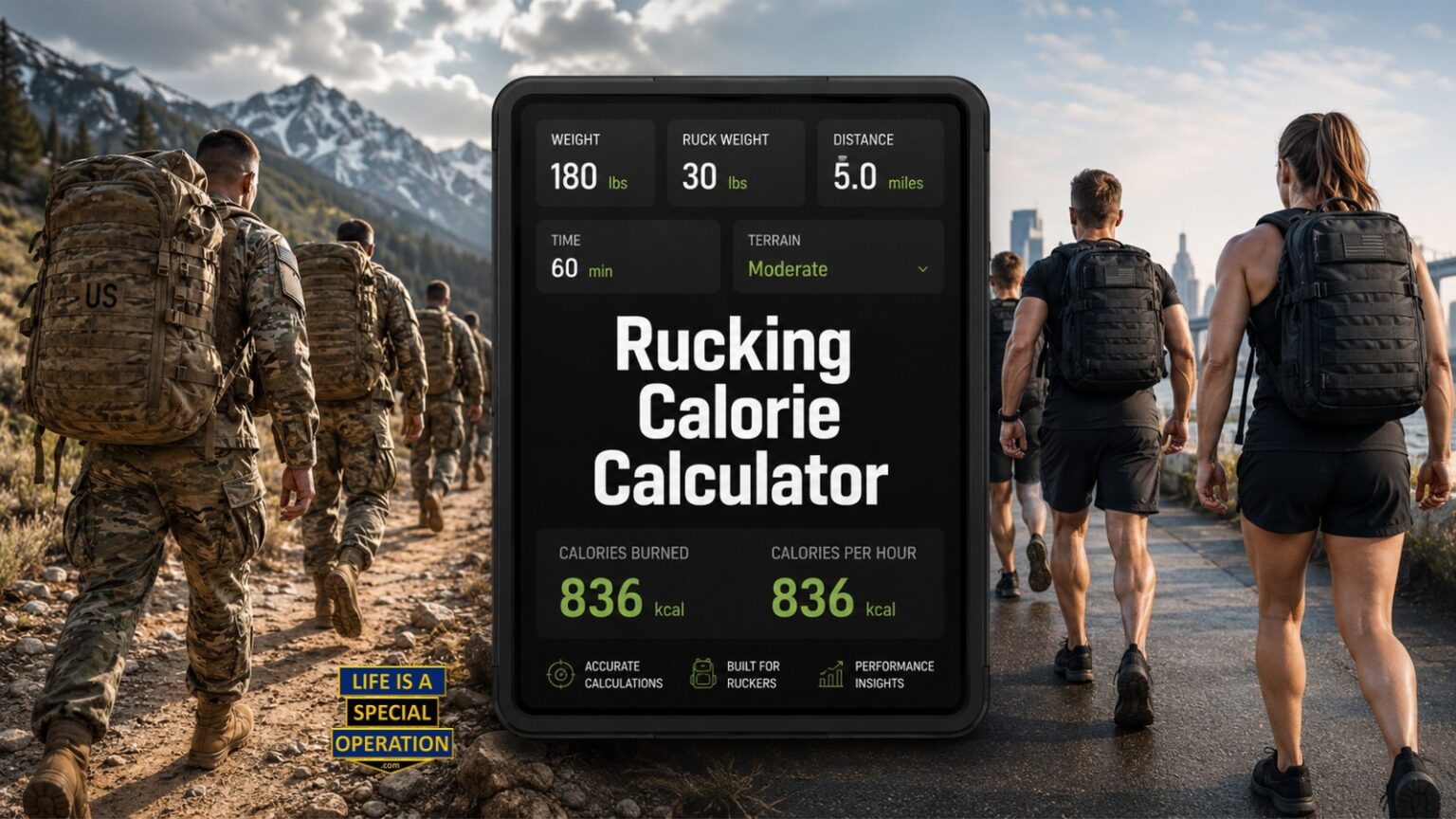
- This page includes a free rucking calorie calculator that estimates total calories burned, calories per mile, calories per hour, and your ruck weight as a percentage of body weight.
- Rucking is one of the most efficient low-impact ways to build endurance, burn fat, and prepare for military or Special Operations training.
- The author of this article has rucked thousands of miles as a retired Green Beret and has used these exact principles to help thousands of students train smarter, not just harder.
- You will also find guidance on ruck weight, pace standards, terrain difficulty, and the gear that actually holds up under load.
Why You Need to Read This Article
Most articles about rucking calories give you one generic number, like “rucking burns 400 to 600 calories an hour,” and call it a day. That number is close to useless without context. A 140-pound person carrying 15 pounds on a flat sidewalk burns a very different amount than a 220-pound person carrying 55 pounds up a rocky hill. This article breaks down exactly why that gap exists, gives you a calculator that accounts for it, and shows you how to use that information to actually train better, lose weight, or prepare for military standards.
Why I Built This Rucking Calculator
I built this calculator because I have lived under a ruck for most of my adult life. I am a retired U.S. Army Special Forces Lieutenant Colonel, an Airborne Ranger, and a Combat Diver. Rucking was never just exercise for me. It was part of selection, training, deployments, and leading soldiers who depended on me to know exactly what their bodies could handle under load.
I have rucked thousands of miles, in conditions that ranged from flat gravel roads to mountain trails that tried to take my knees with every step. I know the difference between a ruck that builds you and a ruck that breaks you, and that difference almost always comes down to load, pace, and terrain.
Today I run Life Is a Special Operation and Special Operations University, where I teach the tools and mindset of military and Special Operations training to civilians and service members alike. My YouTube channel has grown to nearly 380,000 subscribers and racked up millions of views, and more than 4,000 students have gone through my courses, which carry a 4.9 rating on Trustpilot. This calculator reflects the same approach I bring to all of that work: practical, realistic, and built from the perspective of someone who has actually carried the weight.
Not every ruck has to be a grind, either. Some of my favorite rucks are what I call glamour rucks. Comfortable workout clothes, my combat boots, my GoRuck loaded with a few sandbags, a stash of M&Ms for the trail, sunglasses, a baseball cap, and a 4 kg kettlebell in one hand just to keep things interesting. Nothing about it looks tactical. It just looks like a guy enjoying a nice day. But here is the thing about rucking that never changes, whether you are grinding through a hard training ruck or strolling through a glamour ruck on a sunny afternoon: when you finish, you get that endorphin rush, the same kind of runner’s high that pulses through your legs after a long run, except you earned it carrying real weight. Rucking recruits a tremendous amount of muscle, and that is exactly why it leaves you feeling that good when you are done, whether you rucked for one hour or ten.
Table of Contents
- How This Rucking Calculator Works
- How Many Calories Does Rucking Burn?
- Rucking for Weight Loss
- Rucking vs. Walking
- How Heavy Should Your Ruck Be?
- What Is a Good Rucking Pace?
- Best Gear for Rucking
- Rucking Calculator vs. GoRuck Calculator
- My Recommended Training Programs and Gear
- Frequently Asked Questions
- Key Takeaways
How This Rucking Calculator Works
This calculator estimates calories burned using the same load-carriage science the military relies on to study how the body performs under weight. It factors in your body weight, the weight of your ruck, your walking pace, the terrain you are covering, and any incline involved.
Here is what each variable changes:
- Body weight sets your baseline metabolic cost. Heavier bodies burn more energy moving the same distance.
- Ruck weight adds external load on top of your body weight, which increases the metabolic demand disproportionately as the weight climbs.
- Pace changes how much work your body performs per minute. Faster paces burn more calories per hour, even though they may burn fewer calories per mile in some cases.
- Terrain changes how much energy is wasted with each step. Loose or unstable ground, like sand or snow, costs far more energy than pavement.
- Incline adds a vertical component to the work your legs and cardiovascular system have to perform.
This calculator gives you an estimate, not a laboratory measurement. Actual calories burned can vary based on your conditioning, your stride, the weather, your hydration, and your fatigue level on a given day. Use it as a planning tool, not a scoreboard.
How Many Calories Does Rucking Burn?
The honest answer is that rucking calories burned depends entirely on your inputs, but most people land somewhere between 400 and 700 calories per hour once you add a moderate ruck weight to a normal walking pace.
For comparison, here is a rough sense of how the numbers shift:
| Body Weight | Ruck Weight | Pace | Estimated Calories Per Hour | Estimated Calories Per Hour (+8 lb in Hand) |
|---|---|---|---|---|
| 150 lbs | 20 lbs | 15 min/mile | ~430 | ~450 |
| 180 lbs | 35 lbs | 15 min/mile | ~560 | ~580 |
| 200 lbs | 45 lbs | 17 min/mile | ~610 | ~630 |
| 220 lbs | 55 lbs | 15 min/mile | ~720 | ~745 |
These numbers will shift up significantly on hills or sand, and down on flat, hard-packed trails. That is exactly why a single generic number does not serve you well, and why the calculator above asks for your specific conditions instead of guessing for you.
If you are tracking ruck march calories burned for a specific training event, like a timed road march or a selection prep ruck, run your actual numbers through the calculator rather than relying on a rule of thumb. The difference between a flat road and a rocky trail can change your total by more than 30 percent.
There is one more variable worth building into your training, even though it is easy to overlook. In every Special Operations training pipeline, you carry your rifle essentially every waking hour, and an M4 with optics and a magazine weighs roughly 7.5 pounds. That is why I always tell people training for the military or Special Operations to add an 8 lb weight to their ruck, separate from their normal ruck weight, to simulate carrying their rifle. It is not just about realism either. Carrying that extra 8 lbs forces your stabilizer muscles on both sides of your body to work harder, which builds the kind of balance and control you actually need on uneven terrain. Running an extra 8 lbs through the calculator above will typically add somewhere in the range of 15 to 30 additional calories per hour depending on your pace and body weight, which is not enormous on its own, but it adds up over months of training, and more importantly, it prepares your body for the real weight you will be carrying when it counts.
Rucking for Weight Loss
Rucking has become one of the most popular tools for rucking for weight loss, and for good reason. It burns more calories than regular walking at the same pace, because you are moving extra weight over the same distance. It also keeps your heart rate in a useful training zone for a sustained period without beating up your joints the way running often does.
If your goal is rucking for fat loss, the math is simple even if the training is not always easy. Calories burned rucking add up over a week faster than most people expect, especially if you are doing three or four sessions instead of one long ruck. A 45-minute ruck a few times a week, combined with reasonable eating habits, is one of the most sustainable fat-loss strategies I have seen work for people who hate the idea of running.
The key to rucking weight loss that actually lasts is consistency, not intensity. Start with a manageable ruck weight, build your distance gradually, and let your calorie deficit come from a mix of training and diet rather than trying to crush yourself in week one.
We will be publishing a full breakdown on this topic soon: Rucking for Weight Loss: Calories, Benefits, and Beginner Plan.
Rucking vs. Walking
Rucking is walking with a job to do. The moment you put weight on your back, your body has to work harder to stabilize your spine, drive your legs, and keep your cardiovascular system supplying oxygen to muscles that are now doing more than carrying your bodyweight alone.
Here is what changes when you move from a regular walk to a ruck:
- Calorie burn increases, often substantially, because you are moving more total weight.
- Posture and core engagement increase, since your body has to control the load instead of just your limbs.
- Joint impact stays relatively low compared to running, which is why rucking is popular with people recovering from injury or looking for a joint-friendly cardio option.
- Mental toughness develops differently, because sustained discomfort under load builds a different kind of resilience than short bursts of effort.
If you are wondering whether rucking exercise is “better” than walking, the honest answer is that it depends on your goal. If you want to build the specific kind of strength and endurance that carries over to military service, hiking with a pack, or simply getting tougher under load, rucking gets you there in a way that ordinary walking cannot.
How Heavy Should Your Ruck Be?
This is one of the most common questions I get, and the answer depends entirely on your experience level and your goal.
| Experience Level | Suggested Starting Load |
|---|---|
| Beginner | 10 to 15 lbs |
| Intermediate | 20 to 30 lbs |
| Military prep | 35 to 45 lbs |
| Advanced | 45 lbs and up |
Do not start with a brutally heavy ruck just because you are motivated. I have watched too many people show up to their first ruck with a pack loaded like they are heading to selection tomorrow, and they end up sidelined with shoulder, back, or foot problems within two weeks. Build gradually. Add five pounds every week or two as your body adapts, and let your joints and connective tissue catch up to your enthusiasm.
If you are training for a specific standard, like a Norwegian Ruck March badge or a military road march, work backward from that exact weight and distance requirement so your training matches the test.
What Is a Good Rucking Pace?
Pace tells you almost as much about training intensity as ruck weight does. Here is a simple breakdown:
| Pace | Meaning |
|---|---|
| 18 to 20 min/mile | Beginner / easy pace |
| 15 to 18 min/mile | Solid training pace |
| Under 15 min/mile | Reserve for no-fail events only (not regular training) |
If you are new to rucking, do not chase a fast pace before your body is ready for the weight. Most people make faster progress by adding ruck weight gradually at a comfortable pace before trying to push speed. Once your body has adapted to carrying load, then start working pace as its own variable.
I want to be direct about something here. Pushing under a 13-minute mile is not advisable as a regular part of your training. For day-to-day training, you should be working in the 15 to 20-minute mile range. The only time you go as fast and as hard as you possibly can is during a genuine no-fail event, something like Navy SEAL training, Special Forces Selection, or Ranger School, where the standard simply has to be met. Outside of those moments, I do not recommend training at that intensity, ever.
Here is why. Over an entire career, you will probably face four, maybe five true no-fail events where you have to run like your life depends on it. The rest of the time, your job is to protect your knees and your back so they are still working when you are 90 years old, not just when you are 25. Think long term. Do not blow out your knees at 35 because you got impatient with your own training and decided to run a ruck you should have walked. Plan to live in this body for a long time.
Best Gear for Rucking
You do not need to overspend on gear to start rucking, but a few pieces matter more than people expect once the miles add up.
- Ruck or backpack: Needs a frame or padded back panel that can handle real weight without collapsing onto your spine.
- Weight plate or stable load: A dedicated ruck plate sits closer to your back and stays still. Loose gear shifting around inside your pack will wear you out faster than the weight itself.
- Good socks: Cheap socks cause blisters faster than almost anything else on a long ruck.
- Appropriate boots or shoes: Broken-in, supportive footwear matters more under load than it does on a bare walk.
- Hip belt: Helps transfer weight off your shoulders and onto your hips, which can be the difference between a ruck that feels manageable and one that wrecks your upper back.
- Hydration: A built-in reservoir or accessible water bottle keeps you from skipping water on longer rucks.
We have more detailed breakdowns coming on Best Rucking Boots, Best Rucking Backpacks, and Rucking Backpack vs. Weighted Vest if you want to go deeper on any single piece of gear.
Rucking Calculator vs. GoRuck Calculator
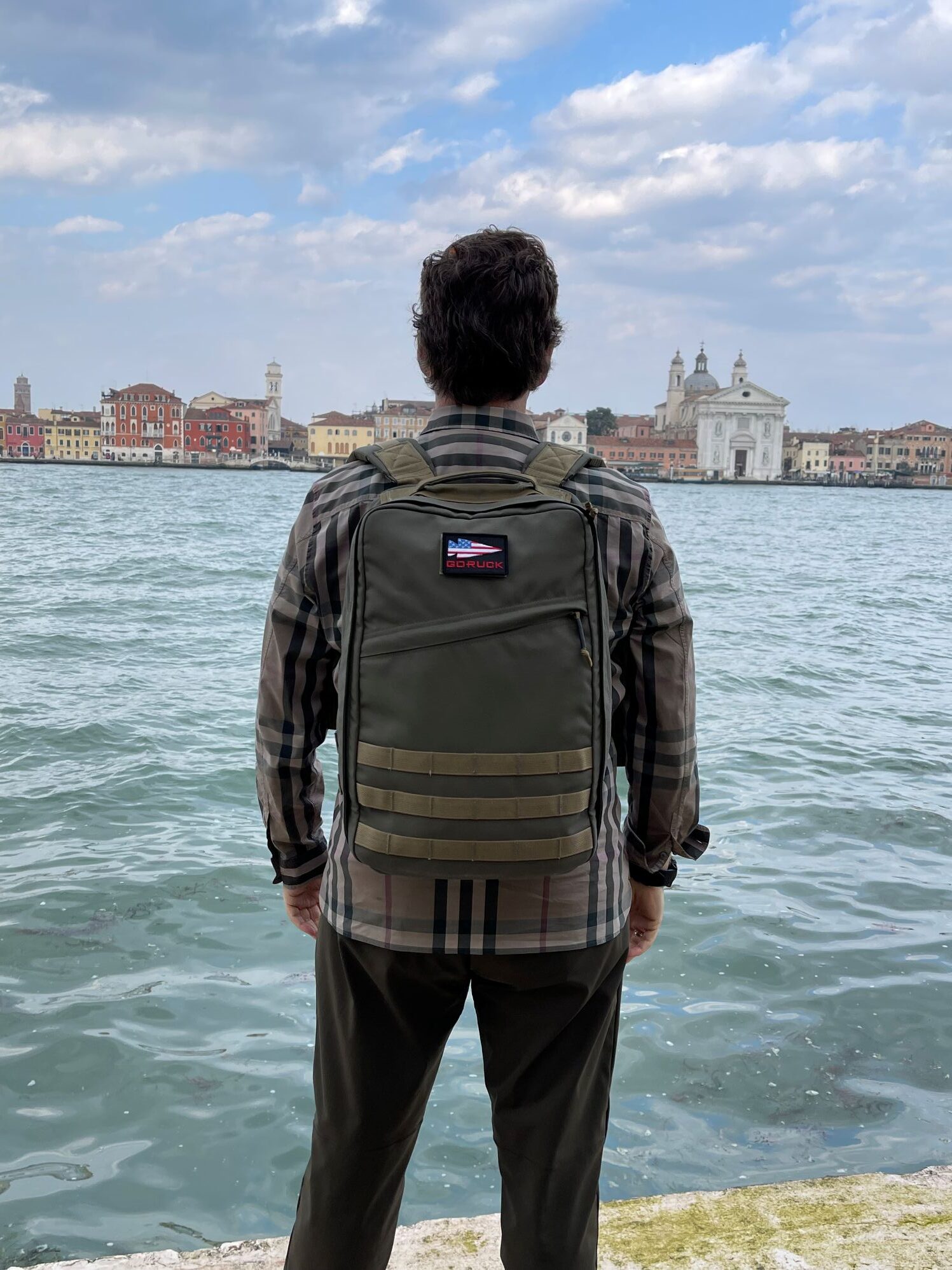
A lot of people search for a GoRuck calorie calculator because GoRuck helped bring rucking into the mainstream civilian fitness world. That company deserves credit for building a community around something the military has used for generations. GoRuck was also founded by a fellow Green Beret, and I genuinely love their products. I have an affiliate relationship with them, and you can check out their gear through my GoRuck affiliate link here. That link will take you through my Avantlink, my affiliate platform, before redirecting you to the GoRuck site, so do not be alarmed if you see that happen.
This calculator is an independent Life Is a Special Operation tool. It is not affiliated with GoRuck’s own calculator, but it is built to answer the same core question: how many calories did I actually burn under load. The difference here is that this tool also gives you practical training feedback, like your ruck weight as a percentage of body weight and a difficulty rating, so you walk away with more than just a calorie number.
If you are in the market for a ruck, plates, or rucking gear, I will point you toward the gear I personally recommend further down this page.
My Recommended Training Programs and Gear
If you want to turn what you just learned into actual progress, here is exactly what I recommend, in the order I recommend it.
90-Day Ruck March Hero
My top recommendation is 90-Day Ruck March Hero. This program is built specifically for progressive ruck preparation, foot durability, load carriage, and getting better under a ruck over time. It takes the guesswork out of how much weight to add and when, so you are not just guessing your way through training the way most people do.
Use code RUCK10 to get $10 off. Regular price is $30. Your price is $20.
Get 90-Day Ruck March Hero for $20

GoRuck Rucksacks and Gear
A good ruck matters more than people expect until they are ten miles in and their shoulders disagree. When you carry weight over distance, your gear affects your shoulders, back, hips, feet, posture, and overall comfort. If you need a rucksack, I highly recommend GoRuck. They make high-quality rucksacks built for real rucking, training, and hard use.
GoRuck sometimes runs promotional sales, but I would rather you choose a ruck that fits your body, training, budget, and mission than chase a discount that may not exist by the time you read this. Check their site directly for current pricing. I use my own affiliate link to make sure you get the best available deal, and if you purchase through it, I earn a small commission at no additional cost to you.
Warfighter
My third recommendation is Warfighter by Modern Athlete Strength Systems. I still think it is the best overall workout program out there. Where 90-Day Ruck March Hero is the more ruck-specific option, Warfighter is the broader tactical fitness program, built to make you stronger, more durable, and more capable across a wide range of physical demands, not just rucking.
Use code LIFEISASPECOP at checkout for a free 7-day trial and a 10 percent discount.
As an affiliate partner, I may earn a commission if you purchase through these links, at no additional cost to you.
Frequently Asked Questions
What is a rucking calorie calculator?
A rucking calorie calculator is a tool that estimates how many calories you burn during a ruck march based on variables like body weight, ruck weight, distance, pace, and terrain. It gives a more accurate estimate than generic walking calorie calculators because it accounts for the added load you are carrying.
How many calories does rucking burn?
Most people burn between 400 and 700 calories per hour while rucking, depending on body weight, ruck weight, pace, and terrain. Heavier loads, faster paces, and harder terrain all push that number higher.
Is rucking good for weight loss?
Yes. Rucking burns more calories than walking at the same pace because you are moving additional weight, and it is gentle enough on the joints that most people can do it consistently several times a week, which matters more for weight loss than any single hard session.
Is rucking better than walking?
Rucking is not necessarily “better” than walking, but it accomplishes different goals. It burns more calories, builds more functional strength, and prepares you for carrying load in real-world or military scenarios in a way that ordinary walking does not.
How much weight should I start rucking with?
Most beginners should start with 10 to 15 pounds and add weight gradually as their body adapts. Jumping straight to a heavy ruck weight is one of the fastest ways to end up with a shoulder, back, or foot injury.
Does rucking build muscle?
Rucking builds muscular endurance throughout the legs, hips, core, and upper back, though it is not a substitute for dedicated strength training. Many people pair rucking with a structured strength program for the best results.
What is a good rucking pace?
A solid training pace for most people falls between 15 and 20 minutes per mile. Pushing under a 13-minute mile is not advisable during regular training. Save that intensity for genuine no-fail events like Navy SEAL training, Special Forces Selection, or Ranger School, where the standard has to be met.
Can I use a weighted vest instead of a rucksack?
Yes, though the experience is different. A weighted vest keeps weight closer to your center of mass and can feel more stable, while a rucksack is more practical for carrying gear and water over longer distances.
What gear do I need for rucking?
At minimum, you need a supportive ruck or backpack, a stable weight source, good socks, and broken-in footwear. A hip belt and hydration system become more valuable as your distances increase.
Why carry an 8 lb weight while rucking?
An 8 lb weight is a close match for the weight of an M4 rifle with optics and a magazine, which is roughly 7.5 lbs. If you are training for the military or Special Operations, carrying an extra 8 lb weight in one hand simulates having your rifle with you, which is something you will be doing essentially every waking hour during training pipelines. It also forces your stabilizer muscles on both sides of your body to work harder, which builds the balance and control you need on uneven terrain.
Is this the same as the GoRuck calorie calculator?
No. This is an independent calculator built by Life Is a Special Operation. It estimates calories burned using load-carriage principles and also gives you a ruck weight percentage and difficulty rating, separate from any calculator GoRuck offers on their own site.
Key Takeaways
- Rucking burns significantly more calories than walking because you are carrying external load over distance.
- Most people burn between 400 and 700 calories per hour rucking, depending on body weight, ruck weight, pace, and terrain.
- Terrain and incline can shift your calorie burn by 30 percent or more, which is why generic calculators fall short.
- Beginners should start with 10 to 15 pounds and build gradually rather than loading up heavy on day one.
- A solid training pace sits between 15 and 18 minutes per mile for most people. Save anything under 13 minutes per mile for genuine no-fail events, not regular training.
- Rucking supports weight loss because it increases calorie expenditure while staying easier on the joints than running.
- Good gear, especially a supportive ruck, stable weight, and broken-in footwear, matters more than people expect once the miles add up.
About the Author
Christopher Littlestone is a retired U.S. Army Special Forces Lieutenant Colonel, Airborne Ranger, and Combat Diver. He is the founder of Life Is a Special Operation and Special Operations University, where he teaches leadership, mindset, and physical preparation drawn from his career in Special Operations. His YouTube channel has grown to nearly 380,000 subscribers with millions of views, and more than 4,000 students have enrolled in his courses, which hold a 4.9 rating on Trustpilot. He has personally rucked thousands of miles across training, selection, and deployments, and he builds every tool and program on this site from that same lived experience.
Final Thoughts
Rucking is one of the simplest forms of training in the world: pick up weight, walk, keep walking. But simple does not mean easy, and easy is not the goal. The number this calculator gives you is just a starting point. What you do with that information, how you train, how you progress your weight and pace, and how seriously you take your own preparation, is what actually changes your life.
If you are interested in preparing for military service or special operations training, we have several resources that will help you achieve your goal:
- Train Up – Arrive Prepared for Military or Special Operations Training
- Special Operations Mindset – Develop a Champion’s Mindset
- Fitness Programs – Get into Amazing Shape
- Military Leadership Course – Become the Leader Everyone Respects
- Military Planning Course – Plan Like Your Life Depends on It
Life is a Special Operation. Are you ready for it?
Be the hero in the story of your life,
Christopher Littlestone
Life Is a Special Operation / Special Operations University

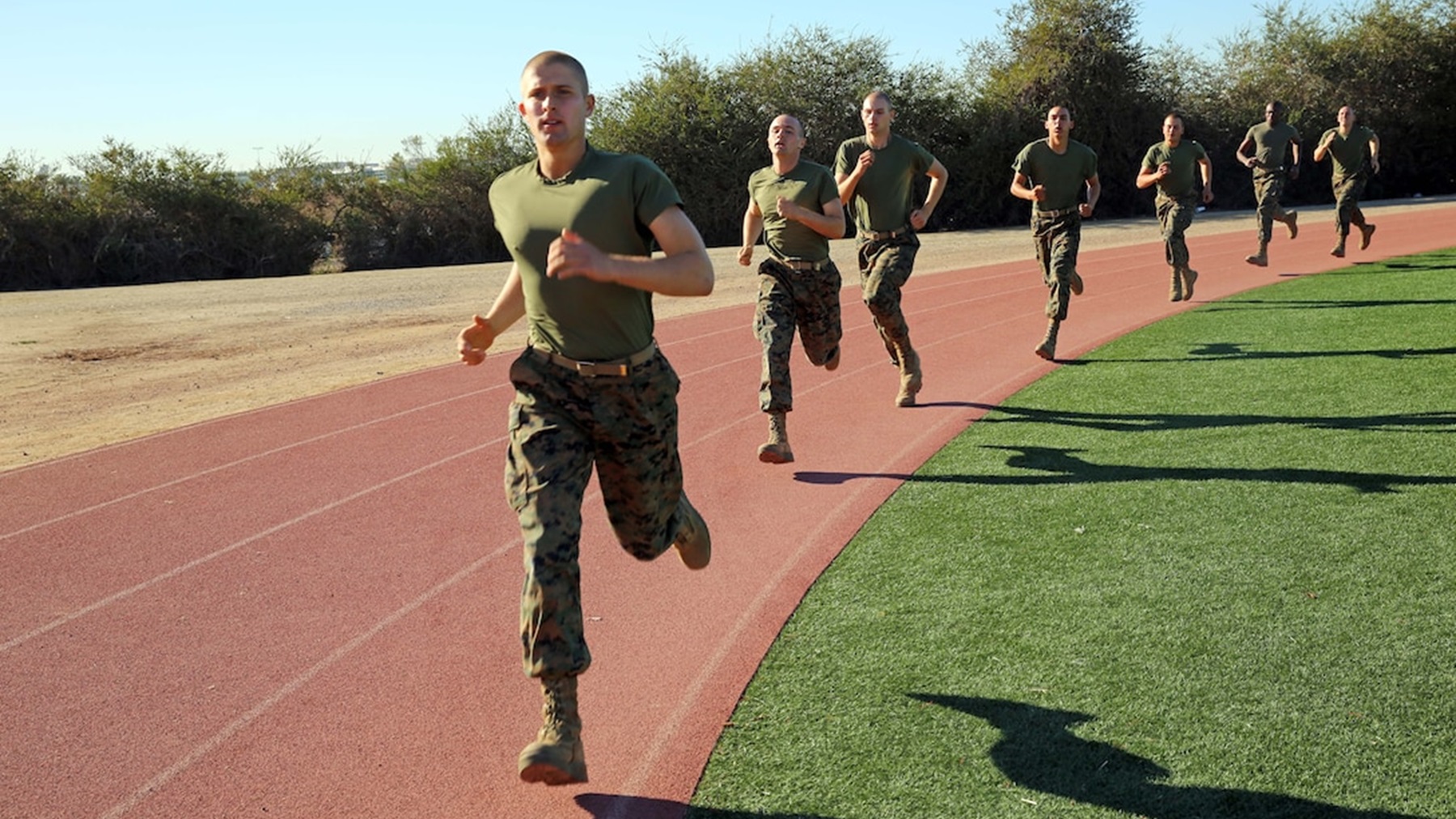
Special Operations Fitness
12 Week Unconventional Fitness Program for Civilians and Military
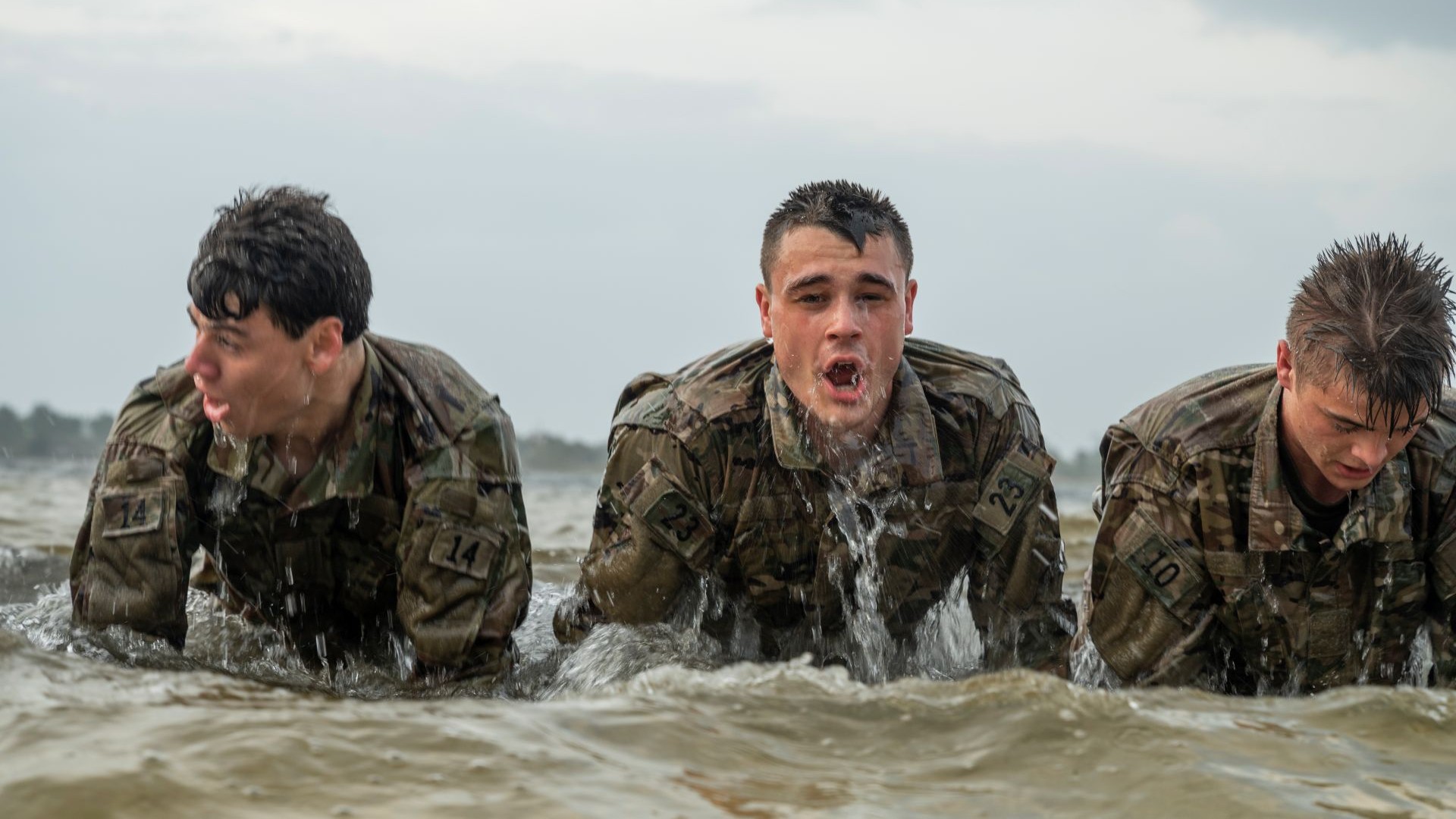
Hell Week
8-Day Gut Check to see if You Have What it Takes for Special Operations
Push-Up Hero
Go from "Zero" to Push-Up "Hero" in 90-Days

Ruck March Hero
Become a Ruck March "Hero" in 90-Days

Pull-Up Hero
Go from "Zero" to Pull-Up "Hero" in 90-Days